Buy the EcoFlow DELTA 3 Plus for home outages: it supplies 1,800 W instead of 1,500 W, has six AC outlets to the Jackery's three, switches over in under 10 ms and can add extra batteries up to about 5 kWh. Buy the Jackery Explorer 1000 v2 if you'll carry it often, since it's 3.8 lb lighter. Both hold 1,024 Wh of LiFePO4, so on the same devices they run for the same time.
As an Amazon Associate, RightSizePower earns from qualifying purchases. That never changes how models are ranked. How we recommend
Quick answer
- Carrying it often
- Jackery Explorer 1000 v2 (23.8 lb vs 27.6 lb)
- Microwave or several devices at once
- EcoFlow DELTA 3 Plus (1,800 W vs 1,500 W)
- Might want more capacity later
- EcoFlow DELTA 3 Plus (expands to about 5 kWh)
- CPAP or computer on UPS
- EcoFlow DELTA 3 Plus (under 10 ms vs within 20 ms)
- Laptops over USB-C
- EcoFlow DELTA 3 Plus (two 140 W ports vs two 100 W)
- Starting a fridge or pump
- EcoFlow DELTA 3 Plus (3,600 W surge vs 3,000 W)
Specs side by side
From each maker's US product page and manual, checked 2026-11-01. Rows where they differ are in darker text; starred values aren't fully confirmed by the maker.
| Spec | Jackery Explorer 1000 v2 | EcoFlow DELTA 3 Plus |
|---|---|---|
| Capacity | 1,024 Wh | 1,024 Wh |
| Continuous output | 1,500 W | 1,800 W |
| Surge | 3,000 W | 3,600 W |
| Boost mode (heating loads) | None | 2,200 W |
| Battery | LiFePO4, 4,000 cycles to 70% | LiFePO4, 4,000 cycles to 80% |
| Weight | 23.8 lb | 27.6 lb |
| AC outlets | 3 | 6 |
| USB-C | 2 × up to 100 W | 2 × up to 140 W |
| 12 V car outlet | Yes | Yes |
| Wall charge, 0–100% | 95 min | 56 min |
| Solar input | 400 W, 2 x DC8020, 12-60V (16-60V for PV) | 500 W, 11-60V* |
| UPS switchover | ≤20 ms | ≤10 ms |
| Extra batteries | Not expandable | Up to 5,000 Wh |
| Warranty | 3 years | 3 years |
* Not stated on the maker's spec sheet, or derived from other official figures.
Is the Jackery Explorer 1000 v2 enough for you?
It is if you mostly run one or two things at a time and move the unit around. At 23.8 lb it's the easier one to take from the house to the car. The 1,500 W inverter with a 3,000 W surge starts a typical fridge and runs lights, a TV, a router and phones. It has three AC outlets, two 100 W USB-C ports, one USB-A port and a car outlet.
Its limits are output, growth and solar. 1,500 W leaves no headroom for a typical microwave, and it can't take an extra battery. Solar goes in through Jackery's DC8020 inputs, up to 400 W, so other panels need an adapter. Jackery's manual gives a UPS switchover within 20 ms. Its cycle rating is 4,000 cycles to 70% capacity, a lower end point than EcoFlow's 80%. Standard charging takes about 1.6 hours; Emergency Super Charge in the app cuts that to about 50 minutes. The warranty is 3 years, plus 2 more only when bought from jackery.com.
Not for you if: you want to run a microwave, plan to add batteries, or need a 10 ms switchover. One setting to change on day one: Energy Saving Mode is on by default and, per Jackery, switches outputs off after 12 hours when the AC load is 25 W or less. Turn it off before you rely on it for a fridge or CPAP.
What does the EcoFlow DELTA 3 Plus add?
More of everything except lightness. It supplies 1,800 W continuously with a 3,600 W surge, and X-Boost lets heating appliances up to 2,200 W run at reduced power (it doesn't help motors start). Six AC outlets, two 140 W USB-C ports, two USB-A ports and a car outlet cover a kitchen counter or a home office. EcoFlow lists a UPS switchover under 10 ms and a full wall charge in 56 minutes at up to 1,500 W.
The bigger difference is expansion: EcoFlow's DELTA 3, DELTA 2, DELTA 2 Max and DELTA Pro 3 extra batteries take it to about 5 kWh, which turns a one-night unit into a multi-day one. Solar input is listed as “500W Max*2” across two ports at 11–60 V; the combined total isn't clear, so we use 500 W. It weighs 27.6 lb and carries 3 years of warranty, plus 2 more when you register it in the EcoFlow app.
Not for you if: you'll carry it often, or you want a near-silent unit beside the bed. T3's review found its fan comes on often even at low loads. If a fridge or CPAP is on it, set the AC output to stay on in the app so a low-load timeout can't switch it off.
How long does each run the same devices?
| Load (typical daily use) | Explorer 1000 v2 | DELTA 3 Plus | DELTA 3 Plus, fully expanded |
|---|---|---|---|
| Top-freezer fridge | 13–16 h | 13–16 h | 2.6–3.3 days |
| Fridge + Wi-Fi router + two LED bulbs | 9.3–12 h | 9.3–12 h | 46 h – 2.3 days |
| CPAP, no humidifier, on the DC cable | 2.6–3.2 days | 2.6–3.2 days | 12.8–15.8 days |
| Laptop (USB-C) + Starlink Mini | 7.8–9.7 h | 7.8–9.7 h | 38–47 h |
Estimates from our published formula. Neither maker publishes standby draw, so both use the same default. The last column assumes about 5 kWh of EcoFlow extra batteries. Try your own devices in the runtime calculator.
When does the quiz engine prefer each one?
We ran five situations through the engine the quiz uses. The DELTA 3 Plus comes out ahead in 3 of 5, mainly for its published one-hour charge and its expansion; the Jackery wins when weight or budget rules the EcoFlow out. A higher score means a better fit for that situation, not a better product overall.
| Situation | Engine prefers | Why |
|---|---|---|
| Outage night: fridge, Wi-Fi, phones | DELTA 3 Plus | Scores 79 vs 83 (Jackery vs EcoFlow) |
| A 1,500 W microwave for breakfast | DELTA 3 Plus | Explorer 1000 v2: Too little continuous power: your devices can draw 1,500 W together; it supplies 1,500 W. |
| Fridge, Wi-Fi and phones for a full day, on wheels | DELTA 3 Plus | Explorer 1000 v2: Runs your devices for about 12 h; you asked for 24 h. |
| Camping, carried in one hand | Explorer 1000 v2 | DELTA 3 Plus: 28 lb is heavier than you want to carry. |
| Outage night on a budget under $500 | Explorer 1000 v2 | DELTA 3 Plus: Usually sells above your budget. |
The engine wants 10% headroom over your devices' combined draw, so a 1,500 W microwave rules out a 1,500 W inverter.
Who should buy which
- Buy the Jackery Explorer 1000 v2 if it travels with you, you run a fridge or a few small devices rather than kitchen appliances, and 1 kWh is all you'll ever want.
- Buy the EcoFlow DELTA 3 Plus if it mostly stays home for outages, you want a microwave or coffee maker on it, a CPAP or computer needs the faster switchover, or you might want two or three days of a fridge later: fully expanded, a top-freezer fridge runs about 3.1 days by our estimate.
- Consider a 2 kWh unit instead if you need a fridge, Wi-Fi and phones through a full day from day one; a top-freezer fridge alone runs about 15 h on 1 kWh. Our DELTA 3 Max vs C2000 Gen 2 guide compares two of them, and the sizing quiz checks your exact devices.
Which model does the quiz pick for these situations?
Across the whole catalog, not just these two. Other models often score higher; open any row in the quiz and swap in your own devices.
Outage night: fridge, Wi-Fi, phones
1.4 kWh/day · 10 h
Open this in the quiz and change the devices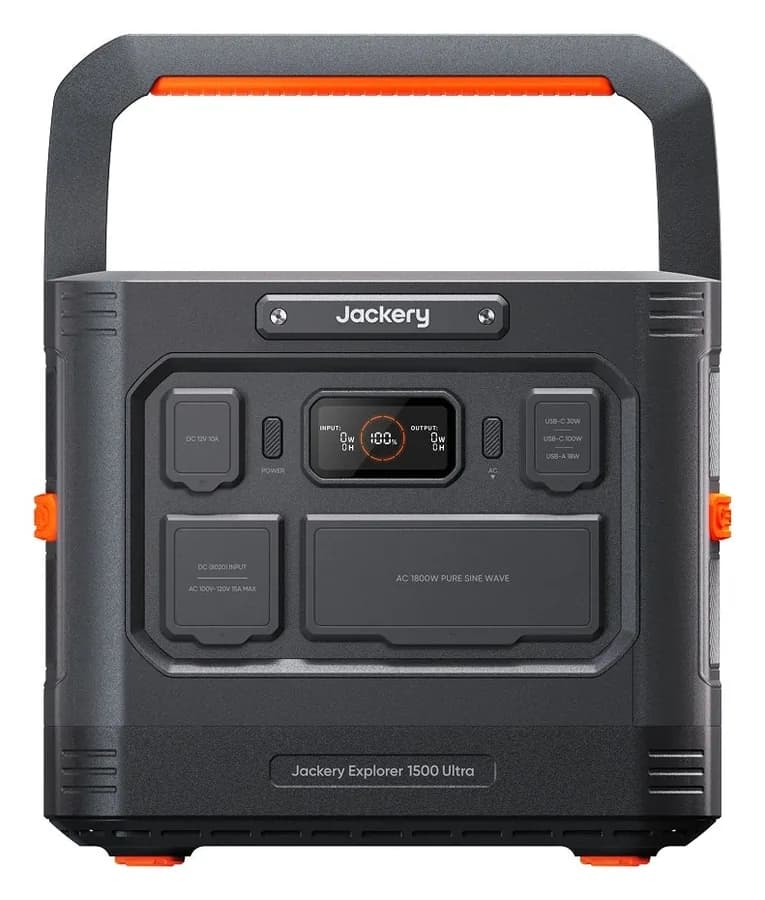
Engine's pick
Jackery Explorer 1500 Ultra
About 17 h · also Anker SOLIX C1000 Gen 2, OUPES Mega 1
A 1,500 W microwave for breakfast
0.4 kWh/day · 10 h
Open this in the quiz and change the devices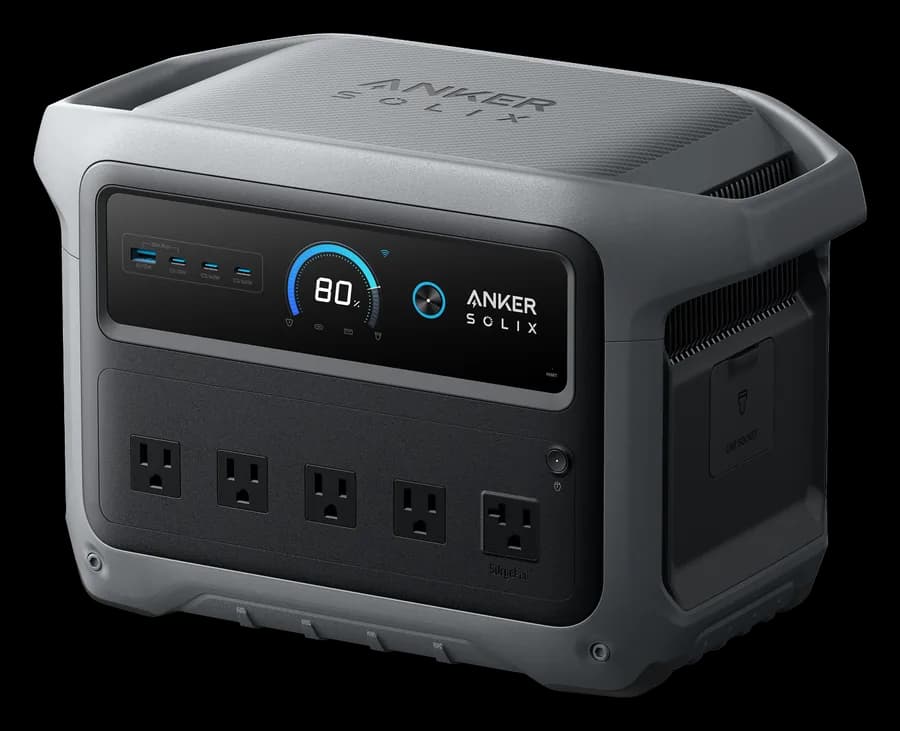
Engine's pick
Anker SOLIX C1000 Gen 2
About 15 h · also OUPES Mega 1, EcoFlow DELTA 3
Fridge, Wi-Fi and phones for a full day, on wheels
1.4 kWh/day · 24 h · extra battery allowed
Open this in the quiz and change the devices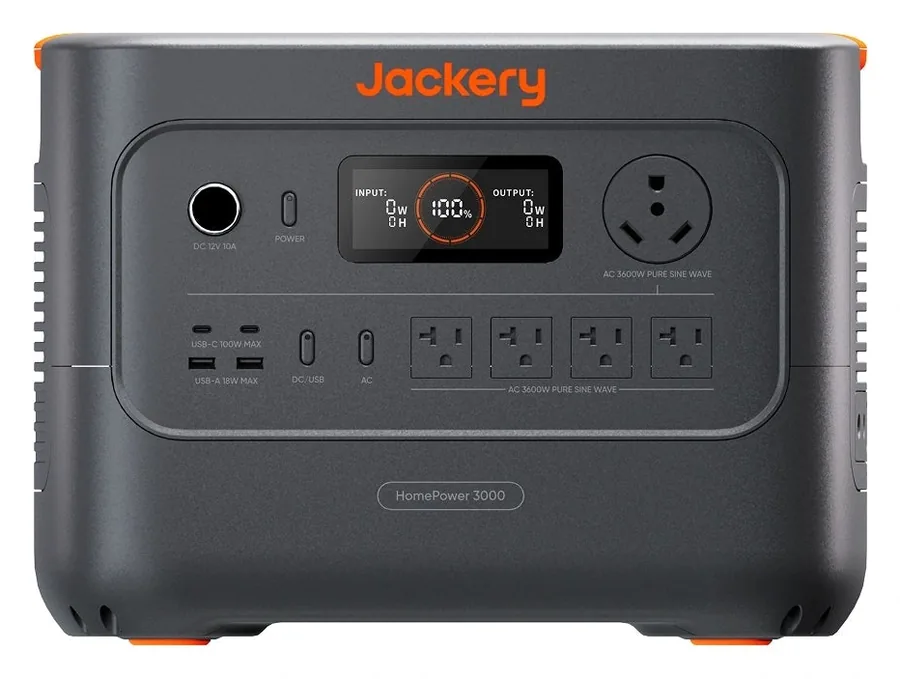
Engine's pick
Jackery HomePower 3000
About 32 h · also Bluetti Elite 400, Jackery HomePower 3600 Pro Max
Camping, carried in one hand
0.5 kWh/day · 10 h · under 25 lb
Open this in the quiz and change the devicesAnker SOLIX768 WhEngine's pick
Anker SOLIX C800X / C800 Plus
About 16 h · also EcoFlow RIVER 2 Pro, Jackery Explorer 500 v2
Outage night on a budget under $500
1.4 kWh/day · 10 h
Open this in the quiz and change the devicesEngine's pick
Anker SOLIX C1000 Gen 2
About 11 h · also OUPES Mega 1, EcoFlow DELTA 3 Classic
Picks come from the same engine as the quiz, recalculated whenever our catalog changes.
What people actually ask
Which lasts longer, the Jackery Explorer 1000 v2 or the EcoFlow DELTA 3 Plus?
On the same devices, neither. Both are sold as 1,024 Wh LiFePO4 units, so runtime is effectively the same, and neither maker publishes standby draw. Only the DELTA 3 Plus can be extended, with EcoFlow extra batteries up to about 5 kWh.
Can the Jackery Explorer 1000 v2 run a microwave?
Only a smaller one. It supplies 1,500 W continuous, and a microwave's label usually states cooking output, not the higher power it draws from the outlet (roughly 1.3 to 1.6 times the cooking figure). A typical 1,000 W microwave draws about 1,500 W, which leaves no headroom on the Jackery. The DELTA 3 Plus supplies 1,800 W.
Which one is better as a UPS for a CPAP or computer?
The DELTA 3 Plus, which EcoFlow lists at under 10 ms. Jackery's manual gives within 20 ms for the Explorer 1000 v2. On the Jackery, turn off Energy Saving Mode, which switches outputs off after 12 hours when the AC load is 25 W or less; on the EcoFlow, set AC output to stay on.
Which one charges faster from the wall?
EcoFlow lists a full charge in 56 minutes at up to 1,500 W. Jackery lists about 1.6 hours with standard charging and about 50 minutes with Emergency Super Charge, which you switch on in its app.
Can I use other brands' solar panels with them?
The DELTA 3 Plus takes standard solar input at 11–60 V. The Jackery uses its own DC8020 inputs (up to 400 W total), so other panels need an adapter cable.
The bottom line
Same battery, same runtime out of the box. The EcoFlow DELTA 3 Plus is the more capable home unit: 300 W more output, twice the AC outlets, a faster UPS switchover, 140 W USB-C and a path to about 5 kWh. The Jackery Explorer 1000 v2 is the lighter, simpler one to carry. For the other popular rivals, see Jackery 1000 v2 vs Anker C1000 Gen 2 and Anker C1000 Gen 2 vs DELTA 3 Plus, or compare every model in the comparison chart.

EcoFlow DELTA 3 Plus
A fridge and home office through an outage, with six AC outlets and a path to 5 kWh with extra batteries.
- Capacity
- 1,024 Wh
- Output
- 1,800 W
- Weight
- 27.6 lb
- UPS
- 10 ms
Paid link
Check price on Amazon
Jackery Explorer 1000 v2
A fridge and lights in an outage, or a weekend of camping, from a 1 kWh unit under 24 lb.
- Capacity
- 1,024 Wh
- Output
- 1,500 W
- Weight
- 23.8 lb
- UPS
- 20 ms
Paid link
Check price on Amazon