For most power stations, plan on panel watts of about 20 to 40% of the battery's watt-hours: 200 to 400 W for a 1,000 Wh unit refills it in anywhere from under a day to about two days of decent sun. Panels deliver about 70% of their label in real conditions, the station caps how much solar it accepts, and the season and region decide how many good hours of sun you get. The table below does the math for common sizes.
As an Amazon Associate, RightSizePower earns from qualifying purchases. That never changes how models are ranked. How we recommend
How do you calculate solar recharge time?
Three numbers decide it: the energy to put back, the watts that actually reach the battery, and the peak sun hours where you are.
- Effective watts = the smaller of (panel watts × 0.7) and the station's maximum solar input. The 0.7 factor covers heat, angle, dust, wiring and charging losses. A well-tilted rigid panel on a cool clear day can reach about 0.80; a panel flat on the ground in the heat can fall to 0.55.
- Hours of full sun = watt-hours to refill ÷ effective watts.
- Days = watt-hours to refill ÷ (effective watts × peak sun hours).
A peak sun hour is one hour of sunlight at the 1,000 W per square meter used to rate panels. A place with 5 peak sun hours gets as much solar energy in a day as five hours of that full rated sun, spread across the whole day.
How long does each panel size take to refill a station?
From empty to full, assuming the station accepts the panel's full output. 3 peak sun hours is a typical US winter day; 5 is a good summer day.
| Station | Panels | Effective watts | Full-sun hours | Days at 3 sun hours | Days at 5 sun hours |
|---|---|---|---|---|---|
| 300 Wh | 100 W | 70 W | 4.3 h | 1.4 days | 0.9 days |
| 200 W | 140 W | 2.1 h | 0.7 days | 0.4 days | |
| 400 W | 280 W | 1.1 h | 0.4 days | 0.2 days | |
| 1,000 Wh | 100 W | 70 W | 14 h | 4.8 days | 2.9 days |
| 200 W | 140 W | 7.1 h | 2.4 days | 1.4 days | |
| 400 W | 280 W | 3.6 h | 1.2 days | 0.7 days | |
| 2,000 Wh | 100 W | 70 W | 29 h | 9.5 days | 5.7 days |
| 200 W | 140 W | 14 h | 4.8 days | 2.9 days | |
| 400 W | 280 W | 7.1 h | 2.4 days | 1.4 days |
Small 300 Wh units often accept only 100 to 220 W of solar, so the 400 W row is capped on many of them; check the model table below. Partly cloudy weeks average lower than these figures.
How many peak sun hours do you get?
Approximate averages for a south-facing panel tilted near your latitude, from NREL solar radiation data. Spot-check your own address in NREL's PVWatts tool. A panel laid flat in winter gets noticeably less.
| City | Year average | June | December |
|---|---|---|---|
| Phoenix, AZ | 6.5 | 7.0 | 4.8–5.0 |
| Los Angeles, CA | 5.6 | 6.0 | 4.0–4.3 |
| Denver, CO | 5.5 | 6.0 | 4.0–4.4 |
| Miami, FL | 5.2 | 5.0 | 4.3 |
| Houston, TX | 4.6–4.8 | 5.5 | 3.3–3.5 |
| Atlanta, GA | 5.0 | 5.5 | 3.3–3.6 |
| New York, NY | 4.5 | 5.2 | 2.6–2.9 |
| Chicago, IL | 4.4 | 5.5 | 2.2–2.5 |
| Minneapolis, MN | 4.5 | 5.5 | 2.5–2.8 |
| Seattle, WA | 3.7 | 5.5 | 1.1–1.5 |
Winter is typically 25 to 50% below the year average. Monthly figures hide runs of cloudy days, and snow on a panel means zero output until it's cleared.
How much solar does each power station accept?
Current models sorted by solar input relative to battery size. "Panels to max out" is the label wattage that reaches the cap at 70% output; "Fastest refill" is full-sun hours at the cap.
| Model | Battery | Max solar | Input voltage | Panels to max out | Fastest refill |
|---|---|---|---|---|---|
| Bluetti Elite 100 V2 | 1,024 Wh | 1,000 W | 12-60V, 20A | 1,430 W | 1 h |
| Bluetti Apex 300 | 2,765 Wh | 2,400 W | 12-60V, 20A per port (2 x XT60) | 3,430 W | 1.2 h |
| Anker SOLIX F3800 Plus | 3,840 Wh | 3,200 W | 2 x 1600W, 11-165V 17A | 4,570 W | 1.2 h |
| Jackery Explorer 5000 Plus | 5,040 Wh | 4,000 W | High-PV 135-450V; Low-PV 16-60V | 5,710 W | 1.3 h |
| Anker SOLIX F3000 | 3,072 Wh | 2,400 W | High-PV 11-165V (1600W) + Low-PV 11-60V (800W) | 3,430 W | 1.3 h |
| OUPES Mega 1 | 1,024 Wh | 800 W | 12-78V (MPPT 18-75V, 14A) | 1,140 W | 1.3 h |
| EcoFlow RIVER 3 Plus | 286 Wh | 220 W | Not published | 310 W | 1.3 h |
| Bluetti Elite 30 V2 | 288 Wh | 200 W | 12-28V, 10A | 290 W | 1.4 h |
| EcoFlow DELTA Pro 3 | 4,096 Wh | 2,600 W | High-PV 30-150V (1600W) + Low-PV 11-60V (1000W) | 3,710 W | 1.6 h |
| Anker SOLIX C1000 Gen 2 | 1,024 Wh | 600 W | 11-60V (XT60i) | 860 W | 1.7 h |
| Anker SOLIX C1000 (Gen 1) | 1,056 Wh | 600 W | 11-60V (XT-60); 10A at 11-32V | 860 W | 1.8 h |
| EcoFlow DELTA 3 Ultra Plus | 3,072 Wh | 1,600 W | Not published | 2,290 W | 1.9 h |
| Jackery Explorer 1500 Ultra | 1,536 Wh | 800 W | 2 x DC8020, 16-60V, 12A each | 1,140 W | 1.9 h |
| EcoFlow DELTA 3 Max Plus | 2,048 Wh | 1,000 W | 11-60V | 1,430 W | 2 h |
| EcoFlow DELTA 2 | 1,024 Wh | 500 W | 11-60V, 15A | 710 W | 2 h |
| EcoFlow DELTA 3 | 1,024 Wh | 500 W | 11-60V | 710 W | 2 h |
| EcoFlow DELTA 3 Classic | 1,024 Wh | 500 W | Not published | 710 W | 2 h |
| EcoFlow DELTA 3 Plus | 1,024 Wh | 500 W | 11-60V | 710 W | 2 h |
| Bluetti Elite 200 V2 | 2,074 Wh | 1,000 W | 12-60V, 20A (XT60) | 1,430 W | 2.1 h |
| EcoFlow RIVER 3 | 245 Wh | 110 W | Not published | 160 W | 2.2 h |
| EcoFlow DELTA Pro | 3,600 Wh | 1,600 W | 11-150V, 15A | 2,290 W | 2.3 h |
| Bluetti AC180 | 1,152 Wh | 500 W | 12-60V (Voc), 10A | 710 W | 2.3 h |
| Bluetti Elite 300 | 3,014 Wh | 1,200 W | 12-60V, 22A (XT60) | 1,710 W | 2.5 h |
| Anker SOLIX C2000 Gen 2 | 2,048 Wh | 800 W | 11-60V, 17A (XT60i) | 1,140 W | 2.6 h |
| Jackery HomePower 2000 Plus v2 | 2,048 Wh | 800 W | 2 x DC8020, PV 16-60V (21A max) | 1,140 W | 2.6 h |
| DJI Power 1000 V2 | 1,024 Wh | 400 W | No built-in solar port; needs a DJI accessory on the SDC port (Solar Panel Adapter Module up to 400W, or 1.8kW Solar/Car Super Fast Charger up to 1200W) | 570 W | 2.6 h |
| Jackery Explorer 1000 v2 | 1,024 Wh | 400 W | 2 x DC8020, 12-60V (16-60V for PV) | 570 W | 2.6 h |
| Jackery HomePower 1000 Plus v2 | 1,024 Wh | 400 W | 2 x DC8020, PV 16-60V (21A max) | 570 W | 2.6 h |
| Anker SOLIX C800X / C800 Plus | 768 Wh | 300 W | 11-60V, 10A (XT-60) | 430 W | 2.6 h |
| Jackery Explorer 500 v2 | 512 Wh | 200 W | 16-60V, 10.5A (DC8020) | 290 W | 2.6 h |
| EcoFlow RIVER 3 Max | 572 Wh | 220 W | Not published | 310 W | 2.6 h |
| Anker SOLIX C300 | 288 Wh | 100 W | 11-28V, 8.2A (XT60) | 140 W | 2.9 h |
| Jackery Explorer 300 | 292 Wh | 100 W | Not published | 140 W | 2.9 h |
| Jackery HomePower 3600 Pro Max | 3,584 Wh | 1,200 W | 2 x DC8020, 16-60V, 12A each | 1,710 W | 3 h |
| Jackery HomePower 3000 | 3,072 Wh | 1,000 W | 2 x DC 8mm, 16-60V, 12A each | 1,430 W | 3.1 h |
| EcoFlow RIVER 2 Pro | 768 Wh | 220 W | 11-50V, 13A | 310 W | 3.5 h |
| Jackery HomePower 3600 Plus | 3,584 Wh | 1,000 W | 2 x DC8020, PV 16-60V (24A max) | 1,430 W | 3.6 h |
| Bluetti Elite 400 | 3,840 Wh | 1,000 W | 12-60V, 20A (XT60) | 1,430 W | 3.8 h |
| EcoFlow DELTA 3 Max | 2,048 Wh | 500 W | Not published | 710 W | 4.1 h |
| Anker SOLIX S2000 | 2,010 Wh | 400 W | Not published | 570 W | 5 h |
| Jackery Explorer 2000 v2 | 2,042 Wh | 400 W | 2 x DC 8mm, 16-60V | 570 W | 5.1 h |
| DJI Power 2000 | 2,048 Wh | 400 W | Via DJI MPPT adapter module; up to 1800W with the DJI 1.8kW Solar/Car Super Fast Charger | 570 W | 5.1 h |
From each maker's spec page. Some units split solar across two inputs with separate limits; the DJI models need a DJI adapter for solar. Sort and filter every spec in the comparison chart.
How do you stay under the voltage limit?
Every solar input has an operating voltage window and a maximum open-circuit voltage (Voc). Going over the maximum can permanently damage the input, and manufacturers usually don't cover that under warranty. Panels wired in series add their voltages, so the limit decides how many you can chain.
Voltage also rises as panels get colder. Using a typical coefficient of −0.30% per °C, a four-panel string of 21.6 V panels (86.4 V at the 25°C rating) reaches about 98 V at −20°C (−4°F). The safe rule: keep the string's rated Voc at or below 85% of the station's maximum input voltage.
| Station max input | Rated Voc limit (85%) | 21.6 V panels in series |
|---|---|---|
| 28 V | 23.8 V | 1 |
| 60 V | 51.0 V | 2 |
| 150 V | 127.5 V | 5 |
| 165 V | 140.3 V | 6 |
Use the Voc printed on your own panel's label, not the example value. Stay under the input's current limit too when wiring in parallel.
Series or parallel?
- Series: voltages add, current stays the same. Better on long cable runs and in low light. Must stay under the maximum voltage, including the cold-weather rise.
- Parallel: currents add, voltage stays the same. More tolerant of shade on one panel. Must stay under the maximum input current and needs Y-branch connectors.
Panels use MC4 connectors; stations use their own inputs, such as XT60 on EcoFlow and many others, or DC8020 on Jackery. Adapter cables are common; match polarity and current ratings. Mixing brands works if voltage and current stay within limits, though it can affect warranty terms.
Folding or rigid panels?
Folding panels set up in a minute and pack into a car, which suits camping, renters and occasional outages. They cost more per watt, wear faster and often deliver less because they sit flat or get hot. Rigid glass panels cost the least per watt, last decades and produce more when tilted, but need a mount; they suit a semi-permanent outage or off-grid setup. Either way, keep the whole panel in full sun: shading even part of it cuts output far more than the shaded area suggests.
So what should you buy?
- 300 Wh station: one 100 W panel tops it up in a day of good sun. Not enough for daily fridge use.
- 1,000 Wh station: 200 to 400 W of panels, checked against the station's solar cap.
- 2,000 Wh station and up: 400 to 800 W or more, with the series string checked against the voltage limit.
To see whether solar can keep up with your devices, compare what the panels put back per day (effective watts × peak sun hours) with what your devices use; the runtime calculator gives the daily figure. For outage planning, see the hurricane outage plan.

Bluetti Elite 100 V2
1,024 Wh with up to 1,000 W of solar at 12-60V, 20A: enough input that panels, not the station, set the pace.
- Capacity
- 1,024 Wh
- Output
- 1,800 W
- Weight
- 25.3 lb
- UPS
- 10 ms
Paid link
Check price on Amazon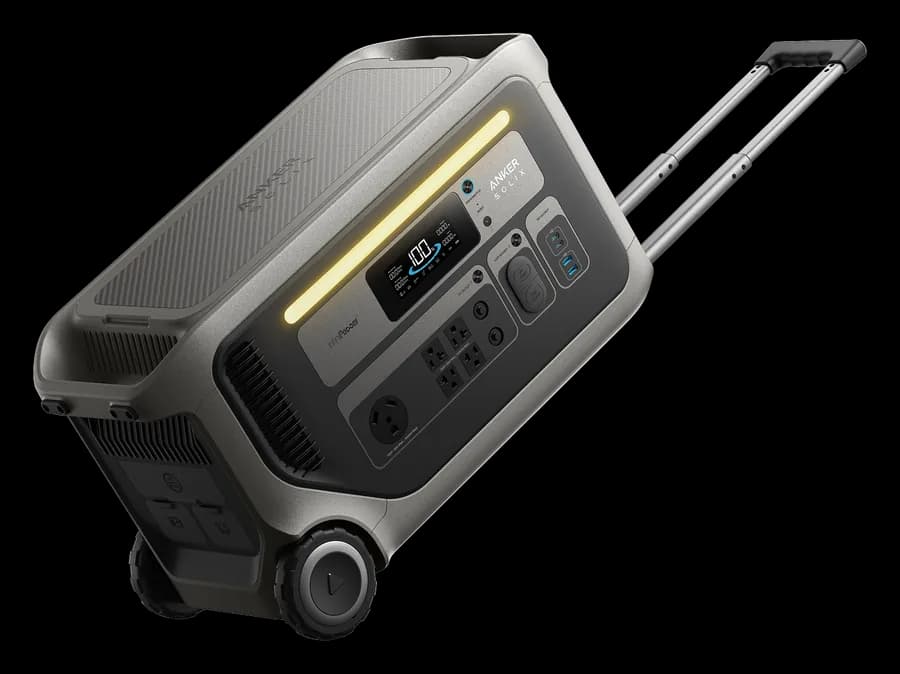
Anker SOLIX F3000
3,072 Wh and up to 2,400 W of solar across a high-voltage (up to 165 V) and a low-voltage input, so long series strings fit.
- Capacity
- 3,072 Wh
- Output
- 3,600 W
- Weight
- 91.5 lb
- UPS
- 20 ms
Paid link
Check price on AmazonWhich station fits a solar-recharged setup?
Each row runs our sizing engine for a day on battery followed by solar recharging. Open any row in the quiz to swap in your own devices.
Camping: 12 V fridge, phones, lights
0.5 kWh/day · 24 h
Open this in the quiz and change the devices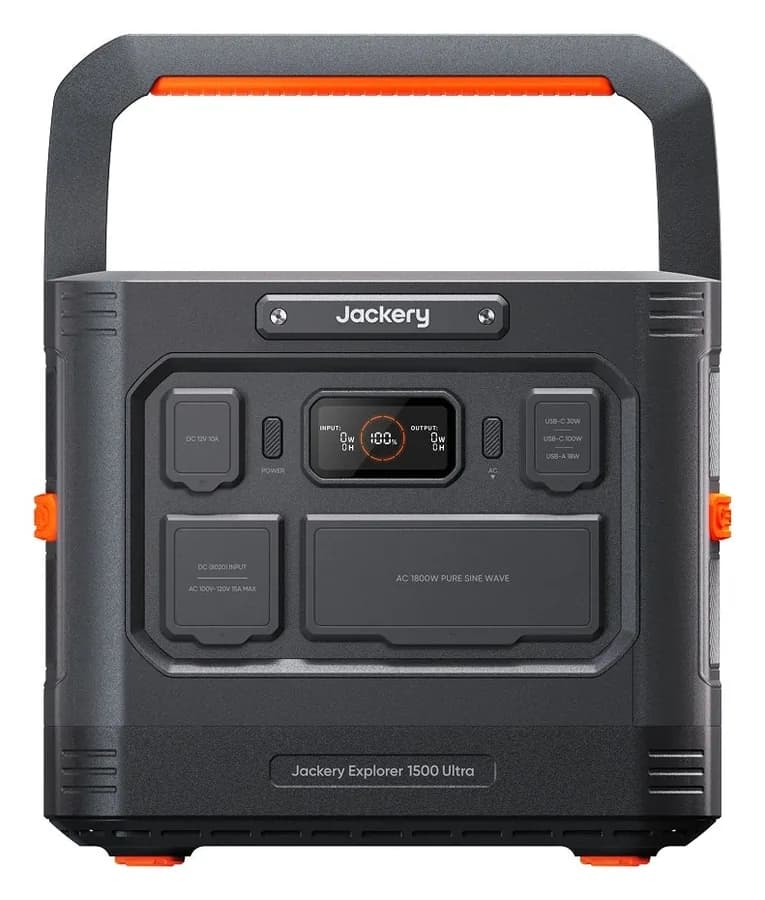
Engine's pick
Jackery Explorer 1500 Ultra
About 40 h · also Anker SOLIX C2000 Gen 2, Jackery Explorer 2000 v2
Van or RV: fan, TV, laptop, phones
1.0 kWh/day · 24 h
Open this in the quiz and change the devices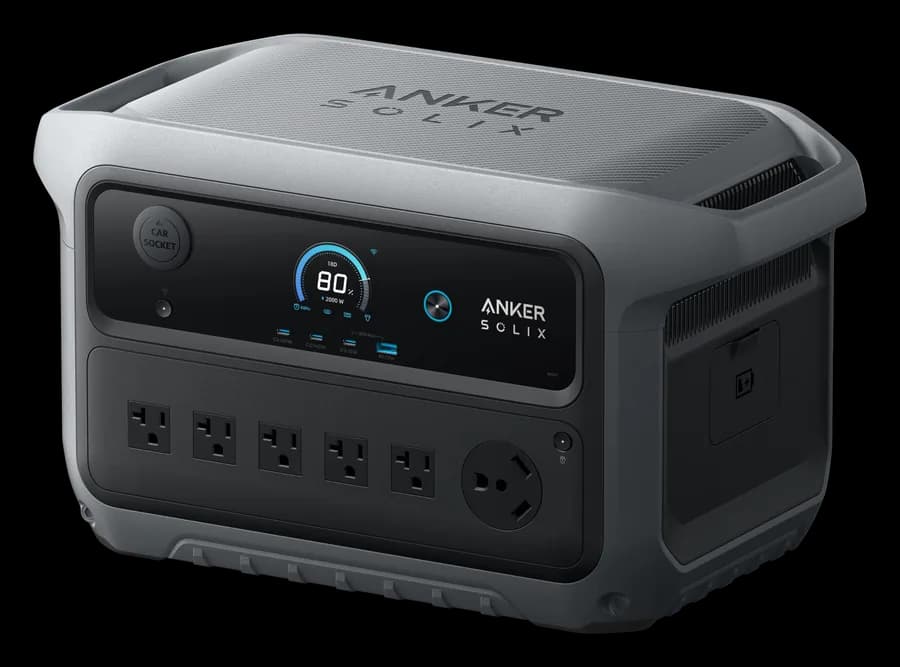
Engine's pick
Anker SOLIX C2000 Gen 2
About 28 h · also Anker SOLIX S2000, Jackery Explorer 2000 v2
Remote work: laptop and Starlink
2.4 kWh/day · 24 h
Open this in the quiz and change the devicesClosest fit
Anker SOLIX C2000 Gen 2
Covers about 14 h · also Jackery HomePower 2000 Plus v2, EcoFlow DELTA 3 Max Plus
Home outage: fridge, Wi-Fi, phones, lights
1.5 kWh/day · 24 h
Open this in the quiz and change the devices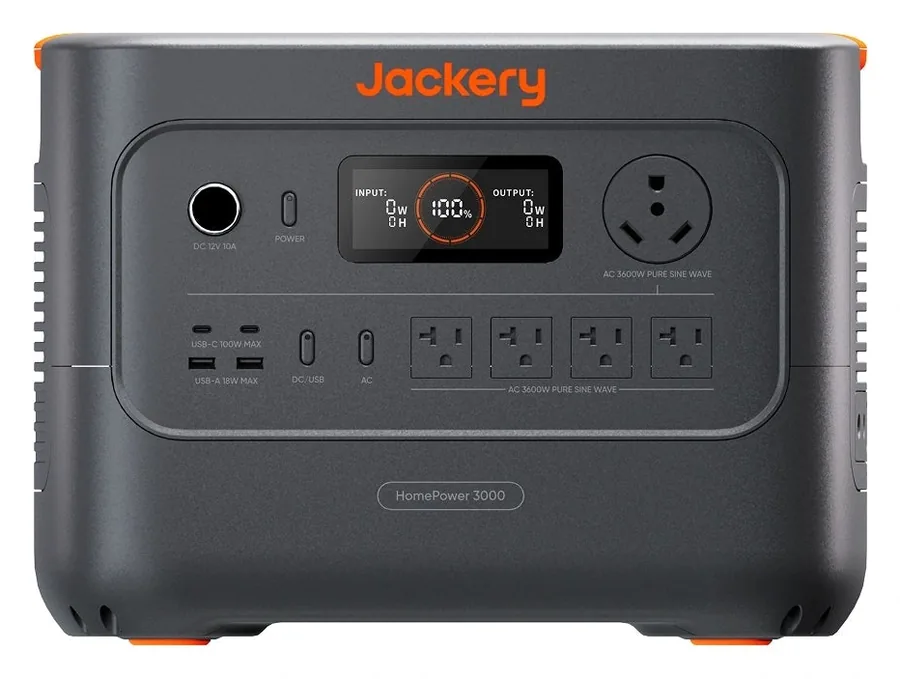
Engine's pick
Jackery HomePower 3000
About 30 h · also Jackery HomePower 3600 Plus, Anker SOLIX F3000
Picks come from the same engine as the quiz, recalculated whenever our catalog changes.
What people actually ask
What size solar panel do I need for a 1000 Wh power station?
About 400 W of panels refills it in a little under a day of good sun: at 70% of label output that's about 280 W, so roughly 3.6 hours of full sun, or about 0.7 days at 5 peak sun hours. A 200 W panel takes about 1.4 days at 5 peak sun hours and 2.4 days at 3.
Will a 100 W solar panel charge a power station?
Yes, slowly. A 100 W panel delivers about 70 W in real conditions, so it refills a 300 Wh unit in about a day of good sun but needs around three days of good sun for a 1,000 Wh unit. It's best as a top-up for small stations.
Can I connect more solar watts than my power station's input rating?
You can connect a bit more wattage, because the station caps what it draws at its rated input and real panels deliver less than their label. What you must never exceed is the input's maximum voltage. Keep a series string's rated open-circuit voltage at or below about 85% of the limit, because voltage rises in the cold.
Should I wire solar panels in series or parallel?
Series adds voltage and keeps current the same, which works better in low light and on long cable runs but has to stay under the voltage limit. Parallel adds current and keeps voltage the same, which tolerates partial shade on one panel better but has to stay under the current limit.
Is solar enough to recharge a power station in winter?
In the desert Southwest, often yes. In the Pacific Northwest and the Upper Midwest, no: Seattle averages only about 1.1 to 1.5 peak sun hours in December, and snow on a panel gives nothing. Treat solar as a top-up there and keep another way to recharge.
The bottom line
Size panels at roughly 20 to 40% of your station's watt-hours, expect about 70% of the label in practice, and check two limits on the station: maximum solar watts and maximum input voltage, with a 15% margin for cold. Then look up your peak sun hours, because a panel that refills a station in a day in Phoenix can take several days in a Seattle winter. The sizing quiz factors solar into its picks when you choose it as a recharge option.
Sources (checked 2026-11-01)
- NREL Solar Radiation Data Manual for flat-plate collectors (record)
- NREL PVWatts calculator
- pvlib: PVWatts default system losses
- Unbound Solar: US sun hours map
- Green Energy Calc: solar production in winter
- IAEI Magazine: PV module calculations (cold Voc, NEC 690.7)
- Jackery: portable solar panels in real use