After a hurricane, keep the fridge, fans, Wi-Fi, phones, a few lights and any medical device running: that takes about 2,600 to 4,300 Wh of battery per day, and because hurricane outages often last several days, plan a way to recharge. Heat is the hard part. Fans fit in the budget; a window air conditioner runs for a few hours at most. Skies often clear after the storm passes, which makes solar the most practical way to refill a station, and a generator, if you have one, stays outdoors.
As an Amazon Associate, RightSizePower earns from qualifying purchases. That never changes how models are ranked. How we recommend
How long should you plan to be without power?
The Atlantic hurricane season runs June 1 to November 30 and peaks from August through October, according to NOAA. Hurricane outages run longer than most: in 2024, major events such as hurricanes Beryl, Helene and Milton made up nearly 9 of the 11 hours the average US customer spent without power, according to the Energy Information Administration. Helene alone cut power to 5.9 million customers, and North Carolina's co-ops took about two weeks to restore 95% of them; some mountain homes waited far longer.
A sensible plan covers three days on battery and has a way to recharge for longer. That's also why a battery-only plan for a week of air conditioning doesn't work at portable sizes.
Step 1: what has to keep running?
- Food. Ready.gov says a closed fridge keeps food cold for about four hours, a full freezer about 48 hours and a half-full freezer about 24. Food above 40°F for two hours or more should be thrown away. The fridge can run in shifts, but it's usually the biggest single job for the battery.
- Medicine. Ready.gov advises discarding refrigerated medication if the power is out for more than a day, unless the label says otherwise, and having a plan for medicines that need cold storage and for powered medical devices.
- Heat and air. Fans draw about 40 W each. Run them on the station's AC outlets, or use USB fans to skip the inverter; see how long a power station runs a fan.
- Communication. Phones and a battery radio for updates; Wi-Fi only if your internet provider is still up.
- Water. If you have a sump pump, it can matter more than anything else in the house during heavy rain.
Step 2: how big a battery for each plan?
Energy per day for five hurricane plans, the battery needed for one and three days, and how long a 2 kWh and a 4 kWh unit last. Includes the battery reserve, inverter loss and standby draw.
| Plan | Per day | Battery for 24 h | Battery for 72 h | 2,048 Wh unit | 4,096 Wh unit |
|---|---|---|---|---|---|
| EssentialsFridge, Wi-Fi, three phones, three LED lights | 1.6 kWh | 2,600 Wh | 7,700 Wh | 19 h | 34 h |
| Essentials + two fansTwo box or pedestal fans, 12 hours a day | 2.5 kWh | 3,900 Wh | 11,500 Wh | 13 h | 24 h |
| Essentials + fans + CPAPAdds a CPAP with humidifier for 8 hours | 2.9 kWh | 4,300 Wh | 12,900 Wh | 11 h | 21 h |
| Essentials + sump pumpA 1/2 hp pump, running about an hour a day in total | 2.6 kWh | 3,900 Wh | 11,700 Wh | 13 h | 23 h |
| Essentials + fans + window ACAdds an 8,000 BTU window unit for 8 hours | 5.1 kWh | 7,200 Wh | 21,500 Wh | 6.9 h | 13 h |
Fridge uses its ENERGY STAR daily energy. Sump pump time depends on rain and your water table; change it in the runtime calculator if yours runs more.
Can a power station keep you cool?
Fans, yes; air conditioning, only briefly. An 8,000 BTU ENERGY STAR window unit draws about 533 W while the compressor runs. Running continuously in the heat, it empties a 2,048 Wh station in about 4.7 h. That's enough to cool a bedroom for part of the night, not to cool the house through the day. The unit also needs a moment of extra power to start; its surge isn't published, so leave headroom on the station's surge rating. Central air needs 240 V and far more power than portable stations deliver.
Spend the battery on fans and on keeping one room shaded and ventilated. Heat can be dangerous, especially for older adults, so plan where you'd go if the outage runs long.
What about the sump pump?
A 1/2 hp sump pump draws about 1,050 W while it runs and about 2,150 W for a moment at start-up, so the station's surge rating matters more than its capacity. Pump time depends entirely on the rain and your water table. Plug the pump straight into the station, and if it's hard-wired, have a licensed electrician add a plug or inlet.
Step 3: can solar keep up after the storm?
Energy the battery uses per day against what portable panels put back on a fall day on the Gulf and Southeast coast, at 4.5 peak sun hours, the low end of the usual range there. Panels deliver about 70% of their label in real conditions. A positive number means the battery gains ground each day.
| Plan | Battery use per day | With 400 W of panels | With 800 W of panels |
|---|---|---|---|
| Essentials | 2.3 kWh | −1.0 kWh/day | +0.2 kWh/day |
| Essentials + two fans | 3.4 kWh | −2.2 kWh/day | −0.9 kWh/day |
| Essentials + fans + CPAP | 3.9 kWh | −2.6 kWh/day | −1.3 kWh/day |
| Essentials + sump pump | 3.5 kWh | −2.2 kWh/day | −1.0 kWh/day |
Peak sun hours are approximate, from NREL solar radiation data; cloudy days give much less. Battery use is for a 2 kWh unit. The station must accept that much solar input: the Anker SOLIX C2000 Gen 2 takes up to 800 W, the EcoFlow DELTA Pro 3 up to 2,600 W. More in our solar panel sizing guide.
The takeaway: about 800 W of panels roughly keeps pace with the essentials on a fair fall day, while 400 W only slows the drain. Fans and other extras need more panels and a station that accepts more solar, or running the fridge in shifts. Cloudy days after a storm give much less, so start each outage with a full battery.
Bring folding panels inside before the storm and set them up once the wind has passed. Keep them fully in the sun: shade on even part of a panel cuts its output sharply. A car's 12 V socket adds only about 100 W, and never idle a car in an attached garage.
Step 4: safety lines that don't bend
- Generators stay outside. Ready.gov says generators and fuel must be used outdoors and at least 20 feet from windows, doors and attached garages. The CPSC counts an average of 85 US deaths a year from carbon monoxide from portable generators. After hurricanes Katrina and Rita, CDC investigators traced carbon monoxide poisonings almost entirely to generators run inside homes or garages; in Florida in 2004, cases peaked within three days of landfall. Install battery-powered CO alarms on every level.
- No back-feeding. Never plug a generator or power station into a wall or dryer outlet to power the house. It can electrocute line workers restoring your power. Home circuits need a transfer switch or inlet installed by a licensed electrician.
- Keep the station dry. Don't run it outdoors in rain or in standing water unless it's rated for that.
- Medical devices. Talk to your doctor about a backup plan. Utility medical programs give notice, not power: FPL says its Medically Essential Service program does not guarantee uninterrupted power or priority restoration after a storm.
Step 5: when the storm is a few days out
- Charge the power station to 100% and top up phones, battery lights and the radio.
- Turn off the station's ECO or auto-off mode so it doesn't cut the fridge or CPAP when the load drops between cycles.
- Test it: plug in the fridge and let the compressor start, and do the same with the sump pump, so you know the surge rating holds.
- Turn the fridge and freezer to their coldest settings and fill empty freezer space; keep the doors closed once the power goes out.
- Bring panels and the station indoors, above any flood level.
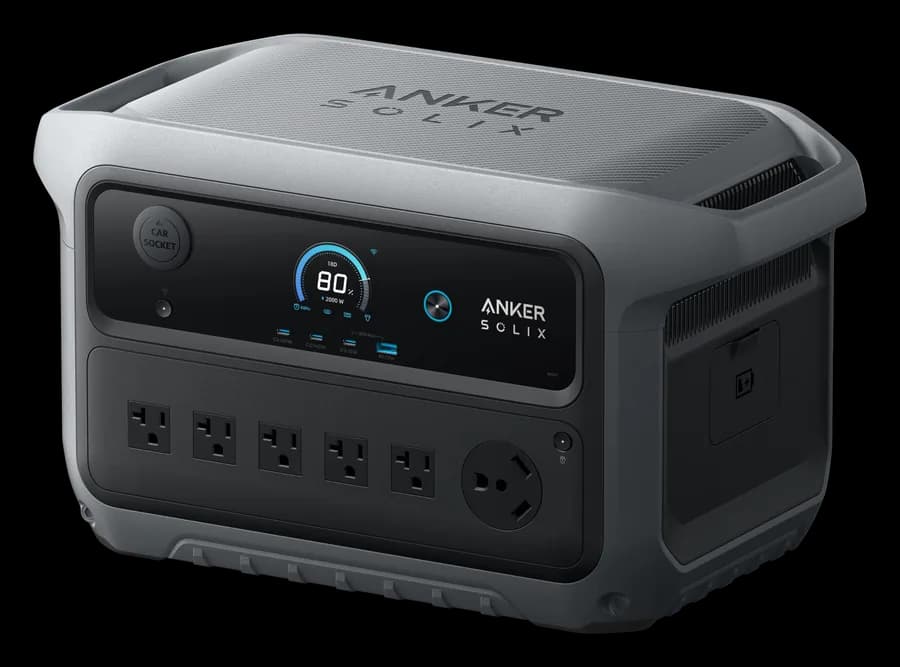
Anker SOLIX C2000 Gen 2
2,048 Wh at 41.7 lb with up to 800 W of solar input: a fridge, fans, Wi-Fi and phones for most of a day, refilled by panels after the storm.
- Capacity
- 2,048 Wh
- Output
- 2,400 W
- Weight
- 41.7 lb
- UPS
- 10 ms
Paid link
Check price on Amazon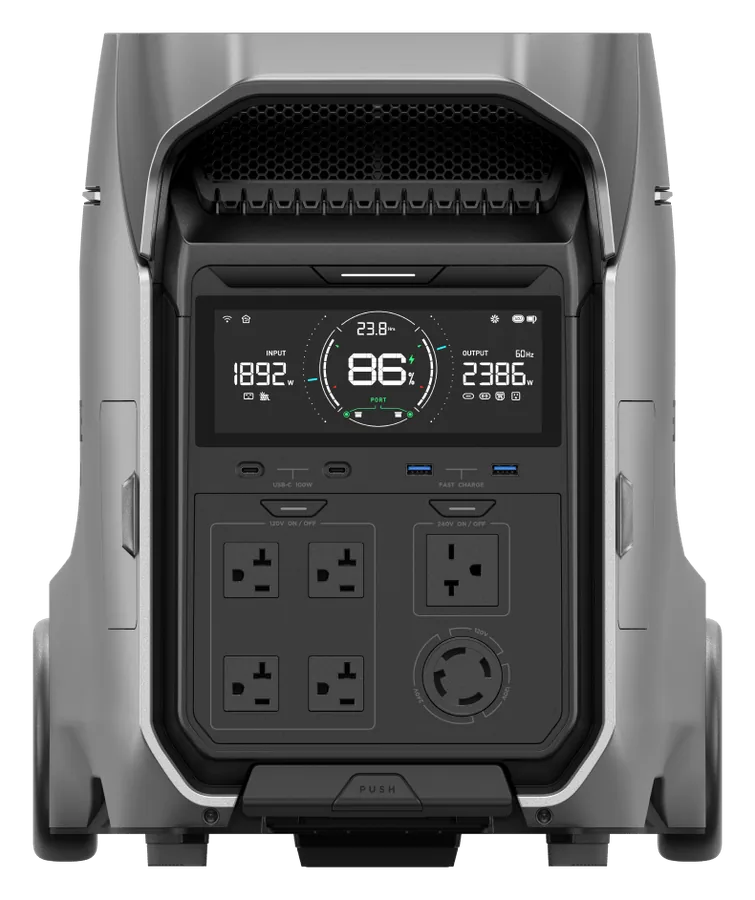
EcoFlow DELTA Pro 3
4,096 Wh, 4,000 W and up to 2,600 W of solar; expandable, and can feed home circuits through an electrician-installed transfer switch.
- Capacity
- 4,096 Wh
- Output
- 4,000 W
- Weight
- 113.5 lb
- UPS
- 10 ms
Paid link
Check price on AmazonWhich station fits your hurricane plan?
Each row runs our sizing engine on a fridge, Wi-Fi, two phones, two LED lights and a fan. Open any row in the quiz to add your own devices.
A full day on battery
1.8 kWh/day · 24 h
Open this in the quiz and change the devices
Engine's pick
Bluetti Elite 400
About 29 h · also Jackery HomePower 3000, EcoFlow DELTA Pro 3
Three days, unit stays in one place
1.8 kWh/day · 3 days
Open this in the quiz and change the devices
Engine's pick
DJI Power 1000 V2
About 4.2 days with an extra battery · also DJI Power 2000, Anker SOLIX F3000
A day on battery, then solar
1.8 kWh/day · 24 h
Open this in the quiz and change the devicesEngine's pick
EcoFlow DELTA Pro 3
About 31 h · also Bluetti Elite 400, Jackery Explorer 5000 Plus
A day, plus CPAP with switchover
2.2 kWh/day · 24 h
Open this in the quiz and change the devices
Engine's pick
EcoFlow DELTA 3
About 38 h with an extra battery · also EcoFlow DELTA 3 Plus, Anker SOLIX C2000 Gen 2
Three days, plus a sump pump
2.8 kWh/day · 3 days
Open this in the quiz and change the devices
Engine's pick
DJI Power 2000
About 5.4 days with an extra battery · also Jackery HomePower 3600 Plus, Jackery Explorer 5000 Plus
Picks come from the same engine as the quiz, recalculated whenever our catalog changes.
What people actually ask
How long does power stay out after a hurricane?
Often days, sometimes weeks. Hurricane Helene cut power to 5.9 million customers across ten states in September 2024, and North Carolina's electric co-ops took about two weeks to restore 95% of their members. In 2024, South Carolina customers averaged nearly 53 hours without power, the most of any state.
What size power station do I need for a hurricane?
For a fridge, Wi-Fi, phones and lights, about 2,600 Wh covers one day, and three days takes roughly three times that. Adding two fans brings one day to about 3,900 Wh. A practical setup pairs a 2 to 4 kWh station with solar panels, or with a generator kept outdoors, to recharge it.
Can a power station run a window air conditioner?
For a few hours, yes. An 8,000 BTU ENERGY STAR unit draws about 530 W while its compressor runs, so a 2,048 Wh station keeps it going for about 5 hours. Cooling one bedroom at night is realistic; cooling the house all day isn't.
How long is food safe in the fridge when the power goes out?
Ready.gov says a closed refrigerator keeps food cold for about four hours, a full freezer about 48 hours and a half-full freezer about 24. Throw away refrigerated food that has been above 40°F for two hours or more.
Is it safe to run a generator after a hurricane?
Only outdoors, at least 20 feet from windows, doors and attached garages, according to Ready.gov. CDC investigations after hurricanes found carbon monoxide poisonings came almost entirely from generators run inside homes or garages, with cases peaking in the first days after landfall. A battery power station has no exhaust and can run indoors.
Does my utility's medical program guarantee power after a storm?
No. FPL, for example, says its Medically Essential Service program does not guarantee uninterrupted power or priority restoration after a storm. Have your own backup and talk to your doctor about powered medical devices.
The bottom line
Size a hurricane plan for food, fans, communication and health: about 2,600 Wh covers a day of essentials, and fans and a CPAP push it past 4,000 Wh. Hurricane outages often last days, so plan to refill the station with solar once the skies clear, and keep any generator outdoors. Leave air conditioning to a few hours for one room. The sizing quiz turns your own device list into three ranked models, the comparison chart lists solar input for every model, and the power station vs generator guide covers the hybrid setup.
Sources (checked 2026-11-01)
- Ready.gov: power outages
- EIA: Today in Energy, US outage hours in 2024
- NC Electric Cooperatives: Hurricane Helene restoration
- NPR: thousands still without power two weeks after Helene
- NOAA/NWS: hurricane season dates
- CPSC: portable generator carbon monoxide deaths
- CDC MMWR: carbon monoxide poisonings after Hurricanes Katrina and Rita
- CDC MMWR: carbon monoxide poisoning after the 2004 Florida hurricanes
- FPL: Medically Essential Service
- ENERGY STAR certified residential refrigerators (dataset)
- NREL Solar Radiation Data Manual (peak sun hours)