The discounted Anker SOLIX C1000 (Gen 1) is worth it only if you mainly need a fridge, Wi-Fi and lights and want the option of one extra battery; for anything else, pay for the C1000 Gen 2. The Gen 2 has the same 1 kWh class battery but more output, a published 3,000 W surge for starting compressors and pumps, a faster UPS switchover, and it's 3.5 lb lighter.
As an Amazon Associate, RightSizePower earns from qualifying purchases. That never changes how models are ranked. How we recommend
Quick answer
- Coffee maker, microwave or pump with the fridge
- C1000 Gen 2 (3,000 W surge; Gen 1 publishes none)
- Carrying it one-handed
- C1000 Gen 2 (24.9 lb vs 28.44 lb)
- CPAP or computer on UPS
- C1000 Gen 2 (10 ms vs an unconfirmed 20 ms)
- Laptops over USB-C
- C1000 Gen 2 (three 140 W ports vs 100 W + 30 W)
- Adding a battery later
- C1000 Gen 1 (one BP1000, 2,112 Wh total)
- Most AC outlets
- C1000 Gen 1 (6 vs 5)
Specs side by side
From Anker's US product pages and spec lists, checked 2026-11-01. Rows where they differ are in darker text; starred values aren't fully confirmed by the maker.
| Spec | Anker SOLIX C1000 Gen 2 | Anker SOLIX C1000 (Gen 1) |
|---|---|---|
| Capacity | 1,024 Wh | 1,056 Wh |
| Continuous output | 2,000 W | 1,800 W |
| Surge | 3,000 W | Not published |
| Boost mode (heating loads) | None | 2,400 W |
| Battery | LiFePO4, 4,000 cycles to 80% | LiFePO4, 3,000 cycles to 80% |
| Weight | 24.9 lb | 28.44 lb |
| AC outlets | 5* | 6 |
| USB-C | 3 × up to 140 W | 2 × up to 100 W |
| 12 V car outlet | Yes | Yes |
| Wall charge, 0–100% | 49 min | 58 min |
| Solar input | 600 W, 11-60V (XT60i) | 600 W, 11-60V (XT-60); 10A at 11-32V |
| UPS switchover | ≤10 ms | ≤20 ms* |
| Extra batteries | Not expandable | Up to 2,112 Wh |
| Warranty | 5 years | 5 years |
* Not stated on the maker's spec sheet, or derived from other official figures.
What does the C1000 Gen 2 fix?
Almost everything that limits the original. Continuous output rises from 1,800 W to 2,000 W, and Anker now publishes a 3,000 W surge, so a fridge compressor can start while a coffee maker or a microwave is running. The UPS switchover is listed at 10 ms. The three USB-C ports deliver up to 140 W each, and the battery is rated for 4,000 cycles to 80% instead of 3,000. At 24.9 lb it's just under the 25 lb we treat as a one-hand carry.
Charging is faster too: Anker lists a full charge in 49 minutes, but only with UltraFast mode switched on in the app and the cells above 20 °C; normal AC charging is 1,200 W. Solar input stays at 600 W. The warranty is 5 years, the same as the Gen 1. Its five-outlet AC count comes from Anker's compare data rather than the spec sheet.
Not for you if: you're sure you'll want more than 1 kWh later. The Gen 2 can't take an extra battery; the C2000 Gen 2 is Anker's next size up.
What does the original C1000 still do better?
Two things, and the discount. It takes one Anker SOLIX BP1000 expansion battery, which doubles it to 2,112 Wh, and it has six AC outlets. Its own battery is a touch larger at 1,056 Wh, which makes no practical difference in runtime. It also has a car outlet, 600 W of solar input and a 5-year warranty.
The compromises add up. Anker publishes no surge figure: its 2,400 W number is a SurgePad rating for high-wattage devices, so we plan around the 1,800 W continuous limit, which rules out starting a fridge compressor while a coffee maker runs. The UPS switchover is blank on Anker's spec list; the 20 ms in our catalog is unconfirmed. USB-C stops at 100 W on one port and 30 W on the other. An experienced owner reports that the firmware won't take solar while AC is plugged in, and owners mention a whiny fan at high power or fast charging (the app's quiet-charge mode helps). It weighs 28.44 lb.
Not for you if: you'll run kitchen appliances or a pump alongside the fridge, carry it often, or need a dependable switchover for a CPAP or computer.
Is the discount worth it?
Yes, if your plan is a fridge, a router and some lights through an outage, and you like the idea of adding a BP1000 later to stretch into a full day of fridge power. No, if it's meant to make coffee or microwave meals during an outage, run a sump pump, go camping on your shoulder, or keep a CPAP or desktop running through a switchover. Those are the jobs the Gen 2 was built to fix, and no discount changes the specs.
How long does each run the same devices?
| Load (typical daily use) | C1000 Gen 2 | C1000 (Gen 1) | Gen 1 + BP1000 |
|---|---|---|---|
| Top-freezer fridge | 13–16 h | 13–16 h | 27–33 h |
| Fridge + Wi-Fi router + two LED bulbs | 9.3–12 h | 9.6–12 h | 19–24 h |
| CPAP, no humidifier, on the DC cable | 2.6–3.2 days | 2.7–3.3 days | 5.4–6.7 days |
| Laptop (USB-C) + Starlink Mini | 7.8–9.7 h | 8.1–10 h | 16–20 h |
Estimates from our published formula. Neither model has a published standby draw, so both use the same default. The last column adds one BP1000 (2,112 Wh total). Try your own devices in the runtime calculator.
When does the quiz engine prefer each one?
We ran five situations through the engine the quiz uses. The Gen 2 comes out ahead in 4 of 5. The Gen 1 wins only when an extra battery is a must, and it drops out when it has to be carried in one hand or start a fridge compressor alongside a coffee maker. A higher score means a better fit for that situation, not a better product overall.
| Situation | Engine prefers | Why |
|---|---|---|
| Outage night: fridge, Wi-Fi, phones | C1000 Gen 2 | Scores 86 vs 77 (Gen 2 vs Gen 1) |
| Same devices, carried in one hand | C1000 Gen 2 | C1000 (Gen 1): 28 lb is heavier than you want to carry. |
| Fridge plus a drip coffee maker overnight | C1000 Gen 2 | C1000 (Gen 1): No published surge rating, and your start-up load (about 2,200 W) exceeds its continuous output. |
| Outage night, must take an extra battery later | C1000 (Gen 1) | C1000 Gen 2: Can't add extra batteries. |
| Outage night, must switch over instantly | C1000 Gen 2 | Scores 87 vs 75 (Gen 2 vs Gen 1) |
Who should buy which
- Buy the C1000 Gen 2 if you want one 1 kWh unit that handles kitchen appliances, a sump pump's start-up, laptops and a CPAP, and that you can carry with one hand. Our C1000 Gen 2 guide goes deeper, and Explorer 1000 v2 vs C1000 Gen 2 compares its closest rival.
- Buy the discounted C1000 (Gen 1) if it's for a fridge, Wi-Fi and lights, it mostly stays in one place, and you may add a BP1000 later. Check that the listing is the C1000 or C1000X you expect.
- Buy neither if you already know you need a full day of fridge, Wi-Fi and phones on one charge: that takes about 2 kWh. What surge watts mean explains why start-up power matters as much as capacity, and the sizing quiz checks your exact devices.
Which model does the quiz pick for these situations?
Across the whole catalog, not just these two. Open any row in the quiz and swap in your own devices.
Outage night: fridge, Wi-Fi, phones
1.4 kWh/day · 10 h
Open this in the quiz and change the devices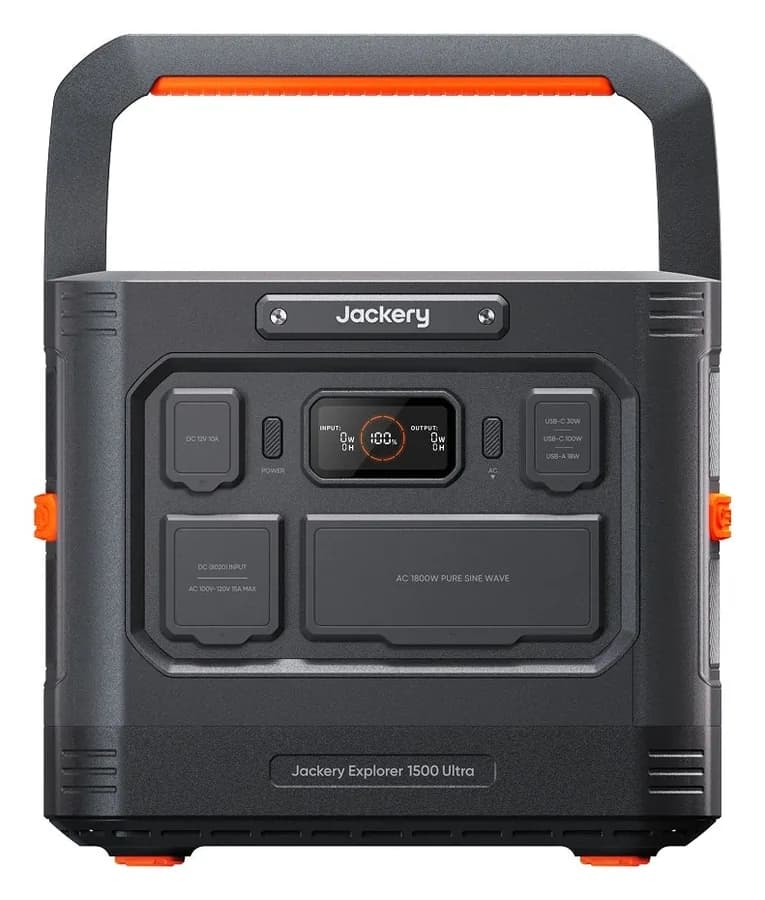
Engine's pick
Jackery Explorer 1500 Ultra
About 17 h · also Anker SOLIX C1000 Gen 2, OUPES Mega 1
Same devices, carried in one hand
1.4 kWh/day · 10 h · under 25 lb
Open this in the quiz and change the devices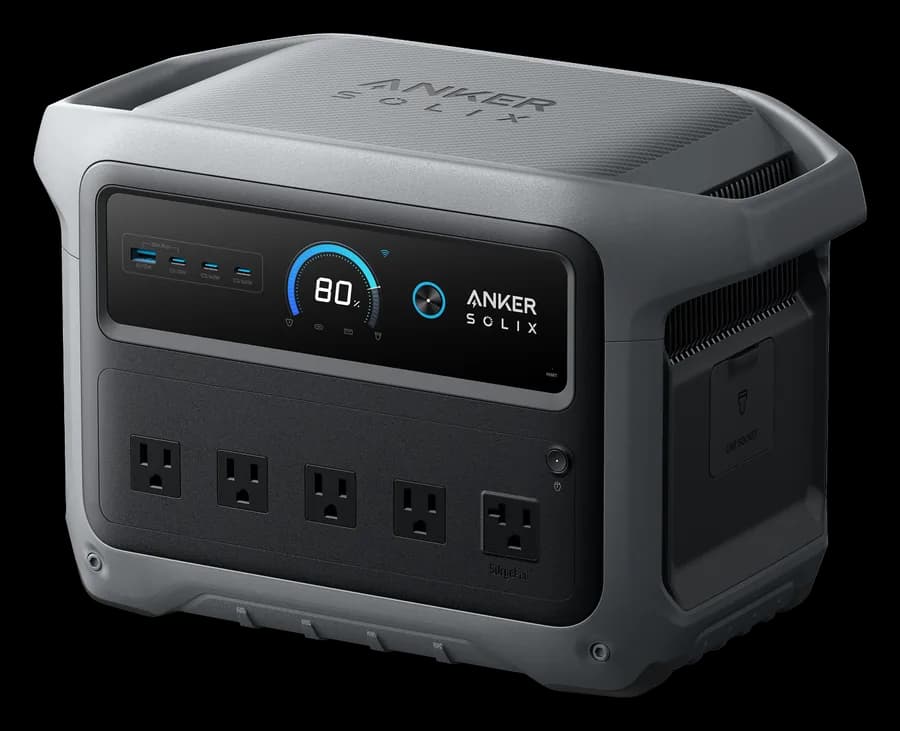
Engine's pick
Anker SOLIX C1000 Gen 2
About 11 h · also Jackery Explorer 1000 v2, Jackery HomePower 1000 Plus v2
Fridge plus a drip coffee maker overnight
1.2 kWh/day · 10 h
Open this in the quiz and change the devicesEngine's pick
Jackery Explorer 1500 Ultra
About 15 h · also Anker SOLIX C2000 Gen 2, Anker SOLIX C1000 Gen 2
Outage night, must take an extra battery later
1.4 kWh/day · 10 h · expandable
Open this in the quiz and change the devices
Engine's pick
EcoFlow DELTA 3
About 11 h · also EcoFlow DELTA 3 Plus, Anker SOLIX C2000 Gen 2
Outage night, must switch over instantly
1.4 kWh/day · 10 h · UPS
Open this in the quiz and change the devicesEngine's pick
Anker SOLIX C1000 Gen 2
About 11 h · also Jackery Explorer 1500 Ultra, EcoFlow DELTA 3
Picks come from the same engine as the quiz, recalculated whenever our catalog changes.
What people actually ask
Is the original Anker SOLIX C1000 discontinued?
It has been replaced by the C1000 Gen 2 but is still sold and often discounted. Anker's current US listing for it is titled C1000X, with the C1000's spec list. Our quiz treats it as an older model that's getting harder to find and lowers its score slightly for that.
Can the C1000 (Gen 1) run a coffee maker or a sump pump with the fridge?
A coffee maker on its own, yes. With a fridge whose compressor may kick on at the same moment, the start-up load is about 2,200 W, and about 2,310 W with a ½ hp sump pump instead. Anker publishes no surge figure for Gen 1, only a 2,400 W SurgePad rating for high-wattage devices, so we can't confirm it covers either. The Gen 2 lists a 3,000 W surge.
What is SurgePad on the C1000?
It's Anker's mode that lets high-wattage devices up to 2,400 W run on the Gen 1. We don't treat it as continuous output or as start-up power for motors, so for fridges and pumps the Gen 1's planning limit is its 1,800 W continuous rating.
Can I add a battery to either one?
Only to the Gen 1. It takes one Anker SOLIX BP1000 for 2,112 Wh in total; with it, a top-freezer fridge runs about 31 h by our estimate. The Gen 2 can't be expanded.
Can the old C1000 charge from solar while it's plugged into the wall?
Not according to an experienced owner, who reports that its firmware won't take solar power while AC is plugged in. If you want the panels to do the work during the day while the unit stays plugged in, that's a reason to choose the Gen 2.
Which recharges faster from the wall?
The Gen 2: 49 minutes to full with UltraFast mode switched on in the app and the cells above 20 °C (normal AC charging is 1,200 W). The Gen 1 lists 58 minutes with HyperFlash charging at up to 1,300 W.
The bottom line
Same battery size, same 600 W of solar, same 5-year warranty. The C1000 Gen 2 is the better power station: 200 W more output, a published surge, a 10 ms switchover, 140 W USB-C and 3.5 lb less to carry. The original C1000 earns its discount only for fridge-and-lights outage duty, where its one-battery expansion is the feature the Gen 2 lacks. Compare every model in the comparison chart.
Anker SOLIX C1000 Gen 2
A fridge, microwave or coffee maker in an outage, from a 1 kWh unit under 25 lb.
- Capacity
- 1,024 Wh
- Output
- 2,000 W
- Weight
- 24.9 lb
- UPS
- 10 ms
Paid link
Check price on Amazon
Anker SOLIX C1000 (Gen 1)
A fridge and lights in an outage from an older 1 kWh unit that can take one extra battery.
- Capacity
- 1,056 Wh
- Output
- 1,800 W
- Weight
- 28.4 lb
- UPS
- 20 ms
Paid link
Check price on Amazon