A 1,000 Wh power station runs a typical top-freezer refrigerator for about 15 hours, and a 2,000 Wh unit runs it for a little over a day. Large French-door fridges with an ice maker use about twice the energy, so expect roughly half those times. The number that decides it is your fridge's daily energy use, not the watts printed on the back.
As an Amazon Associate, RightSizePower earns from qualifying purchases. That never changes how models are ranked. How we recommend
Runtime by fridge type and power station size
Typical estimates for one appliance running alone on AC, using median ENERGY STAR daily energy, a 10% battery reserve, 15% inverter loss and standby draw. Older or larger fridges use more.
| Appliance | Per day | 500 Wh | 1,024 Wh | 2,048 Wh | 3,072 Wh | 4,096 Wh |
|---|---|---|---|---|---|---|
| Full-size refrigerator (top freezer) | 0.99 kWh | 7.7 h | 15 h | 28 h | 42 h | 47 h |
| French door or bottom-freezer refrigerator (no dispenser) | 1.48 kWh | 5.5 h | 11 h | 20 h | 31 h | 36 h |
| Side-by-side refrigerator | 1.77 kWh | 4.7 h | 9.3 h | 18 h | 26 h | 32 h |
| French door refrigerator (with ice and water dispenser) | 1.96 kWh | 4.2 h | 8.5 h | 16 h | 24 h | 29 h |
| Upright freezer | 1.20 kWh | 6.5 h | 13 h | 24 h | 36 h | 42 h |
| Chest freezer | 0.60 kWh | 11 h | 22 h | 39 h | 2.4 days | 2.6 days |
| Mini fridge | 0.67 kWh | 11 h | 21 h | 36 h | 2.3 days | 2.4 days |
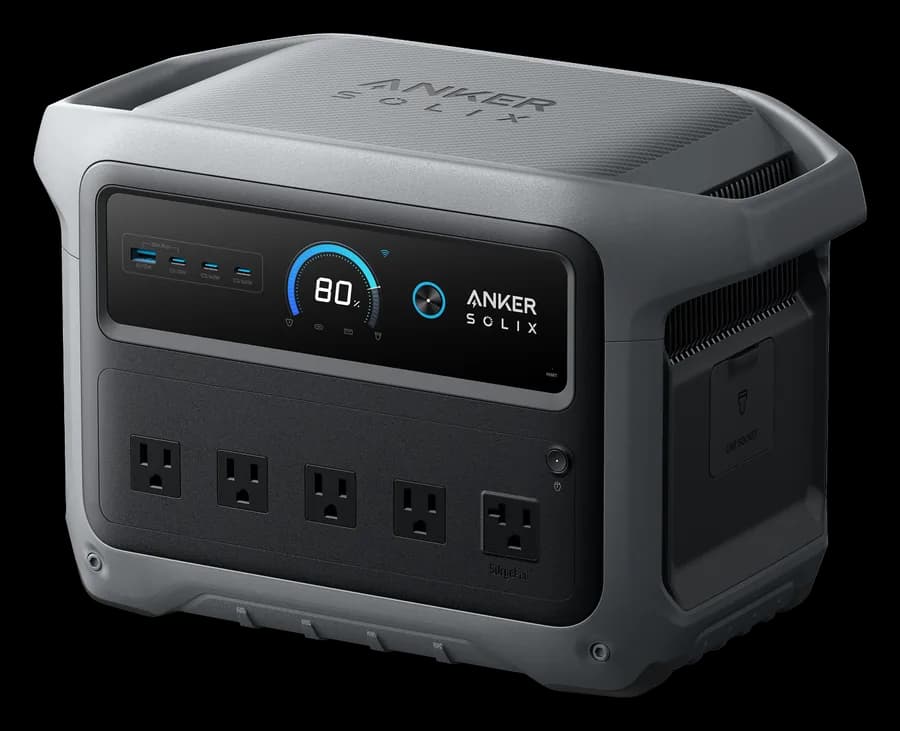
Anker SOLIX C1000 Gen 2
1,024 Wh, 2,000 W continuous and 3,000 W surge in a 24.9 lb unit; covers a top-freezer fridge through the night.
- Capacity
- 1,024 Wh
- Output
- 2,000 W
- Weight
- 24.9 lb
- UPS
- 10 ms
Paid link
Check price on Amazon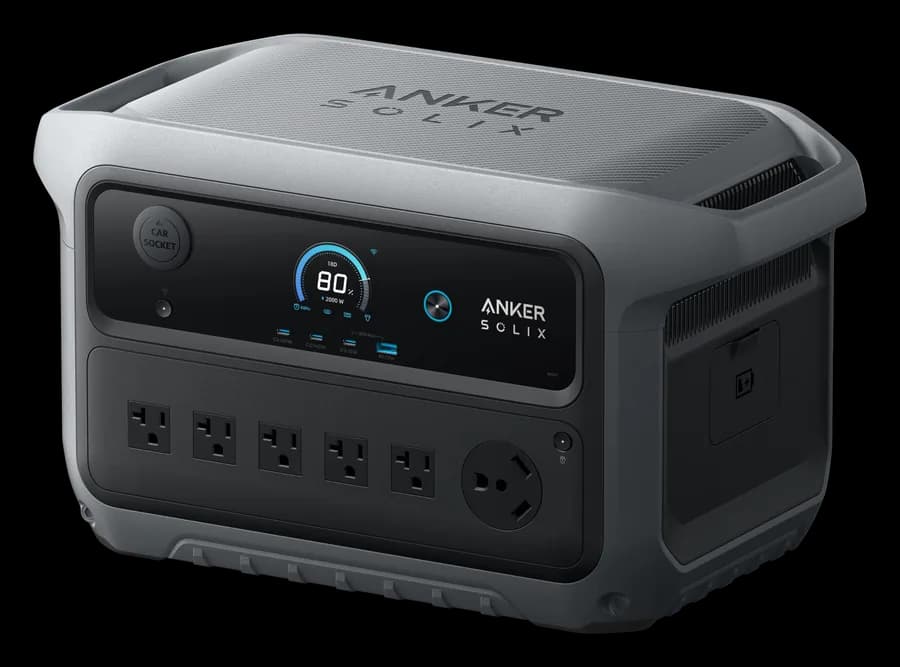
Anker SOLIX C2000 Gen 2
2,048 Wh and 4,000 W surge; runs a typical fridge for a day and adds a TT-30 outlet and an expansion battery option.
- Capacity
- 2,048 Wh
- Output
- 2,400 W
- Weight
- 41.7 lb
- UPS
- 10 ms
Paid link
Check price on AmazonWhy the watts on your fridge are the wrong number
A full-size refrigerator draws roughly 130 to 190 W while its compressor runs, but the compressor is off much of the time. Multiplying running watts by 24 hours overstates daily use by three or four times. The yellow EnergyGuide label lists energy in kWh per year; divide by 365 to get kWh per day. A median top-freezer model in ENERGY STAR's data uses about 363 kWh a year, or 0.99 kWh a day.
The opposite mistake is dividing battery capacity by that daily figure. You lose about 10% to the battery's reserve, about 15% in the inverter that turns battery power into AC, and the inverter itself draws power whenever the outlets are on, even while the compressor rests. On a 2 kWh unit that standby draw can be close to 20 W, almost half of what a modern fridge averages.
Can the station start the compressor?
Capacity tells you how long; surge tells you whether the fridge starts at all. A refrigerator compressor pulls around 1,200 W for a moment when it kicks on, according to generator and utility wattage tables. Every station in the table above needs a surge rating above that, or it will shut off with an overload warning.
Watch for boost modes. EcoFlow's X-Boost, BLUETTI's Power Lifting and similar features lower the voltage so a kettle or hair dryer runs at reduced power. They don't help a compressor start.
The setting that quietly turns your fridge off
Many power stations have an ECO or energy-saving mode that switches off the AC outlets when the load stays low. A fridge between compressor cycles looks like a low load. Jackery's Explorer 1000 v2 manual says its energy-saving mode, on by default, turns outputs off after 12 hours if the AC load is 25 W or less. Before an outage, find this setting in the app or on the screen and turn it off.
How to stretch your runtime
- Keep the doors shut. Ready.gov says an unopened refrigerator keeps food cold for about four hours without power.
- Cycle it. Running the fridge for a few hours and then switching it off for a few hours can roughly double how long a battery lasts. Use a fridge thermometer.
- Don't add the freezer and fridge together without checking. A chest freezer is efficient, but two compressors starting at once need a bigger surge rating.
- Plan the recharge. For outages longer than a day, solar panels or a car can top the station up; see the solar input of each model in the comparison chart.
Which size should you buy?
If you want the fridge through one night and the morning, a 1 kWh unit such as the Anker SOLIX C1000 Gen 2 or the Jackery Explorer 1000 v2 is enough for a typical top-freezer model. For a full day with Wi-Fi and phones on the same unit, look at 2 kWh: a fridge plus a router runs about 22 hours on 2,048 Wh. For French-door models with a dispenser, or for multi-day outages, you're into 3 kWh and above, or a smaller unit plus solar. For engine-ranked picks by fridge type and outage length, see the best power station for a refrigerator; the sizing quiz ranks models against your exact devices.
Check your own fridge
Change the fridge type, add your other devices and pick a station. If you know your fridge's kWh per year, set its watts so watts × hours matches your daily figure.
1. What you want to run
Full-size refrigerator (top freezer)
Cycles on about 26% of the time; typical use is 0.99 kWh a day.
Runtime uses daily energy, not running watts. Turn off the station's ECO/auto-off mode so it doesn't cut power between compressor cycles. Older fridges use more.
2. The power station
What people actually ask
How long will a 1000 Wh power station run a refrigerator?
About 15 hours for a typical top-freezer fridge that uses 1 kWh a day, and about 8 to 9 hours for a large French-door model with an ice and water dispenser. The difference is the fridge's daily energy use, which you can read in kWh per year on its yellow EnergyGuide label.
What size power station do I need to run a fridge for 24 hours?
For a typical top-freezer fridge, about 2,000 Wh covers a full day with margin. Large French-door or side-by-side models need about 3,000 Wh. The station also needs a surge rating of roughly 1,200 W or more to start the compressor.
Will a power station start my refrigerator's compressor?
Only if its surge rating exceeds the compressor's start-up draw, which is around 1,200 W for a full-size fridge in utility and generator tables. Most current 1 kWh units list 3,000 W or more of surge. Boost modes like X-Boost don't help, because they only work for heating appliances.
Do I need to keep the fridge plugged in all the time during an outage?
Not necessarily. A closed refrigerator keeps food cold for about four hours without power, according to Ready.gov, so some people run it for a few hours, then switch it off to stretch the battery. Check temperatures with a fridge thermometer if you do this.
Why did my power station shut off the fridge overnight?
Most likely its ECO or energy-saving mode. When the compressor cycles off, the AC load drops near zero and some units switch their outlets off. Jackery's manual, for example, says its energy-saving mode turns outputs off after 12 hours if the AC load stays at 25 W or less. Turn that mode off before relying on the station for a fridge.
The bottom line
Size a power station for a fridge by its daily kWh, not its running watts, then add 25 to 50% for inverter loss and standby draw. Make sure the surge rating clears about 1,200 W and turn ECO mode off. For most top-freezer fridges, 1 kWh gets you through a night and 2 kWh through a day.

Jackery Explorer 1000 v2
1,024 Wh, 1,500 W continuous and 3,000 W surge at 23.8 lb. Turn off its energy-saving mode before running a fridge.
- Capacity
- 1,024 Wh
- Output
- 1,500 W
- Weight
- 23.8 lb
- UPS
- 20 ms
Paid link
Check price on Amazon