The best portable power station for home backup depends on how long your outages last: a 1 kWh unit gets a fridge and Wi-Fi through the night, about 2.5 to 3 kWh covers a full day, and multi-day outages or 240 V circuits need an expandable home-backup unit. Below are our picks for five common situations. Each comes from the same engine as our sizing quiz, run on that situation's devices, so you can see exactly why it won.
As an Amazon Associate, RightSizePower earns from qualifying purchases. That never changes how models are ranked. How we recommend
Best for getting through the night
Fridge, Wi-Fi, phones and lights overnight, light enough to carry. Engine input: 10 h runtime.
Our pick
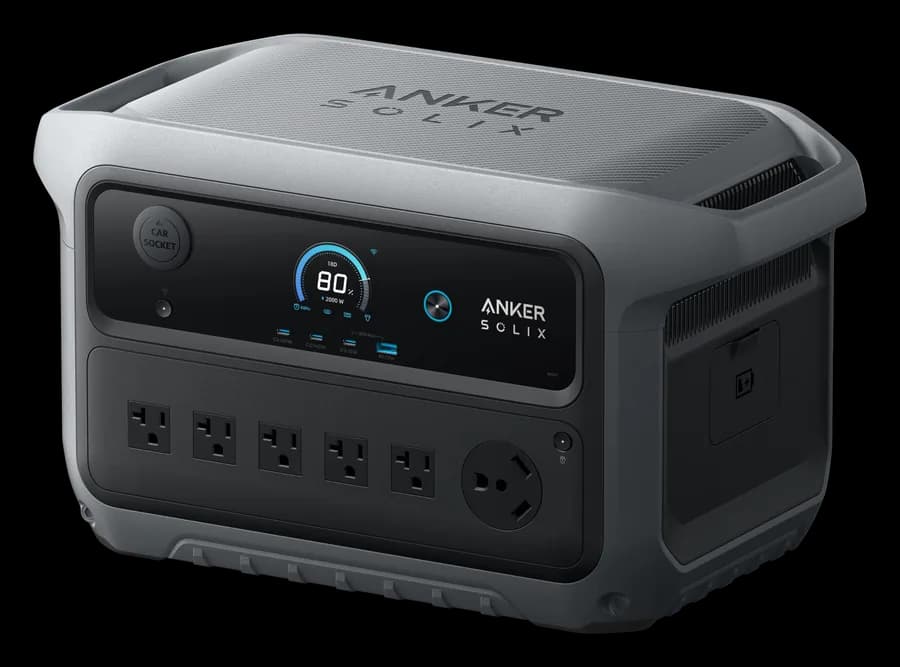
Anker SOLIX C2000 Gen 2
A fridge, sump pump or RV via the TT-30 outlet, with one extra battery to reach 4 kWh.
Black mark: the 10 h you asked for.
- Covers the start-up surge (about 1,245 W; it handles 4,000 W).
- Refills from a wall outlet in about 58 min.
- 42 lb, two-hand carry.
- Skip it if: you need 240V or more than 2400W at once.
- Capacity
- 2,048 Wh
- Output
- 2,400 W
- Weight
- 41.7 lb
- UPS
- 10 ms
Paid link
Check price on AmazonAlso a fit: Jackery Explorer 1500 Ultra (about 13 h) and Anker SOLIX S2000 (about 16 h).
Best for a full day of essentials
The same essentials for 24 hours; wheels are fine. Engine input: 24 h runtime.
Our pick
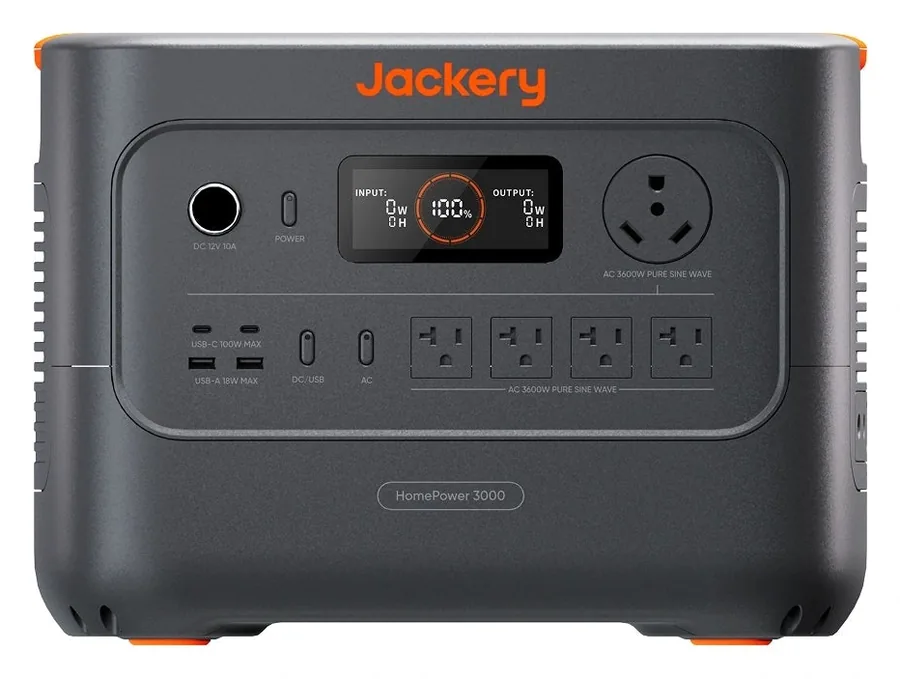
Jackery HomePower 3000
Long 120V outages with fridge and freezer, or RV use, from a non-expandable 3 kWh unit.
Black mark: the 24 h you asked for.
- Covers the start-up surge (about 1,245 W; it handles 7,200 W).
- 60 lb.
- Skip it if: you want to add batteries later; Jackery lists it in its standard (non-expandable) series.
- Capacity
- 3,072 Wh
- Output
- 3,600 W
- Weight
- 59.5 lb
- UPS
- 20 ms
Paid link
Check price on AmazonAlso a fit: Bluetti Elite 400 (about 32 h) and Jackery HomePower 3600 Plus (about 30 h).
Best for multi-day outages
Essentials for two to three days, with room to add batteries; it stays in one place. Engine input: 3 days runtime, must have expandable.
Our pick
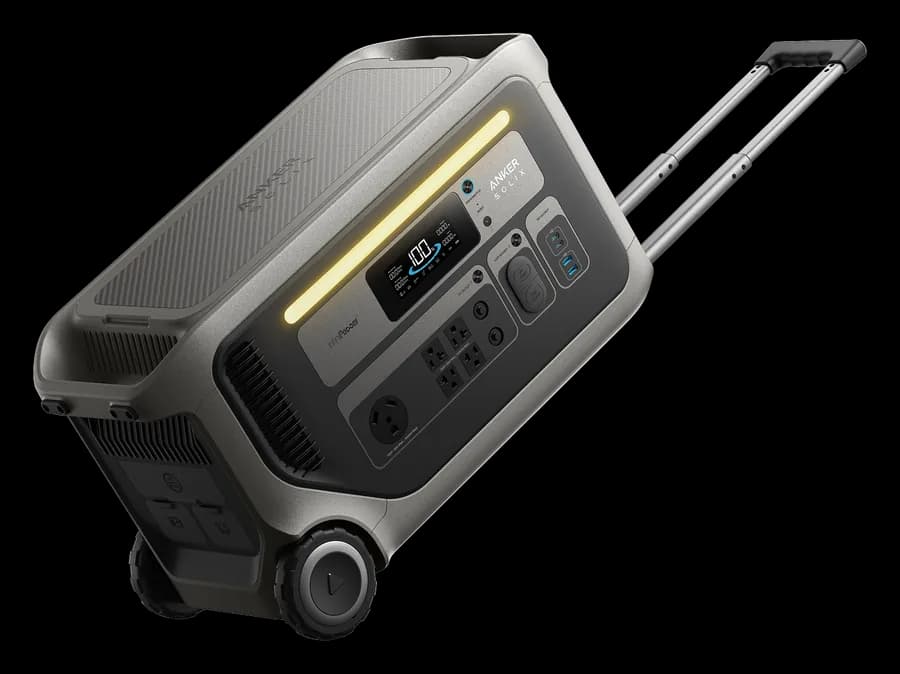
Anker SOLIX F3000
Long 120V outages or RV use through the TT-30 outlet, with up to three extra batteries.
Black mark: the 3 days you asked for.
- Covers the start-up surge (about 1,245 W; it handles 7,200 W).
- Takes up to 2,400 W of solar.
- 92 lb.
- Needs an expansion battery, bought separately, to last as long as you asked.
- Skip it if: you need 240V from one unit; that takes two units and Anker's Double Voltage Hub.
- Capacity
- 3,072 Wh
- Output
- 3,600 W
- Weight
- 91.5 lb
- UPS
- 20 ms
Paid link
Check price on AmazonAlso a fit: EcoFlow DELTA Pro 3 (about 4.3 days with extra batteries) and Jackery HomePower 2000 Plus v2 (about 4.7 days with extra batteries).
Best for a home office or CPAP that can't blink
Router, laptop and a CPAP through the night with a fast UPS switchover. Engine input: 10 h runtime, must have UPS.
Our pick
Anker SOLIX C2000 Gen 2
A fridge, sump pump or RV via the TT-30 outlet, with one extra battery to reach 4 kWh.
Black mark: the 10 h you asked for.
- 2,400 W continuous for your 60 W of devices.
- Refills from a wall outlet in about 58 min.
- 42 lb, two-hand carry.
- UPS mode: switches over in 10 ms or less.
- Skip it if: you need 240V or more than 2400W at once.
- Capacity
- 2,048 Wh
- Output
- 2,400 W
- Weight
- 41.7 lb
- UPS
- 10 ms
Paid link
Check price on AmazonAlso a fit: Jackery Explorer 1500 Ultra (about 13 h) and Anker SOLIX S2000 (about 17 h).
Best for 240 V home circuits
Fridge, sump pump and furnace blower through a transfer switch for a day. Engine input: 24 h runtime, must have 240 V.
Our pick
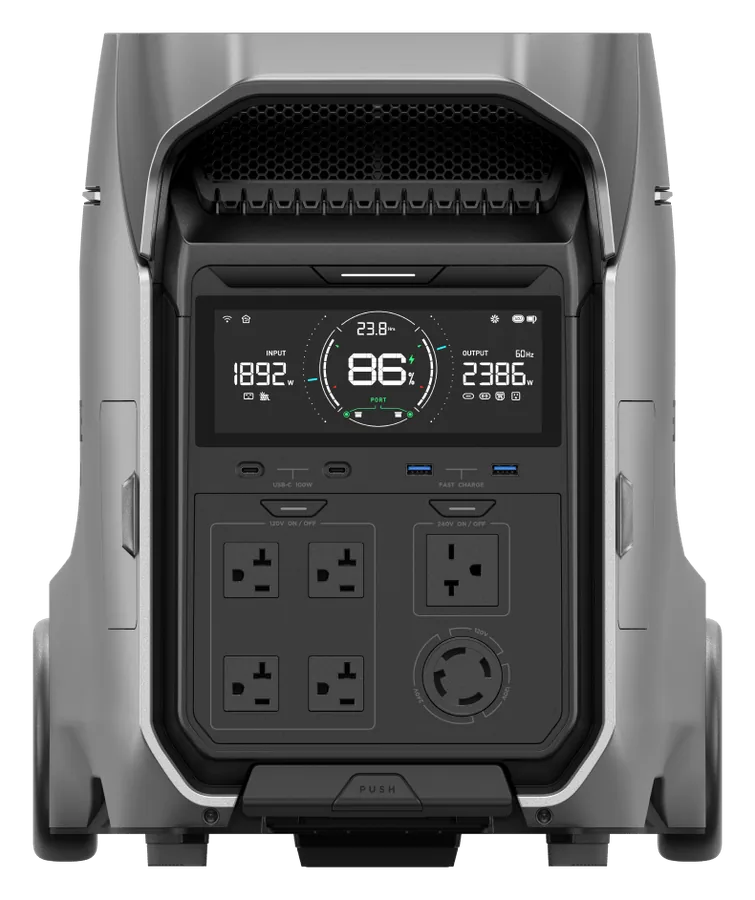
EcoFlow DELTA Pro 3
Home backup with 120/240V output for a transfer switch, well pump or dryer circuit.
Black mark: the 24 h you asked for.
- Covers the start-up surge (about 2,725 W; it handles 8,000 W).
- 114 lb.
- Needs an expansion battery, bought separately, to last as long as you asked.
- Skip it if: the unit has to be carried; it weighs over 110 lb and rolls on wheels.
- Capacity
- 4,096 Wh
- Output
- 4,000 W
- Weight
- 113.5 lb
- UPS
- 10 ms
Paid link
Check price on AmazonAlso a fit: Jackery Explorer 5000 Plus (about 6.7 days with extra batteries) and Anker SOLIX F3800 Plus (about 3 days with extra batteries).
How to choose for your house
- Start with the fridge. A typical top-freezer fridge uses about 1 kWh a day and needs around 1,200 W to start. That alone sets the floor at a 1 kWh unit with a 2,000 W-class surge rating.
- Decide how long, not how big. Overnight, a full day and two to three days are very different purchases. Most US outages are measured in hours, but winter storms and hurricanes can stretch to days.
- Check what needs 240 V. Well pumps, many furnaces and electric dryers do. Only home-backup units with split-phase output can run them, through a transfer switch installed by a licensed electrician; see how to connect a power station to your house.
- Plan the recharge. Solar, a car or a generator outdoors turns a one-day battery into a multi-day setup.
For your own list of devices, the sizing quiz runs the same engine and ranks three models; the winter storm plan covers what to keep running and what to leave off, and the refrigerator picks size a station for the fridge alone.
What people actually ask
What size power station do I need for home backup?
For a fridge, Wi-Fi, phones and lights, plan on about 1,000 Wh to get through a night and 2,500 Wh for a full day. Multi-day outages, sump pumps and furnace blowers push you to 3,000 Wh and up, usually with extra batteries or solar.
Can a portable power station power my whole house?
Not the whole house. Large home-backup units with 240 V output can run selected circuits, such as the fridge, furnace blower, well or sump pump and some lights, through a transfer switch or smart panel installed by a licensed electrician. Central air, electric ranges and electric water heaters are usually beyond them.
Is a power station better than a generator for home backup?
It's quieter, needs no fuel and can run indoors, with no carbon monoxide. A generator runs as long as you have fuel and costs less per kilowatt-hour. Many households pair a power station for overnight and indoor use with a generator outdoors to recharge it.
Do I need a UPS mode for home backup?
Only for devices that can't tolerate a blink: desktop computers, some routers and CPAP machines. Most current models switch in 10 to 20 ms. A fridge or lights don't care if power drops for a moment.
How were these picks chosen?
Each pick is the top result of our sizing engine for that scenario's devices, runtime, weight limit and requirements. The engine rules models out on hard limits first, then scores capacity fit, recharge, portability, ports, UPS and warranty. Commissions are not part of it.
The bottom line
Size home backup by the length of outage you're planning for, then check surge for the fridge and 240 V for well pumps or furnaces. For most homes that means a 1 kWh unit to carry essentials through the night, 2.5 to 3 kWh for a full day, and an expandable home-backup unit with an electrician-installed transfer switch beyond that.