In a winter storm outage, keep the fridge, Wi-Fi, phones, a few lights and any medical device running, and skip electric heat: that takes about 2,500 Wh of battery for a full day. Staying warm is the hard part. An electric blanket fits in that budget; a space heater doesn't, and a furnace blower needs a large home-backup unit plus an electrician-installed connection.
As an Amazon Associate, RightSizePower earns from qualifying purchases. That never changes how models are ranked. How we recommend
How long to plan for
Most outages are short: across the US, customers averaged about 11 hours without power in 2024, most of it from major storms, according to the Energy Information Administration. Winter storms are where the long ones come from. After Winter Storm Uri in February 2021, Texans who lost power averaged 42 hours without it in a University of Houston survey. A day and a half is a sensible minimum to plan for, with a way to recharge if your area sees ice storms.
Step 1: decide what has to keep running
Start with food, communication, light and health; add warmth only where it's efficient. A closed fridge keeps food cold for about four hours without power and a full freezer about 48 hours, according to Ready.gov, so the fridge can also be run in shifts.
Step 2: size the battery
Energy per day for four common plans, the battery needed to cover 24 hours, and how long a 2 kWh and a 4 kWh unit last. Includes the battery reserve, inverter loss and standby draw.
| Plan | Per day | Battery for 24 h | 2,048 Wh unit | 4,096 Wh unit |
|---|---|---|---|---|
| EssentialsFridge, Wi-Fi, three phones, three LED lights | 1.6 kWh | 2,600 Wh | 19 h | 34 h |
| Essentials + electric blanketAdds a queen blanket for 8 hours | 2.0 kWh | 3,200 Wh | 16 h | 29 h |
| Essentials + CPAPAdds a CPAP with humidifier for 8 hours | 2.0 kWh | 3,100 Wh | 16 h | 29 h |
| Essentials + gas furnace blowerAdds a standard furnace blower cycling all day | 5.4 kWh | 7,600 Wh | 6.5 h | 12 h |
Furnace figure assumes a standard (PSC) blower averaging about 400 W while running, on 40% of the time. Variable-speed (ECM) blowers draw much less; check your furnace's rating plate. Your own mix: runtime calculator.
Step 3: plan for the cold itself
- Keep the station indoors. LiFePO4 batteries give roughly 15% less energy around 14°F and about 35% less near −4°F, and most models won't accept a charge below 32°F.
- Expect little solar. Winter has the fewest sun hours, and panels covered by snow produce almost nothing. Treat solar as a top-up, not the plan.
- Use the car carefully. A car's 12 V socket charges a station at around 100 W, so it adds about 1 kWh in 10 hours. Only run the engine outdoors, never in an attached garage.
Step 4: safety lines that don't bend
- Generators stay outside. Ready.gov says generators must run outdoors and at least 20 feet from windows, doors and attached garages. The CPSC counts an average of 85 carbon monoxide deaths a year from portable generators. Install battery-powered CO alarms on every level.
- No back-feeding. Never connect a power station or generator to a wall outlet to power the house. Furnace and panel connections need a transfer switch or inlet installed by a licensed electrician.
- Medical devices. Ready.gov advises talking to your medical provider about a plan for powered devices. Utility medical programs can give you advance notice of planned shutoffs, but they don't guarantee power or faster restoration.
Step 5: the night before the storm
- Charge the power station to 100% and top up phones and battery lights.
- Turn off the station's ECO or auto-off mode so it doesn't cut the fridge or CPAP when the load drops.
- Test it: plug in the fridge and let the compressor start, so you know the surge rating is enough.
- Turn the fridge and freezer to their coldest settings, and keep the doors closed once the power goes out.
- Put the station where it can stay indoors, ventilated and away from water.
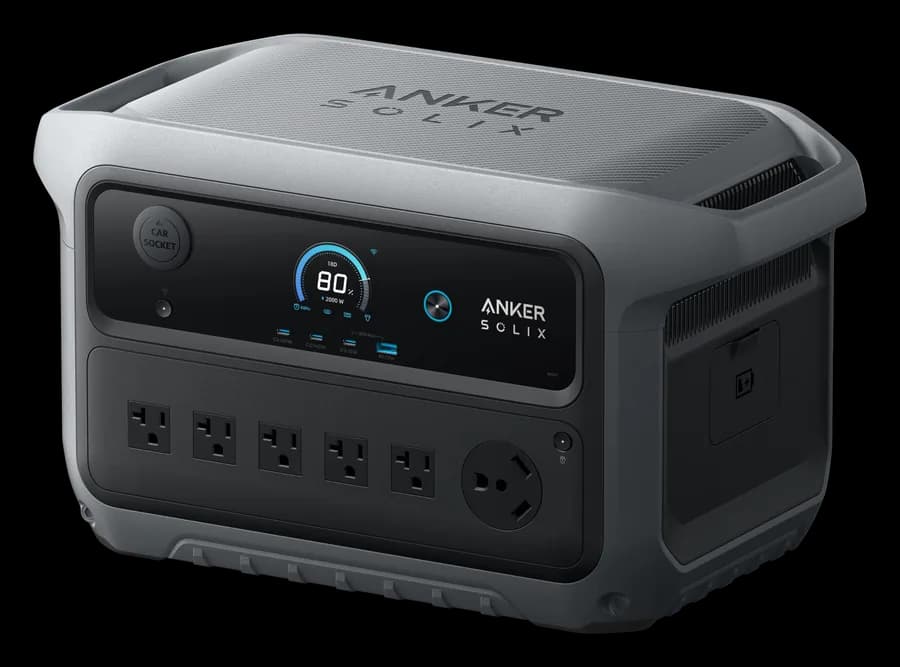
Anker SOLIX C2000 Gen 2
2,048 Wh at 41.7 lb: a fridge, Wi-Fi, phones and lights for most of a day, with one expansion battery available.
- Capacity
- 2,048 Wh
- Output
- 2,400 W
- Weight
- 41.7 lb
- UPS
- 10 ms
Paid link
Check price on Amazon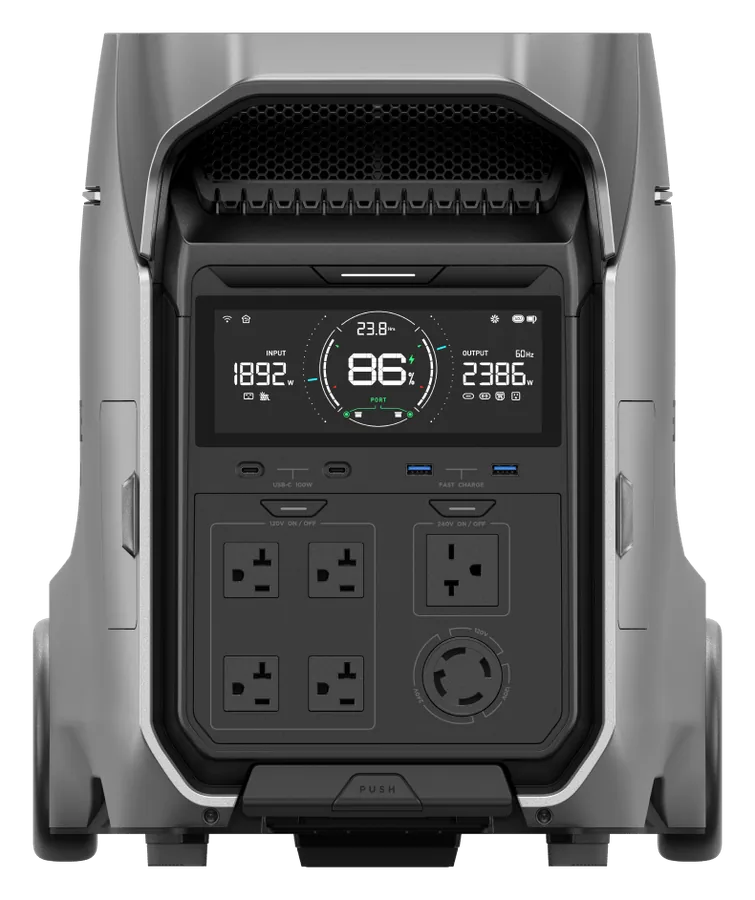
EcoFlow DELTA Pro 3
4,096 Wh, 4,000 W and 120/240 V output; expandable, and can feed home circuits through an electrician-installed transfer switch.
- Capacity
- 4,096 Wh
- Output
- 4,000 W
- Weight
- 113.5 lb
- UPS
- 10 ms
Paid link
Check price on AmazonWhat people actually ask
How long do winter storm power outages last?
Most outages are short, but winter storms produce the long ones. In a University of Houston survey after Winter Storm Uri in February 2021, Texans who lost power averaged 42 hours without it. Plan for at least a day and a half, and longer in ice-prone areas.
What size power station do I need for a winter outage?
For a fridge, Wi-Fi, phones and lights for a full day, plan on about 2,500 Wh of battery. Adding a CPAP or electric blanket pushes that to about 3,000 Wh. Keeping a standard gas furnace blower running all day can take 7,000 Wh or more, which means a large home-backup unit or recharging during the outage.
Can I keep a power station in a cold garage?
Keep it indoors if you can. LiFePO4 batteries deliver noticeably less energy in the cold, roughly 15% less around 14°F, and most models won't recharge below 32°F.
Can a power station run my furnace?
It can run the blower and controls of a gas or propane furnace, often a few hundred watts, but the furnace is hard-wired. You need a transfer switch or furnace power inlet installed by a licensed electrician. Electric furnaces and heat pumps draw far too much for portable stations.
Is it safe to use a power station indoors during a storm?
Yes. A battery power station produces no exhaust, unlike a gas generator. Portable generators cause an average of 85 carbon monoxide deaths a year in the US, according to the CPSC, and must run outdoors at least 20 feet from windows, doors and attached garages.
The bottom line
Size for food, communication, light and health first: about 2,500 Wh covers a day of essentials, and about 3,000 Wh adds a CPAP or an electric blanket. Leave electric heat out of the plan, keep the station indoors, and keep any generator outside. The sizing quiz turns your own device list into three ranked models, and our space heater guide shows why heat is the expensive part.
Sources (checked 2026-11-01)
- Ready.gov: power outages
- Ready.gov: food safety
- EIA: Today in Energy, US outage hours in 2024
- EIA Electric Power Annual, Table 11.1 (SAIDI/SAIFI)
- ENERGY STAR certified residential refrigerators (dataset)
- University of Houston Hobby School: Winter Storm Uri survey
- CPSC: portable generator carbon monoxide deaths