Yes, but only large power stations can start a 13,500 BTU RV air conditioner, and even a 2 kWh unit runs it for only about 1.6 hours. A rooftop AC draws about 1,600 W while the compressor runs, so an hour with the compressor running uses as much energy as a box fan does in 40 hours. A station is a good way to cool down before bed or ride out a short stop; running the AC all night takes a home-backup unit with extra batteries.
As an Amazon Associate, RightSizePower earns from qualifying purchases. That never changes how models are ranked. How we recommend
How long does a power station run an RV AC?
Typical runtime for the AC alone. The first number assumes the compressor runs 60% of the time (our default); the second is the compressor never stopping on a hot afternoon. Includes the battery reserve, inverter loss and standby draw.
| Rooftop AC | Running | Start-up | 2,048 Wh | 3,072 Wh | 5,040 Wh |
|---|---|---|---|---|---|
| 13,500 BTU | 1,600 W | 2,800 W | 1.6 h / 58 min | 2.4 h / 1.5 h | 3.9 h / 2.4 h |
| 15,000 BTU | 1,800 W | 3,300 W | 1.4 h / 52 min | 2.1 h / 1.3 h | 3.5 h / 2.1 h |
Running and starting watts from Honda's wattage guide and Dometic current figures quoted on the Good Sam forum. Real draw varies with outside heat and voltage at the unit.
Which power stations can start an RV AC?
To start a 13,500 BTU unit, a station needs about 1,760 W continuous (running watts plus a 10% margin) and at least 2,800 W of surge. Of the 42 current models with AC outlets we track, 23 clear both. For a 15,000 BTU unit it's 16. Use the surge rating, not a boost-mode figure: X-Boost, Power Lifting and SurgePad are for heating appliances, not compressors.
For an RV, you also want a TT-30 outlet so the rig's 30 amp cord plugs straight in. These current models have one and can start a 13,500 BTU AC:
- Anker SOLIX C2000 Gen 2: 2,048 Wh, 2,400 W continuous, 4,000 W surge, expands to 4,096 Wh.
- Bluetti Apex 300: 2,765 Wh, 3,840 W continuous, no published surge, expands to 19,354 Wh.
- Anker SOLIX F3000: 3,072 Wh, 3,600 W continuous, 7,200 W surge, expands to 12,288 Wh.
- EcoFlow DELTA 3 Ultra Plus: 3,072 Wh, 3,600 W continuous, 7,200 W surge, expands to 11,264 Wh.
- Jackery HomePower 3000: 3,072 Wh, 3,600 W continuous, 7,200 W surge.
- Jackery HomePower 3600 Plus: 3,584 Wh, 3,600 W continuous, 7,200 W surge, expands to 21,504 Wh.
- EcoFlow DELTA Pro: 3,600 Wh, 3,600 W continuous, 7,200 W surge, expands to 10,800 Wh.
- Anker SOLIX F3800 Plus: 3,840 Wh, 6,000 W continuous, 9,000 W surge, expands to 26,880 Wh.
- EcoFlow DELTA Pro 3: 4,096 Wh, 4,000 W continuous, 8,000 W surge, expands to 12,288 Wh.
Anker notes that the TT-30 outlet on the C2000 Gen 2 is limited to 20 A, which still covers one rooftop AC but not the AC plus a microwave.
What a soft-start kit does and doesn't do
A soft starter such as Micro-Air's EasyStart or Dometic's SmartStart ramps the compressor motor up instead of hitting it with full voltage. The EasyStart listing says this cuts starting current by 65 to 75% compared with the compressor's locked-rotor current. That can bring an RV AC within reach of a station whose surge rating would otherwise trip.
What it doesn't change is the running draw. Once started, the AC still pulls its full running watts, so a soft start makes no difference to the runtimes in the table above. Fit one because your station can't start the AC, not to make the battery last longer.
TT-30 is 120 V, not 240 V
The TT-30 outlet is the standard 30 amp RV plug: 120 V, up to 3,600 W. It looks nothing like the L14-30 twist-lock on home-backup units, which carries 120/240 V for a house transfer switch. Don't adapt one to the other. If your station has no TT-30, an adapter from a 20 A outlet works for lighter loads, but the station's per-outlet limit still caps what the RV can draw.
Realistic ways to use a station with an RV AC
- Cool down, then switch off. An hour of AC at a stop or before bed is what a 2 to 3 kWh station handles well.
- All night takes a home-backup system. Eight hours of a 13,500 BTU unit at 60% compressor time needs about 10.3 kWh of battery. Of the TT-30 models above, Bluetti Apex 300, Anker SOLIX F3000, EcoFlow DELTA 3 Ultra Plus, Jackery HomePower 3600 Plus, EcoFlow DELTA Pro, Anker SOLIX F3800 Plus, EcoFlow DELTA Pro 3 can reach that with extra batteries.
- Recharge matters more than capacity. Rooftop solar or driving with alternator charging puts back part of what the AC used; shore power or a generator is the only way to run it all day. Run a generator outdoors only, at least 20 feet from windows, doors and vents, because of carbon monoxide.
- Fans for the rest. A box fan at about 40 W runs for many hours on what the AC uses in one.

EcoFlow DELTA 3 Ultra Plus
3,072 Wh with a TT-30 outlet; about 2.4 hours of a 13,500 BTU AC cycling, and it expands to 11,264 Wh.
- Capacity
- 3,072 Wh
- Output
- 3,600 W
- Weight
- 74.3 lb
- UPS
- 10 ms
Paid link
Check price on Amazon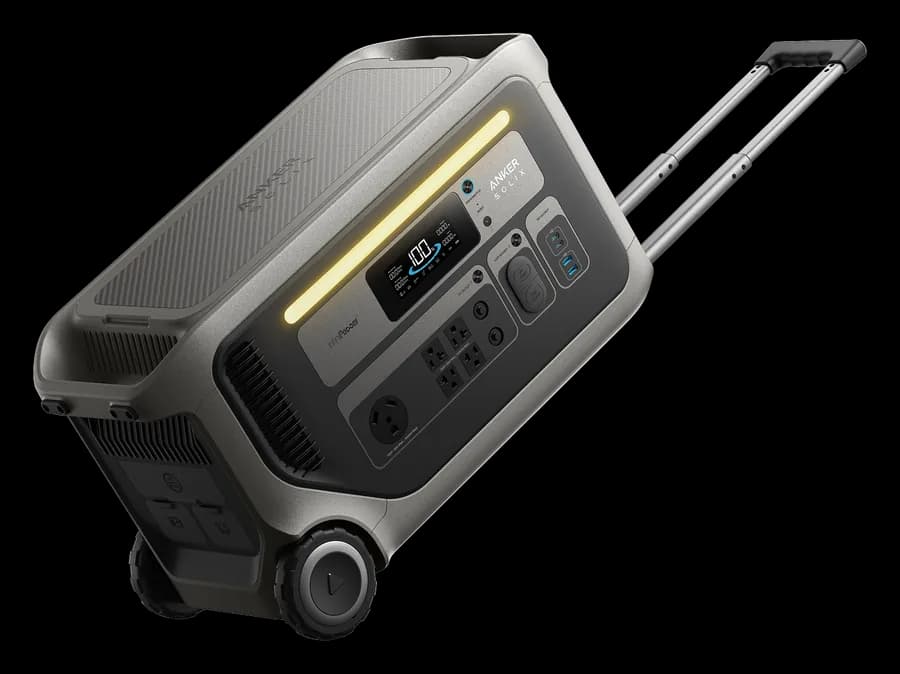
Anker SOLIX F3000
3,072 Wh, 3,600 W and a TT-30 outlet; up to three extra batteries take it to 12,288 Wh for a night of AC.
- Capacity
- 3,072 Wh
- Output
- 3,600 W
- Weight
- 91.5 lb
- UPS
- 20 ms
Paid link
Check price on AmazonWhich station fits your RV plan?
A 13,500 BTU rooftop AC run through our quiz engine under different plans. The quiz assumes 6 hours of AC a day at 60% compressor time; open any row to change the devices or hours.
AC for one night, station stays put
5.8 kWh/day · 10 h
Open this in the quiz and change the devices
Closest fit
Jackery Explorer 5000 Plus
Covers about 6.4 h · also EcoFlow DELTA Pro 3, Anker SOLIX F3800 Plus
AC plus fan, TV and laptop
6.7 kWh/day · 10 h
Open this in the quiz and change the devicesClosest fit
Jackery Explorer 5000 Plus
Covers about 5.6 h · also EcoFlow DELTA Pro 3, Anker SOLIX F3800 Plus
Under $2,000
5.8 kWh/day · 10 h
Open this in the quiz and change the devices
Closest fit
EcoFlow DELTA Pro
Covers about 4.6 h · also Jackery HomePower 3600 Plus, Jackery HomePower 3000
A full day, on wheels
5.8 kWh/day · 24 h
Open this in the quiz and change the devices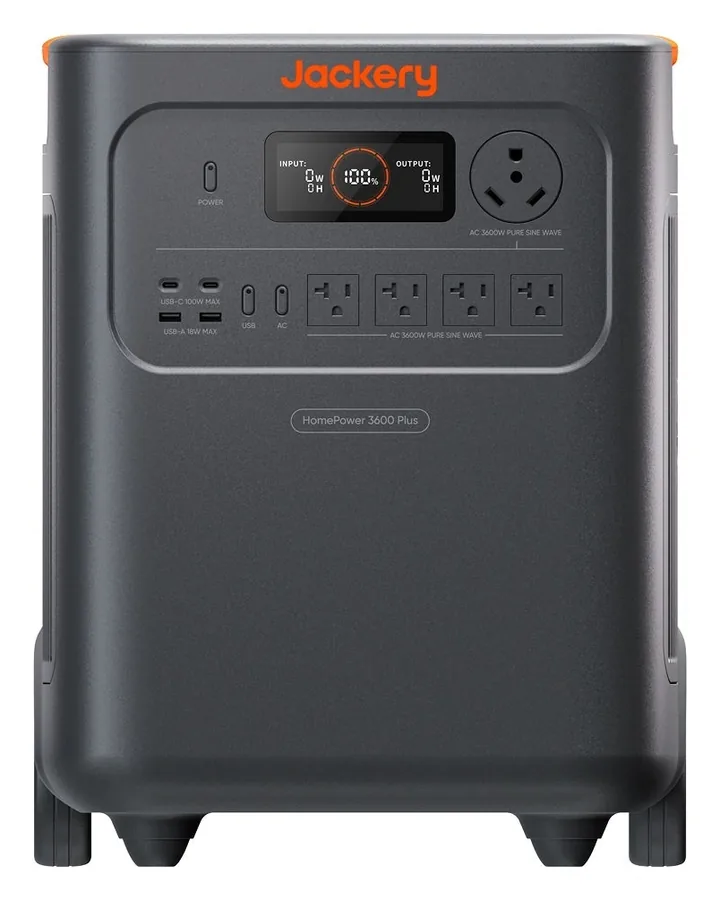
Engine's pick
Jackery HomePower 3600 Plus
About 2.6 days with an extra battery · also Anker SOLIX F3000, Jackery HomePower 2000 Plus v2
Recharging from rooftop solar
5.8 kWh/day · 24 h
Open this in the quiz and change the devicesEngine's pick
Anker SOLIX F3000
About 37 h with an extra battery · also EcoFlow DELTA Pro 3, Jackery Explorer 5000 Plus
Picks come from the same engine as the quiz, recalculated whenever our catalog changes.
Check your own rig
Set the AC's hours, add the rest of your rig and pick a station. If your AC's sticker lists running amps, multiply by 120 for watts. The full runtime calculator has the same tool on its own page.
1. What you want to run
RV rooftop AC (13,500 BTU)
Cycles on about 60% of the time.
A soft-start kit cuts the start surge, not the running watts.
Fan (box or pedestal)
TV (50–55 in, LED)
Bright or HDR picture modes draw more. A streaming stick adds only a few watts.
2. The power station
What people actually ask
Can a 2000 Wh power station run an RV air conditioner?
Several can start a 13,500 BTU rooftop unit, but it runs for only about an hour and a half with the compressor cycling 60% of the time, and under an hour if it never stops. That's enough to cool the rig down before bed, not to sleep with the AC on.
How big a power station do I need to run an RV AC all night?
About 10 kWh of battery for 8 hours of a 13,500 BTU unit at 60% compressor time, once inverter loss and standby draw are counted. Only expandable home-backup units with extra batteries reach that.
Does a soft-start kit let a smaller power station run my RV AC?
It helps with starting, not with running. The listing for Micro-Air's EasyStart says it cuts the starting current by 65 to 75% versus the compressor's locked-rotor current, so a station with less surge can start it, but the AC still draws its full running watts and empties the battery just as fast.
Can I plug my RV's 30 amp cord into a power station?
Yes, if the station has a TT-30 outlet, which supplies 120 V like campground shore power. TT-30 is not the same as the 240 V L14-30 outlet on home-backup units. Without a TT-30 you need an adapter, and the station's own outlet limit still applies.
Will boost modes like X-Boost help run an RV AC?
No. Boost modes lower the voltage so heating appliances run at reduced power. Compressors and motors need the full surge rating, and Anker says SurgePad isn't suited to air conditioners.
The bottom line
A power station can run an RV air conditioner if it has roughly 1,800 W continuous and 2,800 W of surge, ideally with a TT-30 outlet. Expect about an hour and a half per 2 kWh of battery. Use it to cool down at a stop; for a night of AC you need a home-backup unit with extra batteries, or shore power. Compare surge, TT-30 and expansion in the comparison chart, or let the quiz rank models for your whole rig.