A 1,000 Wh power station runs a typical 40 W box or pedestal fan for about 16 h nonstop, and a small 288 Wh unit runs it for about 4.5 h. A fan is one of the cheapest ways to spend a battery in a summer outage: two fans on a 1 kWh station still last about 8.7 h, while a window air conditioner empties the same battery in a few hours.
As an Amazon Associate, RightSizePower earns from qualifying purchases. That never changes how models are ranked. How we recommend
How many hours by station size?
Typical nonstop runtime, including the 10% battery reserve, inverter loss and the station's standby draw.
| Setup | 288 Wh | 512 Wh | 1,024 Wh | 2,048 Wh |
|---|---|---|---|---|
| One box or pedestal fan40 W, typical | 4.5 h | 8.1 h | 16 h | 28 h |
| One fan on high, or a window fan70 W, top of the range | 2.8 h | 5 h | 9.8 h | 18 h |
| Two fans80 W | 2.5 h | 4.4 h | 8.7 h | 16 h |
| One fan + Wi-Fi router and modem55 W | 3.5 h | 6.2 h | 12 h | 22 h |
Fan watts from the Honda generator wattage guide (40 W running) and FirstEnergy (70 W window fan). Your fan's label lists its rated watts; low speed draws less.
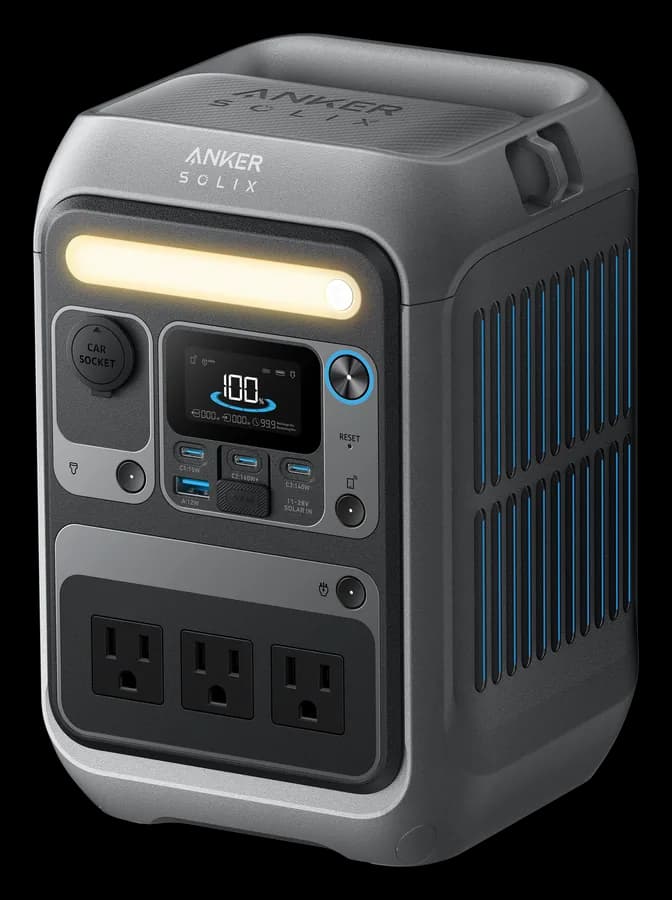
Anker SOLIX C300
288 Wh and 300 W at 9.1 lb: about 4.5 h of a box fan, with USB-C left for phones.
- Capacity
- 288 Wh
- Output
- 300 W
- Weight
- 9.1 lb
- UPS
- 10 ms
Paid link
Check price on Amazon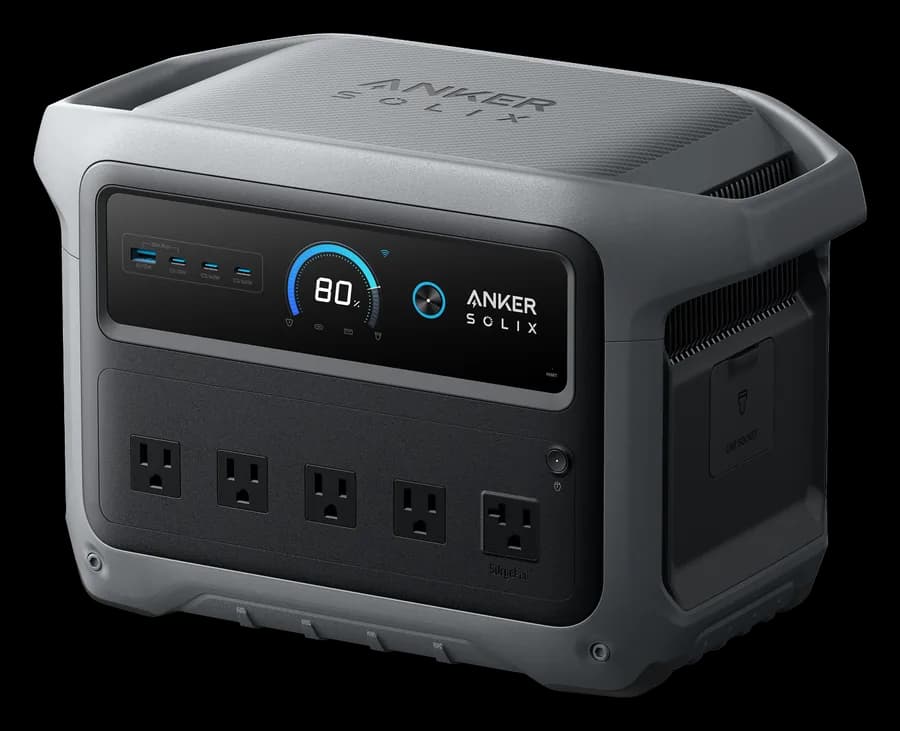
Anker SOLIX C1000 Gen 2
1,024 Wh at 24.9 lb: about 16 h of one fan, or about 8.7 h of two.
- Capacity
- 1,024 Wh
- Output
- 2,000 W
- Weight
- 24.9 lb
- UPS
- 10 ms
Paid link
Check price on AmazonHow much power does a fan use?
A box or pedestal fan draws about 40 W in the Honda generator sizing guide, roughly 35 to 70 W depending on size and speed. FirstEnergy lists a window fan at 70 W. One hour of a 40 W fan is 40 Wh at the fan; the station spends about 47 W from the battery because its inverter loses about 15%.
On a load this small, the station's own standby draw matters. We assume about 10 W for a small unit with AC switched on, which is a quarter of what the fan itself uses. That's why a 288 Wh station gets 4.5 h, not the seven hours that dividing capacity by 40 W suggests.
Can it start the fan?
Yes. A fan motor needs about 120 W for a moment to start, and even 300 W stations handle that. Starting only becomes a question when the fan shares the station with a fridge or an air conditioner; see surge watts explained.
Why would the station switch the fan off?
ECO or energy-saving mode. BLUETTI's ECO mode is on by default and shuts AC off when the load stays below about 40 W on the AC70P, and a box fan on its low setting can sit under that. Jackery's energy-saving mode waits until the AC load has been 25 W or less for 12 hours, so a single fan usually stays on. Before a hot night, turn the mode off or lower its threshold.
How do you get the most out of a battery in a summer outage?
- Run the fan on low and point it at people, not the room. Low speed sits at the bottom of the 35 to 70 W range.
- Use a fan with a USB or 12 V option if you have one: running from the station's DC ports skips the inverter and its standby draw.
- Pre-cool with AC, then switch to fans. An air conditioner runs for hours, not nights; see whether a power station can run a window AC.
- Keep the fridge first. If food and medicine share the battery, size for the fridge, then add fans. The best station for a refrigerator covers that sizing.
- Plan for heat. A fan doesn't lower the air temperature, and heat is dangerous, especially for older adults. Know where you'd go if the outage runs long. The hurricane outage plan covers the rest of the list.
Which station fits your summer nights?
One fan through a night (8 hours of use in a 10-hour window) on a unit you can carry in one hand, then one change per row. Each row runs our quiz engine on the full catalog.
One fan overnight, one hand
0.3 kWh/day · 10 h
Open this in the quiz and change the devicesAnker SOLIX768 WhEngine's pick
Anker SOLIX C800X / C800 Plus
About 15 h · also Anker SOLIX C1000 Gen 2, EcoFlow RIVER 2 Pro
Two fans overnight
0.6 kWh/day · 10 h
Open this in the quiz and change the devicesEngine's pick
Anker SOLIX C1000 Gen 2
About 11 h · also Jackery Explorer 1000 v2, Jackery HomePower 1000 Plus v2
Fan and Wi-Fi overnight
0.7 kWh/day · 10 h
Open this in the quiz and change the devicesEngine's pick
Anker SOLIX C1000 Gen 2
About 14 h · also Anker SOLIX C800X / C800 Plus, Jackery Explorer 1000 v2
Fan and fridge for a full day
1.3 kWh/day · 24 h
Open this in the quiz and change the devices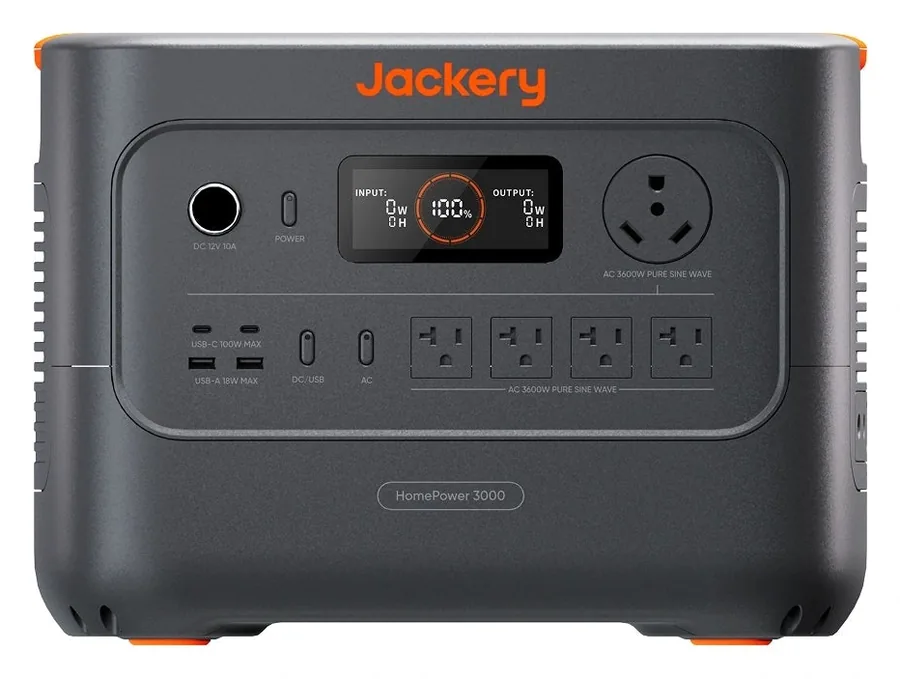
Engine's pick
Jackery HomePower 3000
About 34 h · also Bluetti Elite 400, Jackery HomePower 3600 Pro Max
One fan overnight, under $500
0.3 kWh/day · 10 h
Open this in the quiz and change the devicesAnker SOLIX768 WhEngine's pick
Anker SOLIX C800X / C800 Plus
About 15 h · also Anker SOLIX C1000 Gen 2, EcoFlow RIVER 2 Pro
Picks come from the same engine as the quiz, recalculated whenever our catalog changes.
Check your own fan
Enter your fan's watts from its label, set the hours and add anything else on the station. The full runtime calculator covers every device in our data.
1. What you want to run
Fan (box or pedestal)
Wi-Fi router + modem
A combo gateway sits at the low end; separate modem and router at the high end.
2. The power station
What people actually ask
How long will a 1000 Wh power station run a fan?
About 16 h for a typical 40 W box or pedestal fan running nonstop, and about 9.8 h for a 70 W fan on high. Two fans together get about 8.7 h. Those figures include the battery reserve, inverter loss and the station's standby draw.
How many watts does a box fan use?
About 40 W in the Honda generator sizing guide, with a range of roughly 35 to 70 W by size and speed; FirstEnergy lists a window fan at 70 W. The motor needs about 120 W for a moment to start, which even 300 W stations supply.
Can a small power station run a fan all night?
A 288 Wh unit runs a 40 W fan for about 4.5 h, short of a full night. An 8-hour night takes a station of about 507 Wh once losses and standby draw are counted, so a 500 Wh-class unit is the realistic minimum.
Why did my power station turn the fan off?
Probably its ECO or energy-saving mode. BLUETTI's ECO mode, on by default, shuts the AC outlets off when the load stays below about 40 W on the AC70P, and a box fan on low can draw less than that. Turn the mode off or set its threshold lower before running a fan overnight.
Is a fan enough to stay safe in a summer outage?
Not in extreme heat. A fan moves air, it doesn't cool it, and heat is dangerous, especially for older adults. Use the fan to make a shaded room bearable, keep a plan for where you'd go if the outage runs long, and see the window AC guide for what short bursts of cooling cost.
Who should buy which
- A fan for an evening or a nap: a 300 W, 288 Wh unit like the Anker SOLIX C300.
- One fan through a full night: a 500 Wh-class unit or larger.
- Two fans overnight: a 1 kWh unit like the Anker SOLIX C1000 Gen 2; add Wi-Fi and phones and it falls a little short of a 10-hour night.
- A fan plus the fridge: about 3 kWh for a full day, plus solar for longer; see the home backup picks.
The bottom line
A fan is a light load: about 16 h of a 40 W box fan per 1 kWh, and a full night from a 500 Wh-class station. Turn off ECO mode so a fan on low doesn't get cut, and put the fridge and medical devices ahead of comfort. For your full outage list, take the sizing quiz or compare models in the chart.