Yes, most power stations of 1,000 Wh and up can run a window air conditioner, but a 1 kWh unit keeps an 8,000 BTU AC going for only about 1.4 to 2.4 hours. Starting the compressor is rarely the problem; capacity is. Cooling one bedroom through a whole night takes a 3 kWh-class unit or more, and a smaller AC or a fan stretches every watt-hour further.
As an Amazon Associate, RightSizePower earns from qualifying purchases. That never changes how models are ranked. How we recommend
How long does a power station run a window AC?
Typical runtime for one ENERGY STAR window unit alone. The first number assumes the compressor runs 60% of the time (our default); the second is a heat-wave afternoon with the compressor never stopping. Includes the battery reserve, inverter loss and standby draw.
| Window AC | Running | Start-up | 1,024 Wh | 2,048 Wh | 3,072 Wh |
|---|---|---|---|---|---|
| 5,000–6,000 BTU | 397 W | 1,191 W* | 3.2 h / 1.9 h | 6.2 h / 3.8 h | 9.3 h / 5.7 h |
| 8,000 BTU | 533 W | 1,599 W* | 2.4 h / 1.4 h | 4.7 h / 2.9 h | 7 h / 4.3 h |
| 10,000 BTU | 667 W | 2,200 W | 1.9 h / 1.2 h | 3.8 h / 2.3 h | 5.7 h / 3.4 h |
| 12,000 BTU | 800 W | 2,400 W* | 1.6 h / 58 min | 3.2 h / 1.9 h | 4.7 h / 2.9 h |
Running watts are the ENERGY STAR median for each size (BTU ÷ CEER). *Start-up not published for these sizes; shown as an estimate of three times running watts. The 10,000 BTU figure is Honda's for an older fixed-speed unit.
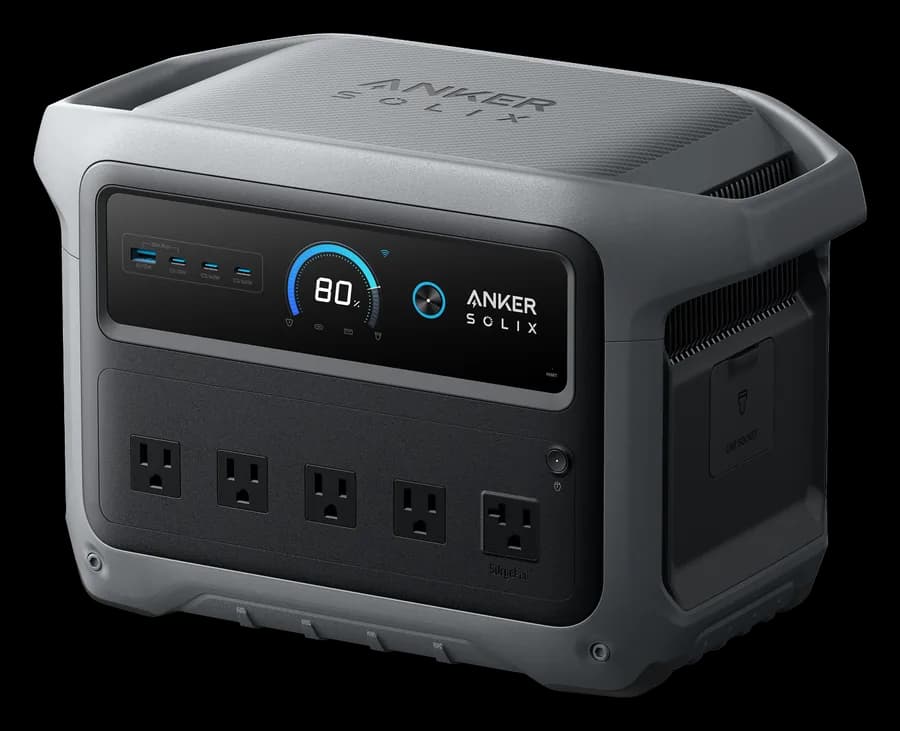
Anker SOLIX C1000 Gen 2
2,000 W continuous and 3,000 W surge at 24.9 lb; about 2.4 hours of an 8,000 BTU unit cycling.
- Capacity
- 1,024 Wh
- Output
- 2,000 W
- Weight
- 24.9 lb
- UPS
- 10 ms
Paid link
Check price on Amazon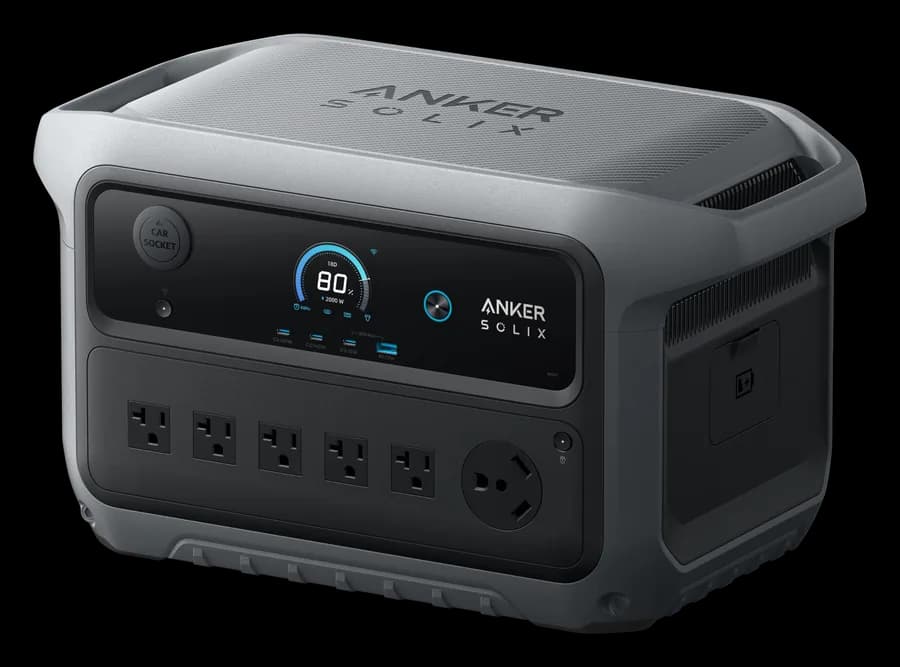
Anker SOLIX C2000 Gen 2
2,048 Wh and 4,000 W surge; about 4.7 hours of an 8,000 BTU unit, and an extra battery takes it to 4,096 Wh.
- Capacity
- 2,048 Wh
- Output
- 2,400 W
- Weight
- 41.7 lb
- UPS
- 10 ms
Paid link
Check price on AmazonWhy an AC empties a battery so fast
An 8,000 BTU ENERGY STAR window unit draws about 533 W while its compressor runs. That's modest next to a space heater, but an AC runs for hours. At 60% compressor time it uses about 2.6 kWh over an 8-hour night, more than double what a 1 kWh station can deliver once you take off the battery's reserve and the roughly 15% the inverter loses turning battery power into AC.
The 60% figure is an assumption, not a measurement. On a mild evening in a shaded room the compressor may rest half the time; on a 100°F afternoon in a west-facing room it may never stop. That's why the table shows both. Older and non-ENERGY STAR units draw more: Champion's wattage chart lists a typical window AC at 1,200 W running.
Can the station start the compressor?
A compressor motor pulls several times its running current for a fraction of a second as it starts. Honda lists an older 10,000 BTU window unit at 2,200 W to start. Of the 42 current models with AC outlets we track, 32 cover that start-up and its running draw with a 10% margin, and 32 cover our estimate for a 12,000 BTU unit. Most 300 to 500 Wh units can't start anything above a 5,000 BTU AC.
Use the station's surge (peak) rating for this. EcoFlow's X-Boost, BLUETTI's Power Lifting and Anker's SurgePad lower the voltage so heating appliances run at reduced power; they don't help a compressor start, and Anker says SurgePad isn't suited to air conditioners.
Inverter window units and soft starts
An inverter (variable-speed) window AC ramps its compressor up gradually, so it starts more gently than a fixed-speed unit, and once the room is cool it slows down instead of cycling hard on and off. Neither ENERGY STAR nor the makers publish the start-up draw, so we can't give you a number, but if you're buying an AC to pair with a battery, an inverter model is the easier load.
Getting through a summer heat wave
Grid emergencies during heat waves, like those in Texas and California, usually mean rolling outages of a few hours rather than days. For that, a 2 kWh unit running a small window AC in one closed room covers a few hours of cooling. For longer outages:
- Cool one room, not the house. A 5,000 BTU unit in a closed bedroom uses about 397 W versus 800 W for a 12,000 BTU unit.
- Pre-cool, then switch to a fan. A box fan draws about 40 W, so a 1 kWh station runs one for about 16 h; more in how long a power station runs a fan.
- Set the thermostat higher. Fewer compressor hours is the only way to stretch the same battery.
- Plug the AC straight into the station. Skip extension cords and power strips, and keep the station in the shade with room to vent.
- Recharge during the day. Solar panels refill the station while the sun is up; check each model's solar input in the comparison chart.
If your outage plan also includes a fridge, CPAP or medication that needs refrigeration, size for those first and treat the AC as what's left over. Heat-related illness is the real risk; Ready.gov's guidance on extreme heat applies whether or not the AC runs.
Which station fits your cooling plan?
The same 8,000 BTU window unit, run through our quiz engine under different plans. The quiz assumes 8 hours of AC a day at 60% compressor time; open any row to change the devices or hours.
AC through one night
2.6 kWh/day · 10 h
Open this in the quiz and change the devices
Engine's pick
Jackery Explorer 5000 Plus
About 14 h · also Bluetti Elite 400, EcoFlow DELTA Pro 3
AC and a fan, two-hand carry
2.9 kWh/day · 10 h
Open this in the quiz and change the devicesClosest fit
Anker SOLIX C2000 Gen 2
Covers about 5.2 h · also Jackery HomePower 2000 Plus v2, DJI Power 2000
AC and a fridge for a full day
3.5 kWh/day · 24 h
Open this in the quiz and change the devices
Engine's pick
EcoFlow DELTA 3
About 24 h with an extra battery · also EcoFlow DELTA 3 Plus, DJI Power 1000 V2
AC and a fridge, recharging with solar
3.5 kWh/day · 24 h
Open this in the quiz and change the devices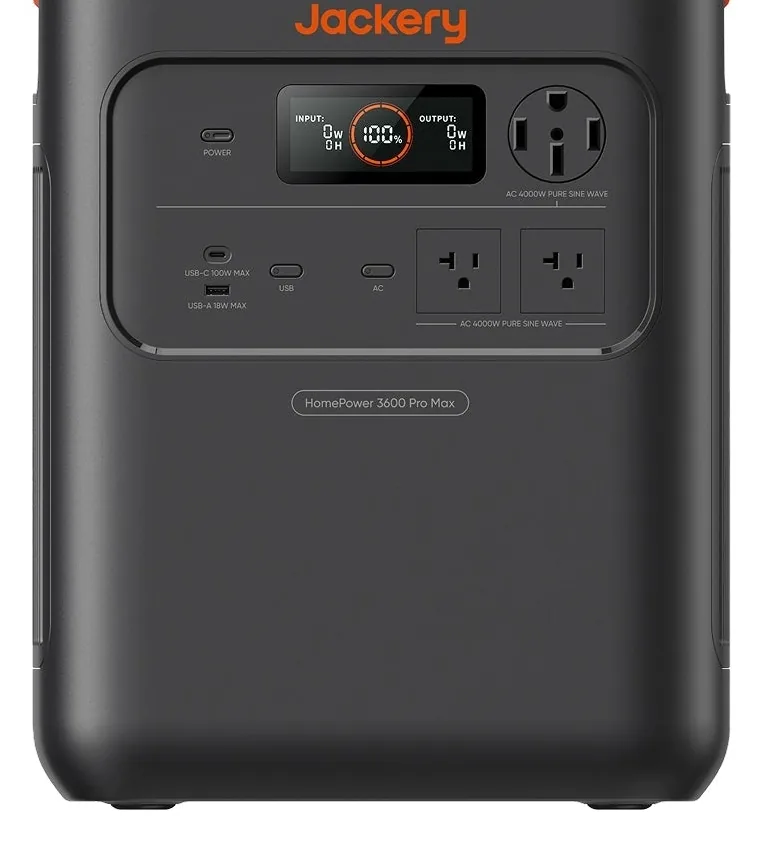
Engine's pick
Jackery HomePower 3600 Pro Max
About 4 days with an extra battery · also Anker SOLIX F3000, Jackery HomePower 2000 Plus v2
Picks come from the same engine as the quiz, recalculated whenever our catalog changes.
Check your own AC
Pick your AC size, set the hours, and pick a station. If your AC's label lists amps, multiply by 120 for watts. Use the full runtime calculator to save more devices.
1. What you want to run
Window AC (8,000 BTU)
Cycles on about 60% of the time.
Based on ENERGY STAR units; older units draw more. Start surge isn't published, so leave headroom.
Fan (box or pedestal)
2. The power station
What people actually ask
How long will a 1000 Wh power station run a window AC?
About 2.4 hours for an 8,000 BTU ENERGY STAR unit if the compressor runs 60% of the time, and about 1.4 hours if it runs nonstop on a hot afternoon. A 5,000 BTU unit lasts roughly a third longer; a 12,000 BTU unit about a third less.
What size power station do I need to run a window air conditioner overnight?
For 8 hours of an 8,000 BTU unit cycling at 60%, plan on roughly 3,500 Wh of battery once inverter loss and standby draw are counted. That's a 3 kWh home-backup unit with an extra battery, or a 2 kWh unit plus a recharge.
Will a power station start my window AC's compressor?
Most 1 kWh and larger models can. Compressors pull several times their running watts for a moment; Honda lists an older 10,000 BTU unit at 2,200 W to start. Check the station's surge rating, not its boost-mode figure.
Is an inverter window AC better on a power station?
Usually yes. Inverter (variable-speed) window units ramp the compressor up gradually instead of slamming it on, so the start-up draw is lower, and they slow down rather than cycle once the room is cool.
Can a power station run a portable air conditioner instead?
It can, but expect less time. Portable ACs are less efficient than window units of the same BTU and often draw around 1,000 W, so check the label and set its watts in the calculator.
The bottom line
A power station can run a window AC, and most 1 kWh models start one easily, but you get a couple of hours of cooling per kilowatt-hour, not a night. For a few hours of a heat-wave outage, a 1 to 2 kWh unit and a small AC in one room works. For overnight cooling, look at 3 kWh and above with an expansion battery, or plan on solar. The sizing quiz ranks models against your exact devices, and our home backup guide covers the rest of an outage plan.