Yes, a power station can run a pellet stove: once it's lit, the auger and fans draw only about 150 W, so a 2 kWh unit keeps it going for about 9.5 h. The catch is ignition, which pulls about 500 W for several minutes, so the station needs at least 550 W of continuous output. That makes a pellet stove one of the most efficient ways to stay warm on battery in a winter outage: the pellets make the heat, and the battery only runs the motors.
As an Amazon Associate, RightSizePower earns from qualifying purchases. That never changes how models are ranked. How we recommend
How long will it run by station size?
The stove running nonstop once lit, with the battery reserve, inverter loss and standby draw included. Heat setting changes the draw most.
| Heat setting | 1,024 Wh | 2,048 Wh | 3,072 Wh | 4,096 Wh |
|---|---|---|---|---|
| Low heat, about 80 W | 8.7 h | 16 h | 25 h | 30 h |
| Typical, about 150 W | 4.9 h | 9.5 h | 14 h | 18 h |
| High heat, about 300 W | 2.5 h | 5 h | 7.5 h | 9.6 h |
Running watts from owner and manual figures quoted on hearth.com (80 to 300 W, about 150 W typical; our confidence is low). Your stove's rating plate or manual lists its own figures. At a steady 150 W the stove uses about 3.6 kWh a day.
How much power does a pellet stove draw at start-up?
Far more than when it's running. To light the pellets, most stoves heat an electric igniter while the fans and auger start, and in our data that takes the stove to about 500 W, against about 150 W once the fire is established. Owner-quoted figures for specific stoves range a little either side, so check your rating plate.
The difference from a fridge compressor is how long that lasts. A compressor surge is over in a moment, which a station's surge rating covers. Ignition runs for several minutes, so treat it as a continuous load: with the usual 10% margin, the station should be rated for at least 550 W continuous. Of the 42 current models with AC outlets we track, 4 fall short, including Anker SOLIX C300, EcoFlow RIVER 3, Jackery Explorer 300.
Which station makes sense for a winter outage?
Our engine ran these situations against every model that clears the ignition draw. Overnight is the common case: the closest unit under 50 lb, the Anker SOLIX C2000 Gen 2, covers about 9.5 h of a 10-hour night at a typical setting, so turn the heat down a notch or pick a bigger unit on wheels.
Overnight, on a unit you can carry
The stove running all night (10 hours) on a station under 50 lb. About 3.6 kWh a day at the devices.
Closest fit
Anker SOLIX C2000 Gen 2
The line marks the 10 h you asked for; the low end of the range falls short.
- 2,400 W continuous for your 500 W of devices.
- Refills from a wall outlet in about 58 min.
- 42 lb, two-hand carry.
- 2,400 W continuous, enough for the ignition draw.
- Covers about 9.5 h of the 10 h you asked for. Recharge once, cut a device or add an extra battery to close the gap.
Also a fit: Jackery HomePower 2000 Plus v2 (about 9.5 h) and DJI Power 2000 (about 9.5 h).
Overnight with room to spare
The same night on a bigger unit on wheels. About 3.6 kWh a day at the devices.
Engine's pick
Jackery HomePower 3000
The line marks the 10 h you asked for.
- 3,600 W continuous for your 500 W of devices.
- 60 lb.
- 3,600 W continuous, enough for the ignition draw.
Also a fit: Bluetti Elite 400 (about 17 h) and Jackery HomePower 3600 Pro Max (about 16 h).
A full day
The stove for 24 hours on a unit that stays in one place, extra batteries allowed. About 3.6 kWh a day at the devices.
Engine's pick
DJI Power 1000 V2
The line marks the 24 h you asked for.
- 2,400 W continuous for your 500 W of devices.
- Refills from a wall outlet in about 56 min.
- 31 lb, two-hand carry.
- 2,400 W continuous, enough for the ignition draw.
- Needs an expansion battery, bought separately, to last as long as you asked.
- Some specs couldn't be confirmed from the maker: continuousW.
- An older model that's getting harder to find.
Also a fit: DJI Power 2000 (about 4.3 days with an extra battery) and Anker SOLIX F3000 (about 2.4 days with an extra battery).
The stove and the fridge for a day
Pellet stove plus a top-freezer fridge for 24 hours, on wheels. About 4.6 kWh a day at the devices.
Engine's pick
DJI Power 1000 V2
The line marks the 24 h you asked for.
- Covers the start-up surge (about 1,350 W; it handles 2,400 W).
- Refills from a wall outlet in about 56 min.
- 31 lb, two-hand carry.
- 2,400 W continuous, enough for the ignition draw.
- Needs an expansion battery, bought separately, to last as long as you asked.
- Some specs couldn't be confirmed from the maker: continuousW.
- An older model that's getting harder to find.
Also a fit: Jackery HomePower 1000 Plus v2 (about 43 h with an extra battery) and DJI Power 2000 (about 3.5 days with an extra battery).
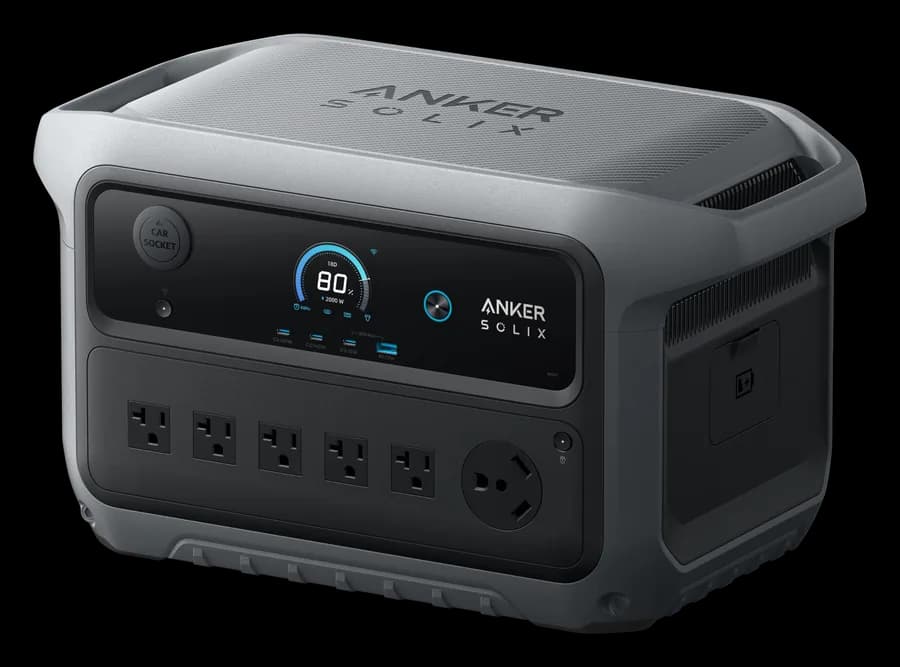
Anker SOLIX C2000 Gen 2
About 9.5 h on this plan. 2,048 Wh, 2,400 W continuous.
- Capacity
- 2,048 Wh
- Output
- 2,400 W
- Weight
- 41.7 lb
- UPS
- 10 ms
Paid link
Check price on Amazon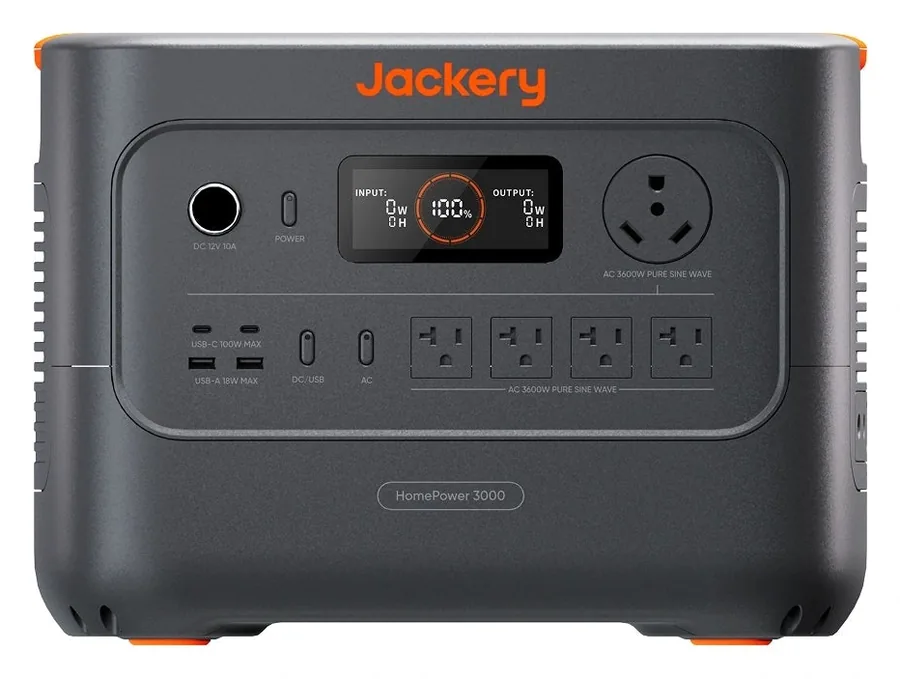
Jackery HomePower 3000
About 14 h on this plan. 3,072 Wh, 3,600 W continuous.
- Capacity
- 3,072 Wh
- Output
- 3,600 W
- Weight
- 59.5 lb
- UPS
- 20 ms
Paid link
Check price on AmazonHow do you set it up for an outage?
- Plug the stove into the station ahead of time if it has a UPS mode. The stove keeps running through the switchover instead of losing power mid-burn.
- Keep the station indoors and warm. Batteries lose capacity in the cold: at about 14°F a 2 kWh unit runs the stove for about 8.1 h instead of 9.5 h. The stove's room is a good spot, away from the stove's heat.
- Turn the heat down a setting to stretch the battery; the draw falls toward 80 W on low.
- Mind the venting. The combustion blower is what pushes exhaust out. Follow the stove manual on power failures, keep carbon monoxide alarms working, and never run a fuel-burning generator indoors.
- Recharge between nights. Even a 2 kWh station runs dry in under a day of stove use, so plan to refill it from a car, solar, or a generator running outdoors; see cold weather and storage for charging below 32°F.
How does it compare with other ways to heat on battery?
A pellet stove sits with a gas furnace as the best heat per watt-hour, because the fuel makes the heat. A furnace blower draws a few hundred watts and needs an electrician-installed connection; see whether a power station can run a gas furnace. A pellet stove usually plugs into a standard outlet, so it connects with no wiring work. A 1,500 W space heater is the opposite case, about half an hour of full heat per kilowatt-hour of battery; see space heaters. The full storm checklist is in the winter storm power outage plan.
Check your own stove
Enter the running watts from your stove's manual, set the hours and add the fridge or lights. The calculator checks the start-up draw against each station's surge rating; for ignition, also make sure its continuous rating clears 550 W.
1. What you want to run
Pellet stove
Ignition draws much more for several minutes. Check the rating plate.
Full-size refrigerator (top freezer)
Cycles on about 26% of the time; typical use is 0.99 kWh a day.
Runtime uses daily energy, not running watts. Turn off the station's ECO/auto-off mode so it doesn't cut power between compressor cycles. Older fridges use more.
2. The power station
What people actually ask
Can a portable power station run a pellet stove?
Yes, if it can handle ignition. Once lit, the auger and fans draw about 150 W in owner and manual figures, but the igniter pushes the stove to about 500 W for several minutes at start-up. Plan for a station rated for at least 550 W of continuous output; 300 W units can't light it.
How long will a power station run a pellet stove?
At a typical 150 W, about 4.9 h on a 1 kWh station and 9.5 h on 2 kWh, including the battery reserve, inverter loss and standby draw. On low heat it's closer to 16 h on 2 kWh; on high, about 5 h.
Why does a pellet stove need electricity at all?
The auger motor feeds pellets into the burn pot, a combustion blower pulls air through the fire and vents the exhaust, and a convection fan pushes heat into the room. The control board runs it all, and most stoves use an electric igniter to light. Without power, the stove stops feeding and its fans stop.
Is a pellet stove better than a space heater on battery?
Far better. A pellet stove burns pellets for heat and uses only about 150 W to run, so it heats a room for many hours on a 2 kWh station. A 1,500 W space heater makes all its heat from the battery and empties the same station in roughly an hour.
Should I plug the stove into the station before the power goes out?
If the station has a UPS mode, that's the best setup: the stove runs from the wall until an outage, then switches to the battery in milliseconds, so it never loses power mid-burn and doesn't need to relight. Check your stove manual for its guidance on power failures and battery backups.
Who should buy which
- Getting through the night: a 2 kWh unit with the heat turned down, or about 3 kWh for a full night at a typical setting.
- A full day or more: an expandable unit that stays in one place, or a smaller one recharged every day.
- Stove plus fridge: plan on about 4.6 kWh a day; expansion batteries or daily recharging.
- Small 300 W stations: not for a pellet stove; they can't cover ignition.
The bottom line
A pellet stove runs well on a power station once it's lit, at about 150 W, giving roughly 9.5 h per 2 kWh. Size the continuous rating for ignition, at least 550 W, keep the station warm and plugged in ahead of the outage, and plan a way to recharge. For your full winter list, take the sizing quiz or compare models in the chart.
Sources (checked 2026-11-01)
- hearth.com: Big E pellet stove on batteries
- hearth.com: pellet stove electrical consumption
- FirstEnergy: Understanding electricity use and cost
- Honda generator wattage estimation guide
- Virginia Cooperative Extension: appliance energy use
- Ready.gov: power outages
- Anker SOLIX C2000 Gen 2 (official)
- Jackery HomePower 3000 (official)
- DJI Power 1000 V2 specs (official, Canada 120V)