Yes, a 1 kWh or larger power station can usually run a gas furnace, because the gas makes the heat and the electricity only runs the blower, igniter and controls. The catches are start-up surge of around 1,400 W, a daily use of several kilowatt-hours for a standard blower in cold weather, and the fact that furnaces are hard-wired: you need a connection installed by a licensed electrician.
As an Amazon Associate, RightSizePower earns from qualifying purchases. That never changes how models are ranked. How we recommend
How long it keeps the furnace going
The blower alone, cycling on about 40% of the time, with the battery reserve, inverter loss and standby draw included. Check your furnace's rating plate for its blower motor.
| Blower type | Per day | 1,024 Wh | 2,048 Wh | 4,096 Wh |
|---|---|---|---|---|
| Standard (PSC) blower, about 400 W while running | 3.8 kWh | 4.6 h | 8.9 h | 17 h |
| Variable-speed (ECM) blower, about 150 W while running | 1.4 kWh | 11 h | 21 h | 37 h |
What a gas furnace actually draws
The blower motor is the big load. Older and builder-grade furnaces use a standard (PSC) motor that draws a few hundred watts, up to about 900 W on large units; newer variable-speed (ECM) motors run at roughly 90 to 300 W. The hot-surface igniter adds a few hundred watts for a minute or so at the start of each cycle, and the inducer fan and control board add a little more. Start-up surge is around 1,400 W in generator sizing tables, so the station's surge rating matters as much as its capacity.
In cold weather the furnace runs longer cycles. Our table assumes the blower is on 40% of the time; on the coldest nights it can be more, which shortens runtime proportionally.
The connection: why you need an electrician
Furnaces are wired into a circuit, not plugged in. The safe options are a manual transfer switch, a generator inlet with a panel interlock, or a smart panel from the power station's maker, all installed by a licensed electrician and permitted where your local code requires it. Some areas allow an electrician to fit a furnace with a plug and inlet on its own circuit. Never connect a power station or generator to a wall outlet to feed the house: it can energize utility lines and injure line workers. The options are compared in how to connect a power station to your house.
Which power station makes sense
- A few hours to take the chill off: a 1 kWh unit with at least 2,000 W of surge can run a standard blower for roughly four to five hours of furnace cycling.
- Through the night: about 2 kWh, or a 1 kWh unit with a variable-speed blower.
- Several days with other essentials: a home-backup unit with expansion batteries and a transfer-switch kit, such as the EcoFlow DELTA Pro 3, or a smaller station recharged by a generator running outdoors.
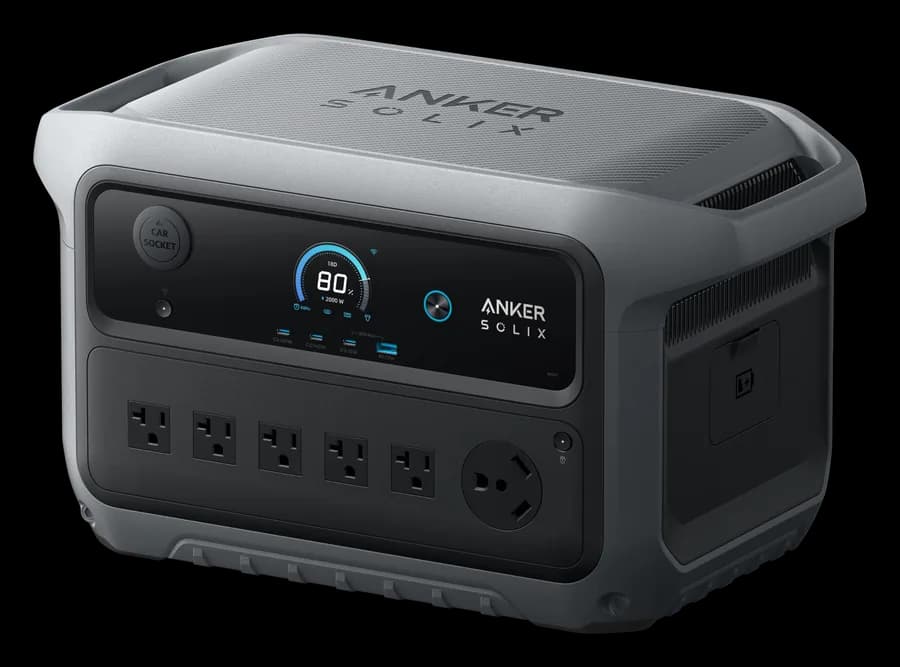
Anker SOLIX C2000 Gen 2
2,048 Wh and a 4,000 W surge: a standard blower for about 9 hours, with room for a fridge in milder weather.
- Capacity
- 2,048 Wh
- Output
- 2,400 W
- Weight
- 41.7 lb
- UPS
- 10 ms
Paid link
Check price on Amazon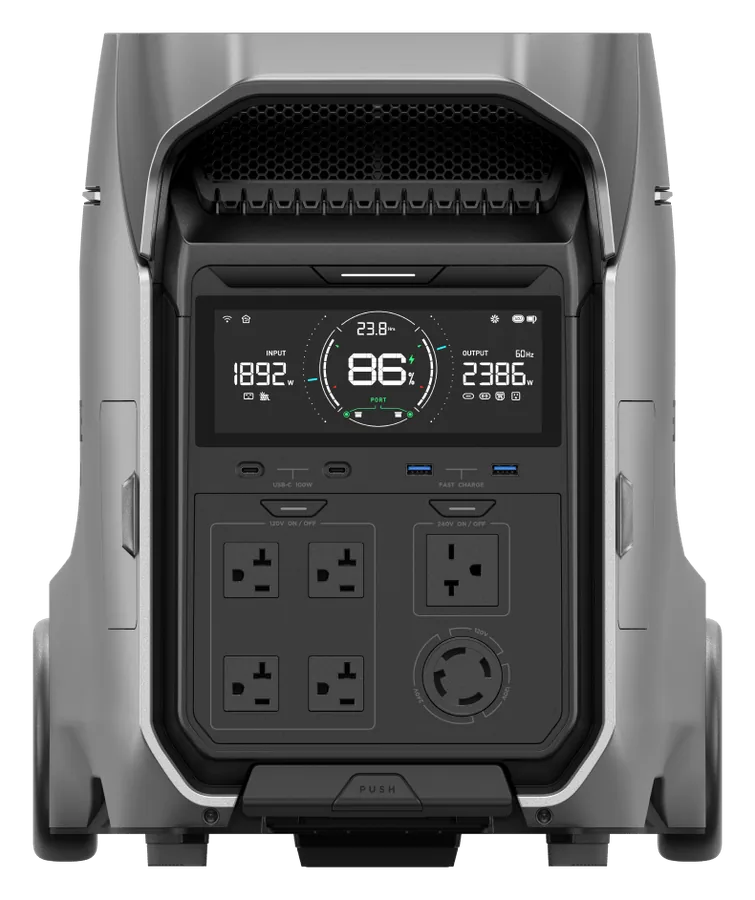
EcoFlow DELTA Pro 3
4,096 Wh, 120/240 V output and expansion batteries; built to feed home circuits through an electrician-installed transfer switch.
- Capacity
- 4,096 Wh
- Output
- 4,000 W
- Weight
- 113.5 lb
- UPS
- 10 ms
Paid link
Check price on AmazonWhat people actually ask
Can a portable power station run a gas furnace?
Usually, yes. A gas or propane furnace burns fuel for heat; electricity runs the blower, igniter and controls. That's typically a few hundred watts while running and around 1,400 W for a moment at start-up, which most 1 kWh and larger stations can supply.
Can I plug my furnace into a power station?
Most furnaces are hard-wired, so there's no plug. A licensed electrician can install a transfer switch, a generator inlet with an interlock, or in some areas a furnace power inlet so you can connect a power station safely. Never back-feed the house through a wall outlet.
How long will a power station run a furnace?
It depends on the blower and how cold it is. A standard blower cycling 40% of the time uses about 3.8 kWh a day, so a 2,000 Wh station lasts roughly 9 hours; a variable-speed blower uses far less. Colder weather means longer run cycles and shorter runtime.
Can a power station run an electric furnace or heat pump?
Not in any useful way. Electric furnaces and heat pumps draw thousands of watts and usually need 240 V. Portable stations can't sustain that; even large home-backup units would last a short time.
Does the furnace need a pure sine wave inverter?
Furnace control boards and variable-speed motors can be sensitive to poor power quality. Most current portable power stations use pure sine wave inverters, but confirm it on the spec sheet of any unit you consider.
The bottom line
A gas furnace is one of the best uses of a power station in a winter outage: a few hundred watts buys you whole-house heat from gas. Budget for the surge, size for your blower type and the hours you need, and have a licensed electrician install the connection. If you heat with pellets instead, see whether a power station can run a pellet stove. For the rest of your outage list, see the winter storm plan.