Yes, most 1 kWh and larger power stations can run a 1,500 W space heater, but only for about 30 minutes per 1,000 Wh of capacity. A heater turns all its power into heat, which makes it one of the hungriest things you can plug in. For staying warm through an outage, an electric blanket or keeping your gas furnace's blower running gets you far more hours from the same battery.
As an Amazon Associate, RightSizePower earns from qualifying purchases. That never changes how models are ranked. How we recommend
How long each way of staying warm lasts
Typical runtime, one device at a time, including the battery reserve, inverter loss and standby draw.
| Heat source | 1,024 Wh | 2,048 Wh | 3,072 Wh |
|---|---|---|---|
| Space heater on high1,500 W, all the time it's on | 31 min | 1 h | 1.6 h |
| Space heater on low750 W setting | 1 h | 2 h | 3.1 h |
| Electric blanket (queen)About 110 W, cycling on and off | 12 h | 22 h | 33 h |
| Pellet stove (running)Fan and auger; ignition draws more | 4.9 h | 9.5 h | 14 h |
| Gas furnace blowerHard-wired: needs an electrician-installed inlet | 4.6 h | 8.9 h | 13 h |
Why a heater drains a battery so fast
A space heater on high draws 1,500 W, so it uses 1.5 kWh every hour. A power station that holds 1,024 Wh gives you about 920 Wh after the battery's reserve, and the inverter loses about 15% converting it to AC. That leaves roughly half an hour of full heat. Doubling the battery doubles the time, which is why even a 3 kWh home-backup unit gives you only about an hour and a half on high.
Output is the second limit. To run a 1,500 W heater steadily, a station should supply at least 1,650 W continuously. Of the 45 current models with AC outlets we track, 31 do; most 300 to 800 Wh units don't.
What boost modes do with heaters
EcoFlow's X-Boost, BLUETTI's Power Lifting and Anker's SurgePad let a station run a heating appliance rated above its output by lowering the voltage. The heater runs, but at reduced power, so it puts out less heat. That's useful for a kettle or hair dryer you'd otherwise not be able to use. It doesn't make the battery last longer.
Warmer ways to spend the same battery
- Electric blanket or heated mattress pad. Around 110 W on a queen, cycling on and off, so a 1 kWh unit gets you through a night.
- Your gas furnace's blower. A gas or propane furnace makes heat from fuel; the electricity runs the blower and controls. That's a few hundred watts, though it's hard-wired, so it needs a transfer switch or furnace inlet installed by a licensed electrician.
- A pellet stove. The fan and auger draw around 150 W once it's lit; ignition draws several hundred watts for a few minutes; see running a pellet stove.
- Heat one small room. If you do use a heater, run it on low in a closed room and switch it off once the room is warm.
Plug the heater directly into the station's AC outlet rather than through a power strip, and keep it clear of bedding and curtains as its manual directs. Never use a fuel-burning heater or generator indoors.
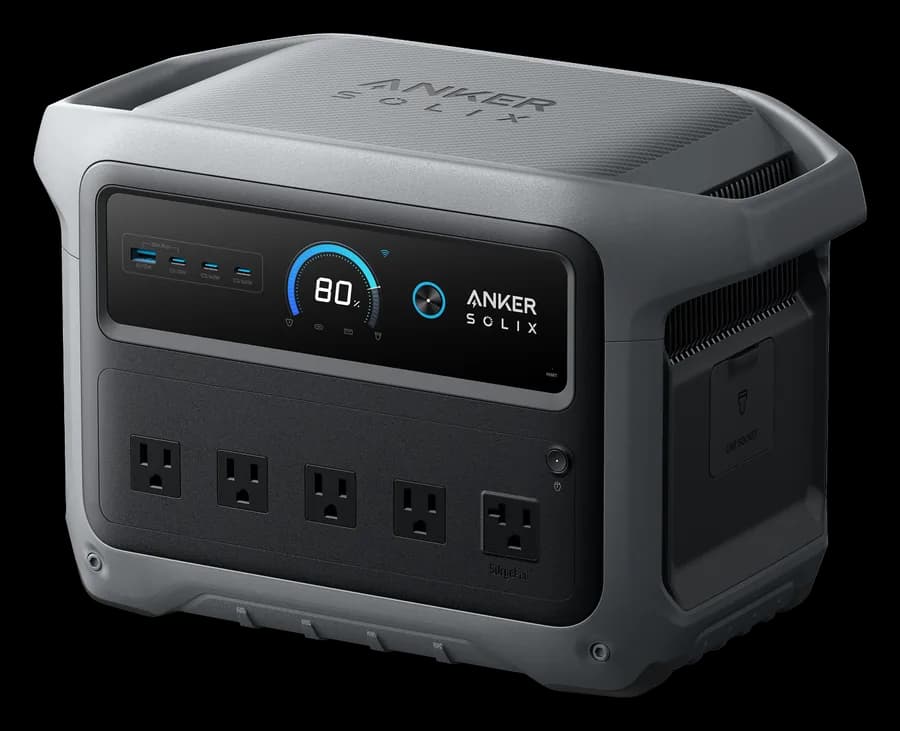
Anker SOLIX C1000 Gen 2
2,000 W continuous handles a 1,500 W heater; expect about 30 minutes on high. Better used for a blanket all night.
- Capacity
- 1,024 Wh
- Output
- 2,000 W
- Weight
- 24.9 lb
- UPS
- 10 ms
Paid link
Check price on Amazon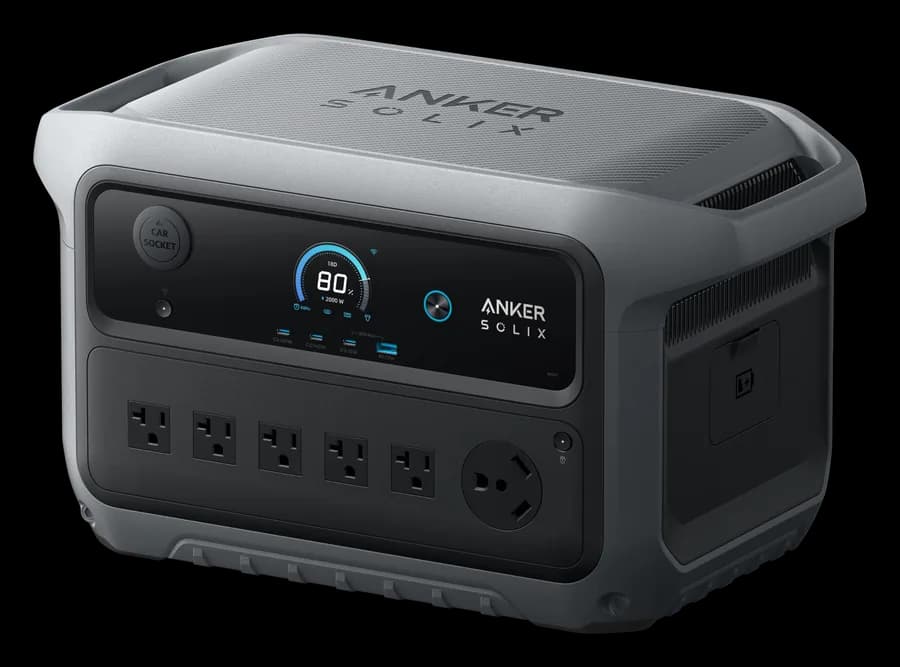
Anker SOLIX C2000 Gen 2
2,048 Wh and 2,400 W: about an hour of heater on high, or a blanket and a fridge through the night.
- Capacity
- 2,048 Wh
- Output
- 2,400 W
- Weight
- 41.7 lb
- UPS
- 10 ms
Paid link
Check price on AmazonTry your own setup
Set the heater's watts and hours, add your other devices and pick a station. The cold-weather setting shows the extra capacity loss if the station sits in a cold room.
1. What you want to run
Space heater (1500 W setting)
Uses 1.5 kWh every hour on high, so most portable stations last under an hour. The low setting is 750 W.
Electric blanket or heated mattress pad (queen)
Cycles on about 50% of the time.
Far more efficient than a space heater. Dual-control queens can reach 240 W with both sides on high.
2. The power station
What people actually ask
How long will a 1000 Wh power station run a space heater?
About 30 minutes on high (1,500 W) and about an hour on low (750 W). The heater draws 1.5 kWh every hour on high, and the station loses roughly 15% more in its inverter.
Can a 2000 Wh power station run a space heater overnight?
No. A 2 kWh unit runs a 1,500 W heater for about an hour and on its 750 W setting for about two hours. Keeping a room warm overnight with a resistive heater takes far more energy than portable stations hold.
What's the most efficient way to stay warm on a power station?
An electric blanket or heated mattress pad. At around 110 W cycling on and off, a queen blanket runs about 12 hours on a 1,000 Wh unit, warming you instead of the whole room.
Will X-Boost or Power Lifting let a small station run a heater?
Partly. These modes lower the voltage so a heater rated above the station's output still runs, but at reduced power, so you get less heat. They don't add any battery capacity.
Can a power station keep my gas furnace running?
Often, yes: the blower usually draws a few hundred watts and needs around 1,400 W to start. But furnaces are hard-wired, so you need a transfer switch or a furnace power inlet installed by a licensed electrician. Never plug a station into a wall outlet to back-feed the house.
The bottom line
A power station can run a space heater, but you'll get about half an hour of full heat per kilowatt-hour of battery. If the goal is getting through a cold night, spend the battery on an electric blanket, your furnace blower or a pellet stove instead. For a whole-outage plan, see our winter storm power plan.