A power station can technically charge an electric car through a 120 V Level 1 cord, but it adds only a few miles: about 2–5 miles from a 2 kWh station. A Level 1 cord pulls about 1,440 W, which empties a 2 kWh unit in roughly 1.1 h, and the Department of Energy puts Level 1 at 2 to 5 miles of range per hour. Treat it as a last-resort way to reach a charger, not as a way to charge an EV.
As an Amazon Associate, RightSizePower earns from qualifying purchases. That never changes how models are ranked. How we recommend
How many miles does each station size add?
Charging time on a 1,440 W Level 1 cord, including the station's battery reserve, inverter loss and standby draw. Miles use DOE's Level 1 rate of 2 to 5 miles per hour of charging; the last column uses DOE's average of 3 miles per kWh.
| Station | Charging time | Miles at 2–5 mi/h | Miles at 3 mi/kWh |
|---|---|---|---|
| 1,024 Wh | 32 min | 1–3 | 2 |
| 2,048 Wh | 1.1 h | 2–5 | 5 |
| 3,072 Wh | 1.6 h | 3–8 | 7 |
| 5,040 Wh | 2.6 h | 5–13 | 11 |
The car's own charging losses and its efficiency vary by model; FuelEconomy.gov lists each EV's kWh per 100 miles if you want a figure for your car.
Why so few miles?
A Level 1 cord plugs into an ordinary 120 V outlet and draws about 12 A, roughly 1,440 W. That's slow even from the wall: the Alternative Fuels Data Center says Level 1 replenishes 2 to 5 miles of range per hour, and FuelEconomy.gov rounds it to about 5. A typical commute needs hours of that, which is why Level 1 owners plug in overnight.
A portable station holds a tiny amount of energy next to a car battery. A 2,048 Wh unit gives about 1,843 Wh after its reserve, and the inverter loses about 15% on the way to the cord. At DOE's average of 3 miles per kWh, that's about 5 miles. The car's battery is many times larger, so the station barely moves the gauge.
Which stations can even run a Level 1 cord?
The station has to supply about 1,440 W for the whole session, so continuous output matters, not surge. With a 10% margin that's about 1,584 W; for a load that runs at full draw nonstop, we prefer 1,800 W or more. Of the 42 current models with AC outlets we track, 31 clear the first bar, and all of them clear the second too. A typical 1 kWh model puts out about 1,800 W, so most mid-size and larger stations qualify on output. Boost modes like X-Boost or Power Lifting don't count; they're meant for heating appliances, not chargers.
Output isn't the same as compatibility. We can't confirm which cars and charging cords accept power from a portable station, so we don't list any as compatible. If you plan to rely on it, check with the car maker and try it at home first.
When does it make sense?
- A few miles to safety. If the car stops short of a charger, a large station already in the trunk may add enough to get there. A roadside service is usually the better plan.
- Not for daily charging. Recharging the station from the wall to move that energy into the car only adds losses. Plug the car's cord straight into the wall instead.
- Not during an outage. The same 2 kWh that adds a few miles runs a fridge for more than a day. Spend the battery on the house; see our home backup guide.
- No back-feeding. Never connect a station to a wall outlet or the panel to feed a home charger. Home connections need a transfer switch or inlet installed by a licensed electrician.
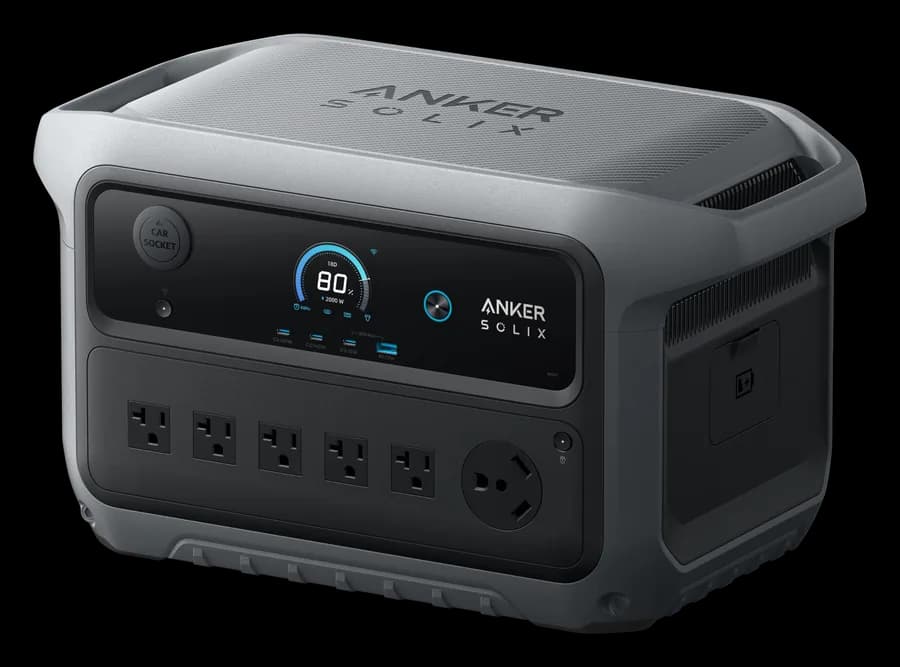
Anker SOLIX C2000 Gen 2
2,400 W continuous covers a 1,440 W cord with room to spare; 2,048 Wh adds about 2–5 miles, or runs a fridge for more than a day.
- Capacity
- 2,048 Wh
- Output
- 2,400 W
- Weight
- 41.7 lb
- UPS
- 10 ms
Paid link
Check price on Amazon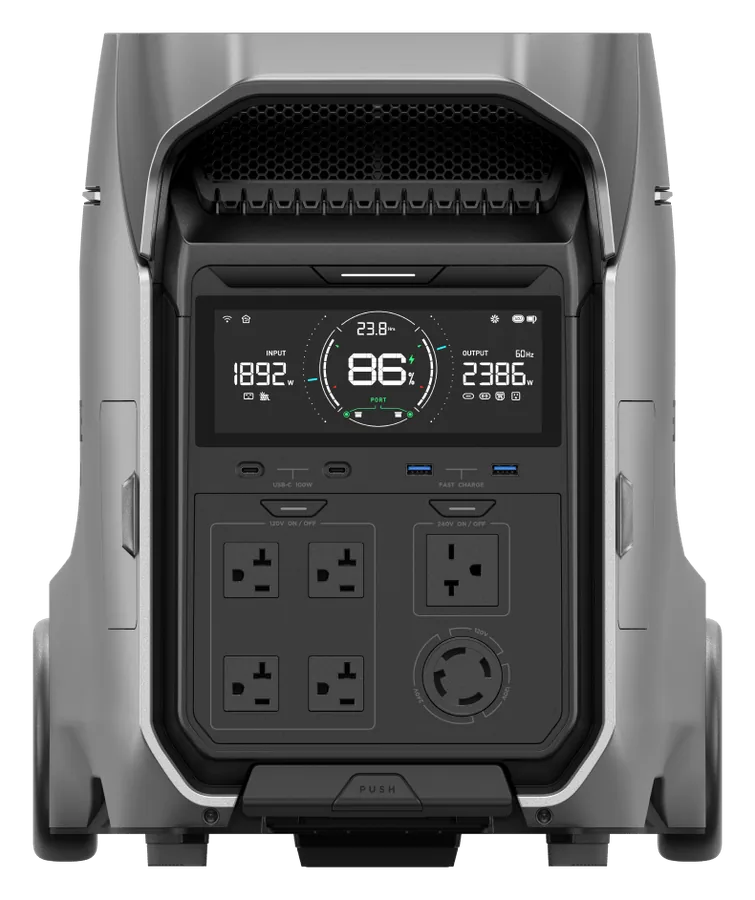
EcoFlow DELTA Pro 3
4,096 Wh and 4,000 W: about 4–11 miles of Level 1 charging. Bought for whole-home backup, not for the car.
- Capacity
- 4,096 Wh
- Output
- 4,000 W
- Weight
- 113.5 lb
- UPS
- 10 ms
Paid link
Check price on AmazonWhat the same battery does at home
EV charging isn't in our quiz. These rows show what the engine picks for the outage loads people usually weigh against the car: the fridge, internet and phones. Open any row to change the devices.
Fridge, Wi-Fi and phones for a day
1.4 kWh/day · 24 h
Open this in the quiz and change the devices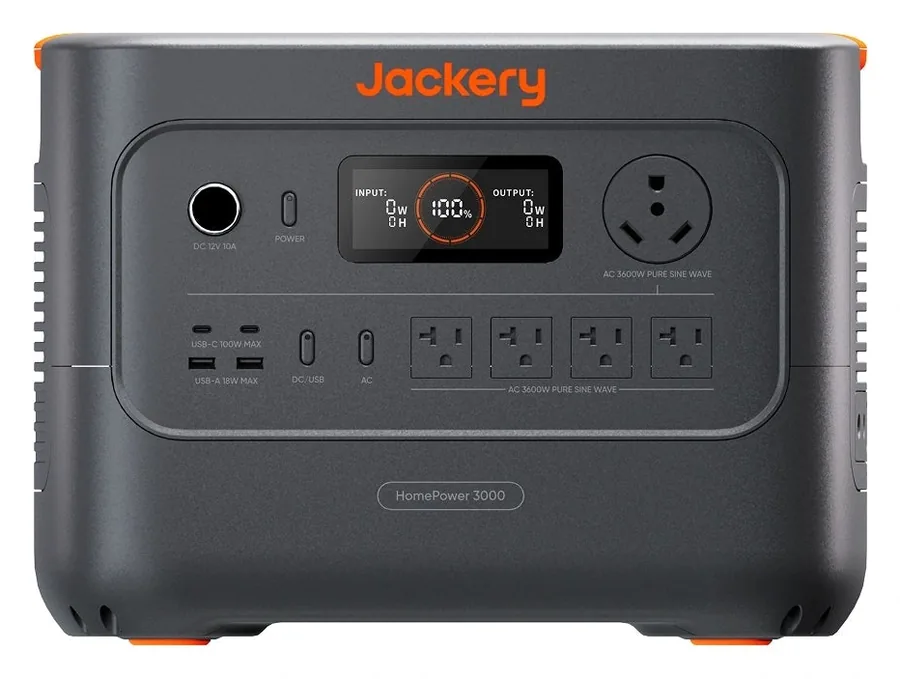
Engine's pick
Jackery HomePower 3000
About 32 h · also Bluetti Elite 400, Jackery HomePower 3600 Pro Max
The same for three days, station stays put
1.4 kWh/day · 3 days
Open this in the quiz and change the devices
Engine's pick
DJI Power 1000 V2
About 5.3 days with an extra battery · also DJI Power 2000, Anker SOLIX F3000
Three days, then solar
1.4 kWh/day · 24 h
Open this in the quiz and change the devicesEngine's pick
Jackery HomePower 3000
About 32 h · also Anker SOLIX F3000, EcoFlow DELTA Pro 3
A day with an expandable station
1.4 kWh/day · 24 h
Open this in the quiz and change the devices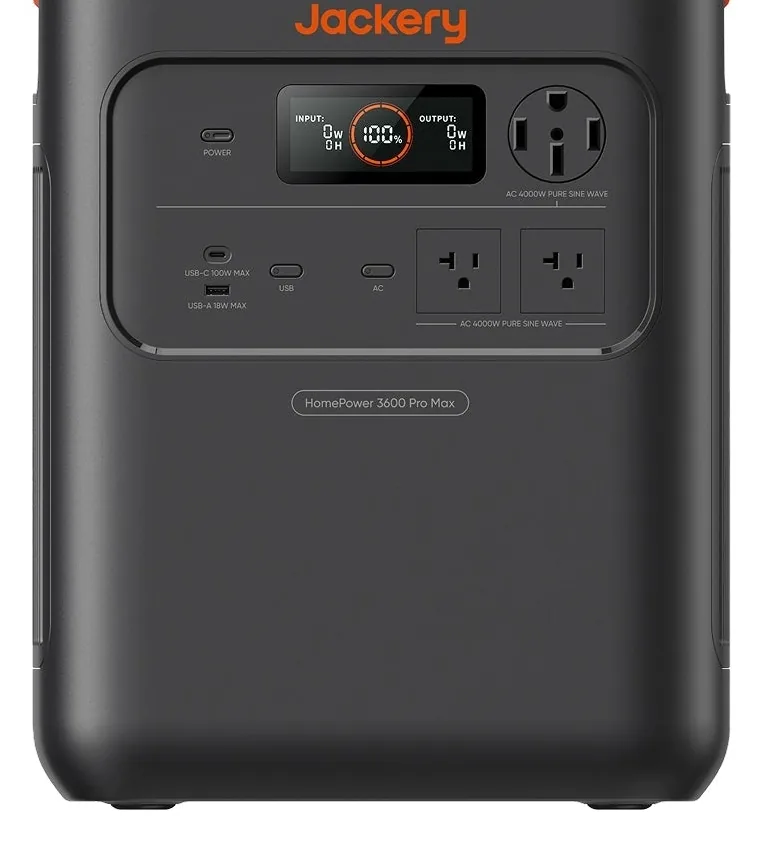
Engine's pick
Jackery HomePower 3600 Pro Max
About 33 h · also Jackery HomePower 3600 Plus, Anker SOLIX F3000
Picks come from the same engine as the quiz, recalculated whenever our catalog changes.
Run the numbers yourself
Set the charging hours and pick a station to see how long it lasts; multiply the hours by 2 to 5 for miles. The full runtime calculator handles expansion batteries.
1. What you want to run
EV charging (Level 1, 120 V)
AFDC and FuelEconomy.gov put Level 1 at about 5 miles of range per hour (AFDC also cites 2–5), so a 2 kWh station adds only a few miles.
2. The power station
What people actually ask
How many miles will a power station add to an EV?
Very few. On a 120 V Level 1 cord, the Department of Energy's figures work out to roughly 2 to 5 miles per hour of charging, and a 2 kWh station can sustain that for only about an hour. Expect a few miles from a 2 kWh unit and somewhat more from a 5 kWh one.
What size power station do I need to charge an EV?
For output, at least about 1,600 W continuous to run a 12 A Level 1 cord (120 V × 12 A is 1,440 W, plus a 10% margin), and ideally 1,800 W or more because charging runs at full draw for the whole session. For range, no portable station holds enough to matter for daily driving.
Can I charge my Tesla or other EV from a power station?
We can't confirm which cars and charging cords accept power from a portable station, and we don't list any as compatible. If you want this as an emergency option, ask the car maker and test it at home before you need it.
Is a power station a good emergency charger for a dead EV?
Only for a short hop: a few miles to reach a charger or get off the road. A roadside service or a tow is often the more practical fix. A station earns its keep running your fridge, phones and internet during an outage, not filling a car.
Can solar panels and a power station charge my EV?
In theory, slowly. The station can only pass on what the panels put in, minus losses, so a few hundred watts of panels add only a few miles over a sunny day. A home solar system with a dedicated charger is the realistic way to charge from the sun.
The bottom line
Most 1 kWh and larger stations have the output for a Level 1 cord, but none hold enough energy to matter: a 2 kWh unit adds about 2–5 miles. Buy a station for outages, camping or power tools, and treat EV charging as an emergency extra at best. The comparison chart lists continuous output for every model, or take the quiz.