A current LiFePO4 power station is rated for 3,000 to 6,000 full cycles before it drops to 70% or 80% of its capacity, which on paper is decades of weekly use and about 8.2 to 16.4 years of rated cycles even at one full cycle every day. For most owners the cycle count never runs out first: calendar aging, heat and the electronics do, so the warranty, usually 3 or 5 years, is the figure a maker actually commits to.
As an Amazon Associate, RightSizePower earns from qualifying purchases. That never changes how models are ranked. How we recommend
What does a cycle rating actually mean?
A cycle is one full battery's worth of energy in and out, under lab conditions: usually around 77°F at a set charge rate. The rating counts how many of those the battery takes before its capacity falls to a threshold, 80% of new for some makers and 70% for others. Two half discharges add up to about one cycle. The battery keeps working past the rating; it simply holds less.
The threshold matters. 24 of the rated models below are rated to 80% and 11 to 70% (all from Jackery). A 70% rating is the easier target, so 4,000 cycles to 70% is not the same as 4,000 cycles to 80%. Compare like with like.
How many years is that at your rate of use?
Divide the rated cycles by the full cycles you use in a year:
The arithmetic
- One full cycle a week (outage practice, weekend camping): 4,000 ÷ 52 = about 77 years.
- One full cycle a day (daily off-grid or solar use): 4,000 ÷ 365 = about 11 years.
- A few outages a year: the cycle count is effectively unlimited; age decides.
These are lab-rating arithmetic, not a forecast. Heat, deep discharges, charging in the cold and time all shorten real life.
Cycle ratings and warranties of current models
Every current model in our catalog with a maker-stated cycle rating and end percentage, most cycles first. Capacity left is the rated capacity times the end percentage.
| Model | Rated cycles | Capacity left at rating | Years at 1 cycle a week | Years at 1 cycle a day | Warranty |
|---|---|---|---|---|---|
| Jackery Explorer 500 v2 | 6,000 to 70% | 358 of 512 Wh | 115 | 16.4 | 3 years |
| Jackery HomePower 1000 Plus v2 | 6,000 to 70% | 717 of 1,024 Wh | 115 | 16.4 | 3 years |
| Anker SOLIX S2000 | 6,000 to 80% | 1,608 of 2,010 Wh | 115 | 16.4 | 5 years |
| Jackery HomePower 2000 Plus v2 | 6,000 to 70% | 1,434 of 2,048 Wh | 115 | 16.4 | 3 years |
| Bluetti Apex 300 | 6,000 to 80% | 2,212 of 2,765 Wh | 115 | 16.4 | — |
| Jackery HomePower 3600 Plus | 6,000 to 70% | 2,509 of 3,584 Wh | 115 | 16.4 | 3 years |
| Jackery HomePower 3600 Pro Max | 6,000 to 70% | 2,509 of 3,584 Wh | 115 | 16.4 | 3 years |
| Jackery Explorer 300 | 4,000 to 70% | 204 of 292 Wh | 77 | 11 | — |
| Anker SOLIX C1000 Gen 2 | 4,000 to 80% | 819 of 1,024 Wh | 77 | 11 | 5 years |
| Bluetti Elite 100 V2 | 4,000 to 80% | 819 of 1,024 Wh | 77 | 11 | — |
| DJI Power 1000 V2 | 4,000 to 80% | 819 of 1,024 Wh | 77 | 11 | 5 years |
| EcoFlow DELTA 3 | 4,000 to 80% | 819 of 1,024 Wh | 77 | 11 | — |
| EcoFlow DELTA 3 Plus | 4,000 to 80% | 819 of 1,024 Wh | 77 | 11 | 3 years |
| Jackery Explorer 1000 v2 | 4,000 to 70% | 717 of 1,024 Wh | 77 | 11 | 3 years |
| Jackery Explorer 1500 Ultra | 4,000 to 70% | 1,075 of 1,536 Wh | 77 | 11 | 3 years |
| Jackery Explorer 2000 v2 | 4,000 to 70% | 1,429 of 2,042 Wh | 77 | 11 | 3 years |
| DJI Power 2000 | 4,000 to 80% | 1,638 of 2,048 Wh | 77 | 11 | 5 years |
| Anker SOLIX F3000 | 4,000 to 80% | 2,458 of 3,072 Wh | 77 | 11 | 5 years |
| Jackery HomePower 3000 | 4,000 to 70% | 2,150 of 3,072 Wh | 77 | 11 | 3 years |
| EcoFlow DELTA Pro 3 | 4,000 to 80% | 3,277 of 4,096 Wh | 77 | 11 | 5 years |
| Jackery Explorer 5000 Plus | 4,000 to 70% | 3,528 of 5,040 Wh | 77 | 11 | 5 years |
| OUPES Mega 1 | 3,500 to 80% | 819 of 1,024 Wh | 67 | 9.6 | 5 years |
| Bluetti AC180 | 3,500 to 80% | 922 of 1,152 Wh | 67 | 9.6 | 5 years |
| EcoFlow DELTA Pro | 3,500 to 80% | 2,880 of 3,600 Wh | 67 | 9.6 | 5 years |
| EcoFlow RIVER 3 | 3,000 to 80% | 196 of 245 Wh | 58 | 8.2 | — |
| EcoFlow RIVER 3 Plus | 3,000 to 80% | 229 of 286 Wh | 58 | 8.2 | — |
| Anker SOLIX C300 | 3,000 to 80% | 230 of 288 Wh | 58 | 8.2 | 5 years |
| Anker SOLIX C300 DC | 3,000 to 80% | 230 of 288 Wh | 58 | 8.2 | — |
| EcoFlow RIVER 3 Max | 3,000 to 80% | 458 of 572 Wh | 58 | 8.2 | — |
| Anker SOLIX C800X / C800 Plus | 3,000 to 80% | 614 of 768 Wh | 58 | 8.2 | 5 years |
| EcoFlow RIVER 2 Pro | 3,000 to 80% | 614 of 768 Wh | 58 | 8.2 | 5 years |
| EcoFlow DELTA 2 | 3,000 to 80% | 819 of 1,024 Wh | 58 | 8.2 | 5 years |
| Anker SOLIX C1000 (Gen 1) | 3,000 to 80% | 845 of 1,056 Wh | 58 | 8.2 | 5 years |
| Anker SOLIX C2000 Gen 2 | 3,000 to 80% | 1,638 of 2,048 Wh | 58 | 8.2 | 5 years |
| Anker SOLIX F3800 Plus | 3,000 to 80% | 3,072 of 3,840 Wh | 58 | 8.2 | 5 years |
From maker spec pages and manuals, as stored in our catalog; models whose cycle rating has no end percentage or couldn't be confirmed are left out. Warranty shows the base term: EcoFlow adds 2 years after app registration, and Jackery adds 2 years only for purchases at jackery.com. A dash means we couldn't confirm it. Every spec is in the comparison chart.
What does an older battery mean for runtime?
Runtime shrinks in step with capacity. A new Anker SOLIX C1000 Gen 2 runs a typical top-freezer fridge for about 15 h; at the end of its 4,000-cycle rating, with 80% left, that becomes about 12 h. The Jackery Explorer 1000 v2, rated to 70%, would drop from about 15 h to about 11 h. If you size a station tightly for an overnight outage, leave room for that fade.
Why do power stations age even when they sit unused?
Lithium cells lose capacity with time as well as use. NREL's battery life modeling and Battery University both describe calendar aging that runs faster in heat and when the battery sits at a high charge. That's why makers want a stored unit cool and partly charged, and why a station left in a hot car or a summer garage ages faster than one kept indoors.
Two habits do lasting damage. Charging below 32°F plates lithium onto the anode, which is permanent, so the battery management system blocks it. And leaving a unit empty for months can leave it unable to charge; Jackery warns that 3 to 6 months stored depleted can do that. The cold weather and storage guide has each maker's storage charge and top-up schedule.
What usually fails first?
For a unit used a few times a year, it's rarely the cells running out of cycles. Age, heat exposure and the electronics, such as the inverter, fans and charger, are the more likely limits, and they are what a warranty covers. That makes the warranty term and the maker's support record worth weighing alongside the cycle count. 19 of the current models we track carry a confirmed 5-year base warranty and 14 a 3-year one.
How do you make a power station last longer?
- Keep it cool. Store and charge it indoors, out of direct sun and hot cars.
- Store it partly charged at the level your manual gives, unless it's your outage backup, where keeping it fuller is a fair trade.
- Never leave it empty. Recharge right after an outage or trip.
- Charge above 32°F. Bring it inside and let it warm up first.
- Switch outputs off in storage so the inverter doesn't drain it, and update the firmware.
- Buy from an authorized seller and register it, so the warranty applies.
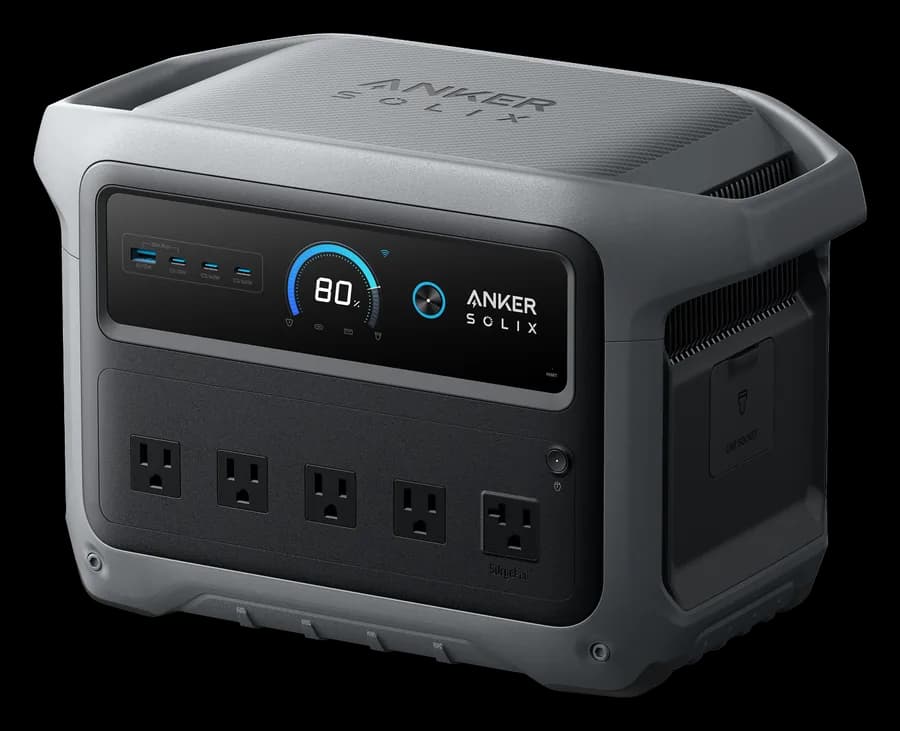
Anker SOLIX C1000 Gen 2
4,000 cycles to 80% and a 5-year warranty: about 11 years at a full cycle every day.
- Capacity
- 1,024 Wh
- Output
- 2,000 W
- Weight
- 24.9 lb
- UPS
- 10 ms
Paid link
Check price on Amazon
Jackery Explorer 1000 v2
4,000 cycles to 70%, a 3-year base warranty, plus 2 more when bought at jackery.com.
- Capacity
- 1,024 Wh
- Output
- 1,500 W
- Weight
- 23.8 lb
- UPS
- 20 ms
Paid link
Check price on AmazonWhen cycle life matters most
Daily use is where cycle ratings count. A fridge, router and two phones recharging from solar every day, then one change per row. Each row runs the quiz engine, which gives longer warranties and higher cycle ratings a small weight.
Fridge, router and phones on solar every day
1.4 kWh/day · 24 h
Open this in the quiz and change the devices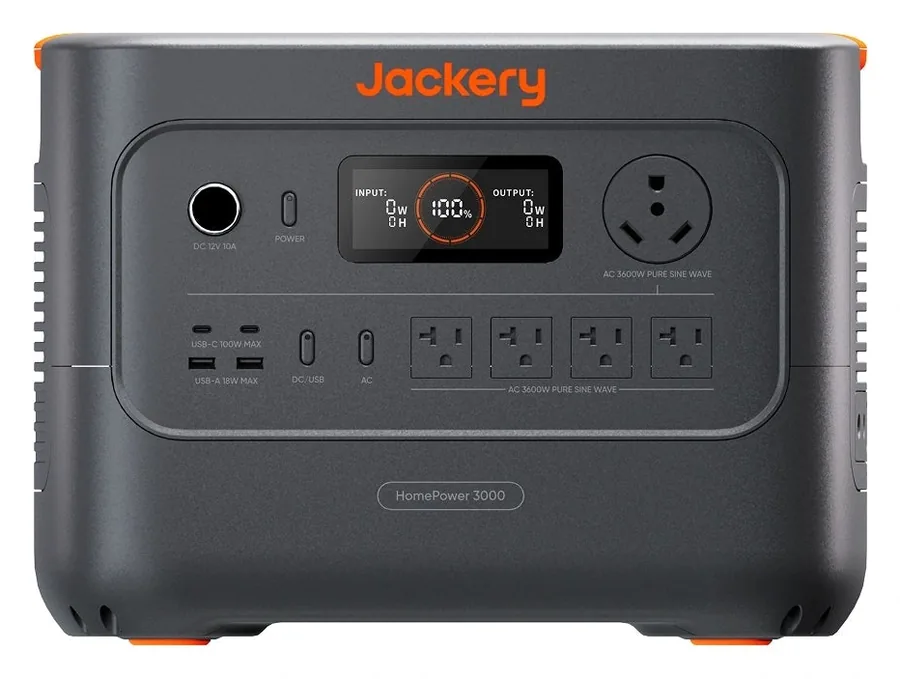
Engine's pick
Jackery HomePower 3000
About 32 h · also Jackery HomePower 3600 Pro Max, Anker SOLIX F3000
Laptop and Starlink on solar every day
2.4 kWh/day · 24 h
Open this in the quiz and change the devices
Engine's pick
Jackery Explorer 5000 Plus
About 31 h · also EcoFlow DELTA Pro 3, Anker SOLIX C2000 Gen 2
RV fan, TV and laptop on solar
1.0 kWh/day · 24 h
Open this in the quiz and change the devicesEngine's pick
Jackery HomePower 3000
About 42 h · also Jackery HomePower 3600 Plus, Anker SOLIX F3000
Occasional outage: fridge and router for one night
1.4 kWh/day · 10 h
Open this in the quiz and change the devices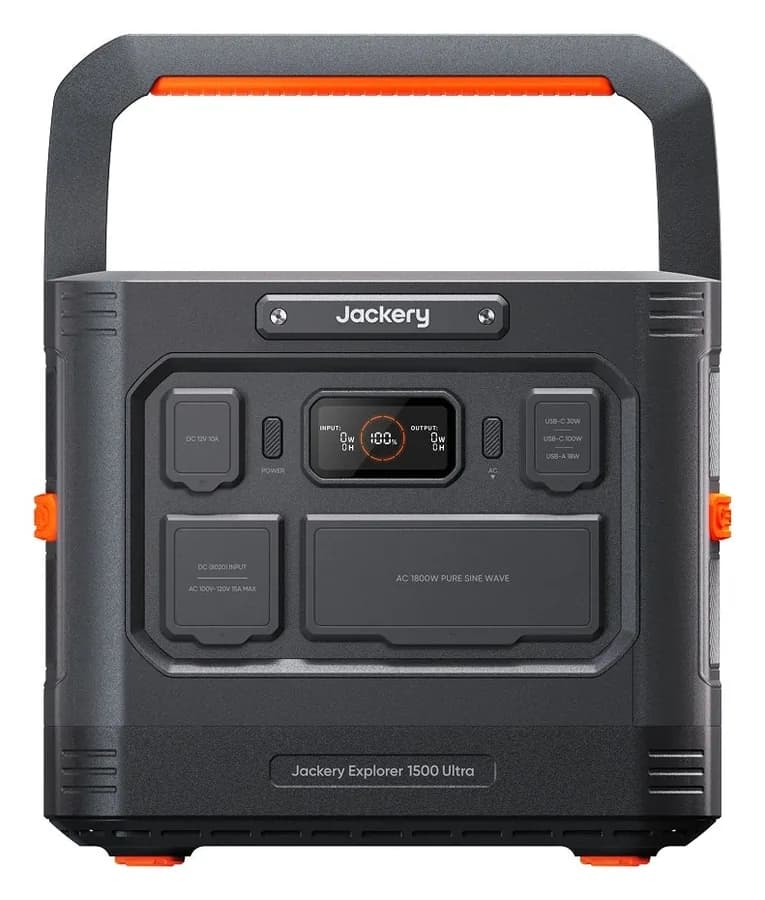
Engine's pick
Jackery Explorer 1500 Ultra
About 17 h · also Anker SOLIX C1000 Gen 2, OUPES Mega 1
Picks come from the same engine as the quiz, recalculated whenever our catalog changes.
What people actually ask
How many years does a portable power station last?
Usually longer than its warranty, and the battery cycles are rarely what ends it. Current LiFePO4 models are rated for 3,000 to 6,000 cycles; at one full cycle a week, even 3,000 cycles would take about 58 years. Time, heat and the electronics set the practical limit, so treat the warranty (3 or 5 years on most current models) as the period a maker stands behind.
What does 4,000 cycles to 70% mean?
After about 4,000 full charge-and-discharge cycles under lab conditions, usually around 77°F at a set charge rate, the battery should still hold 70% of its original capacity. It doesn't stop working at that point; it just holds less. A rating to 80% is a stricter test, so 4,000 cycles to 80% is better than 4,000 cycles to 70%.
Does a power station lose capacity if I don't use it?
Yes, slowly. Lithium batteries age with time even on a shelf, faster in heat and when kept at a high charge, according to NREL's battery life modeling and Battery University. Storing it cool and partly charged, as your manual says, slows that down. The electronics also drain a stored unit, so check it every few months.
Is LiFePO4 better than NMC for lifespan?
For cycle life, yes. Every current model in our catalog rated for cycles uses LiFePO4, at 3,000 cycles or more. Older NMC power stations, such as Goal Zero's Yeti X family, were rated around 500 cycles to 80%. If a used or clearance unit has NMC cells, expect it to fade much sooner.
Does the warranty depend on where I buy?
It can. EcoFlow's US warranty covers purchases from EcoFlow or an authorized seller with proof of purchase, and BLUETTI's covers products bought directly or through authorized channels. Some makers add years for registering in the app or buying from their own store; Jackery, for example, adds 2 years only for jackery.com purchases. Check the seller before you buy.
Who should care about which number
- Outage backup used a few times a year: cycle count hardly matters. Weigh the warranty, support and storage habits.
- Weekend camping: any current LiFePO4 rating covers decades of trips; compare weight and solar input instead.
- Daily off-grid, RV or solar use: the cycle rating and its end percentage matter. Prefer higher counts rated to 80%.
The bottom line
Current LiFePO4 power stations are rated for thousands of cycles, more than most owners will ever use, so age, heat and the electronics usually decide how long one lasts. Compare cycle ratings only at the same end percentage, keep the unit cool and never empty, and buy where the warranty applies. To pick a size that leaves room for battery fade, take the sizing quiz or check runtimes in the runtime calculator.
Sources (checked 2026-11-01)
- EcoFlow DELTA 2 user manual V1.1 (cycle definition, storage)
- Jackery Explorer 1000 v2 user manual
- NREL: battery calendar-life model
- Battery University: how to store batteries
- Goal Zero Yeti Lithium specs (retailer copy, cycle rating)
- EcoFlow US warranty policy
- BLUETTI product warranty periods
- Jackery Explorer 500 v2 basic information (official, US FAQ)
- Jackery HomePower 1000 Plus v2 (official)
- Anker SOLIX S2000 (official)
- Jackery HomePower 2000 Plus v2 (official)
- Bluetti Apex 300 (official)
- Jackery HomePower 3600 Plus (official)
- Jackery HomePower 3600 Pro Max (official)
- Jackery Explorer 300 (official)
- Anker SOLIX C1000 Gen 2 (official)
- Bluetti Elite 100 V2 (official)
- DJI Power 1000 V2 specs (official, Canada 120V)
- EcoFlow DELTA 3 (official)
- EcoFlow DELTA 3 Plus (official)
- Jackery Explorer 1000 v2 (official)
- Jackery Explorer 1500 Ultra (official)
- Jackery Explorer 2000 v2 (official)
- DJI Power 2000 specs
- Anker SOLIX F3000 (official)
- Jackery HomePower 3000 (official)
- EcoFlow DELTA Pro 3 (official)
- Jackery Explorer 5000 Plus (official)
- OUPES Mega 1 (official)
- Bluetti AC180 (official)
- EcoFlow DELTA Pro (official, US spec table)
- EcoFlow RIVER 3 (official, Canada store, 120V)
- EcoFlow RIVER 3 Plus (official)
- Anker SOLIX C300 (official)
- Anker SOLIX C300 DC (official, spec table)
- EcoFlow RIVER 3 Max (RIVER 3 Plus + Extra Battery 300) (official)
- Anker SOLIX C800X user guide A1755 (official)
- EcoFlow RIVER 2 Pro (official, US spec table)
- EcoFlow DELTA 2 (official, Canada store, 120V)
- Anker SOLIX C1000 / C1000X (official, spec list)
- Anker SOLIX C2000 Gen 2 (official)
- Anker SOLIX F3800 Plus (official)