Yes, most power stations of 1,000 Wh and up can start and run a 1/2 hp sump pump, and how long it lasts depends on how often the pump kicks on. With about an hour of pumping a day, a 1 kWh unit lasts around 15 h; in a storm that keeps the pump running 8 hours a day, about 2.2 h. Pick a model with a UPS mode so it takes over the moment the power cuts, and turn its ECO mode off.
As an Amazon Associate, RightSizePower earns from qualifying purchases. That never changes how models are ranked. How we recommend
How long does a power station run a sump pump?
Typical runtime for the pump alone, including the battery reserve, inverter loss and the station's standby draw while the pump waits. Pumping hours depend on rain, snowmelt and your water table; these rows are examples.
| Pump and conditions | 1,024 Wh | 2,048 Wh | 3,072 Wh |
|---|---|---|---|
| 1/3 hpSteady seepage, about 1 h of pumping a day | 19 h | 33 h | 2.1 days |
| 1/3 hpHeavy rain, 4 h of pumping a day | 5.5 h | 11 h | 16 h |
| 1/3 hpStorm or thaw, 8 h of pumping a day | 2.8 h | 5.6 h | 8.3 h |
| 1/2 hpSteady seepage, about 1 h of pumping a day | 15 h | 27 h | 41 h |
| 1/2 hpHeavy rain, 4 h of pumping a day | 4.2 h | 8.2 h | 12 h |
| 1/2 hpStorm or thaw, 8 h of pumping a day | 2.2 h | 4.3 h | 6.4 h |
Running watts: 800 W (1/3 hp) and 1,050 W (1/2 hp), from Honda's wattage guide. Your pump's nameplate amps × 120 gives a closer figure.
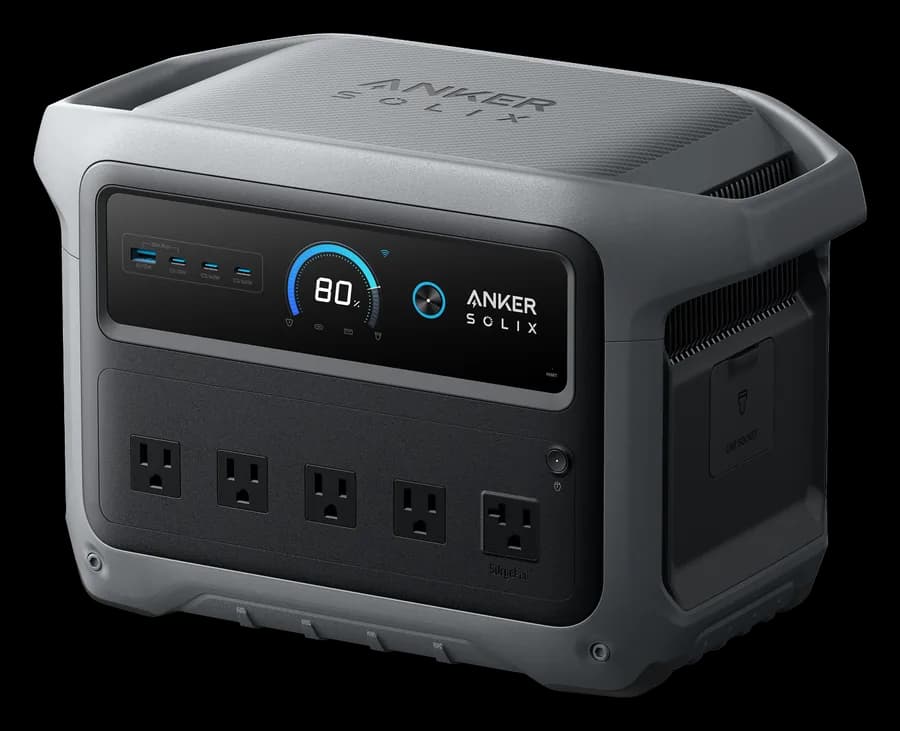
Anker SOLIX C1000 Gen 2
2,000 W continuous, 3,000 W surge and a 10 ms UPS mode; about 15 h with an hour of pumping a day.
- Capacity
- 1,024 Wh
- Output
- 2,000 W
- Weight
- 24.9 lb
- UPS
- 10 ms
Paid link
Check price on Amazon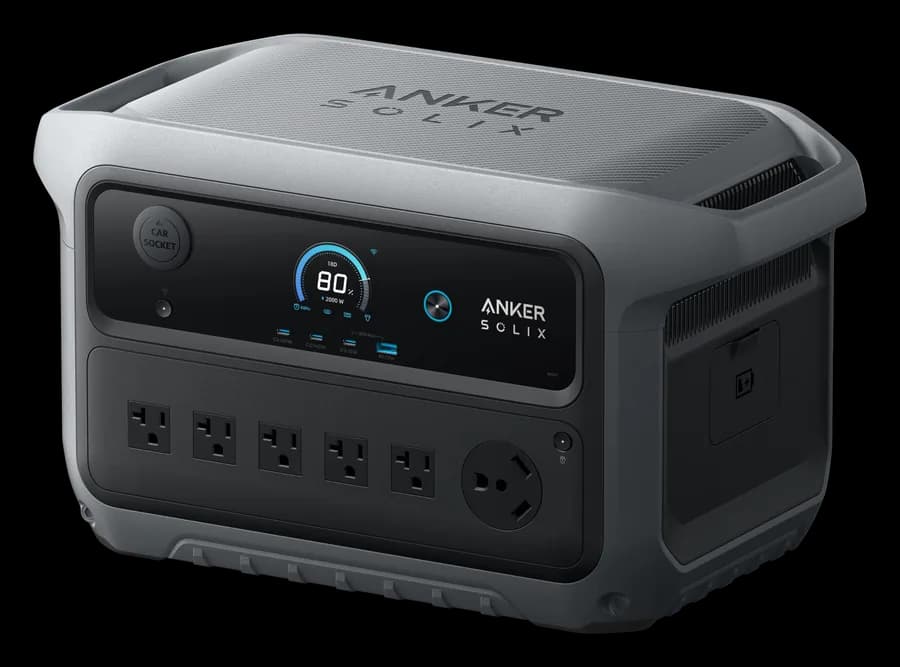
Anker SOLIX C2000 Gen 2
2,048 Wh, 4,000 W surge and a 10 ms UPS mode; about 27 h with an hour of pumping a day (8.2 h in heavy rain), and room for one extra battery.
- Capacity
- 2,048 Wh
- Output
- 2,400 W
- Weight
- 41.7 lb
- UPS
- 10 ms
Paid link
Check price on AmazonCan the station start the pump?
A sump pump motor pulls far more than its running watts for a moment as it starts. Honda's generator guide lists a 1/3 hp pump at 800 W running and 1,300 W starting, and a 1/2 hp pump at 1,050 W running and 2,150 W starting. Zoeller's M53, a common 3/10 hp pump, is rated at 9.7 A at 115 V.
Of the 42 current models with AC outlets we track, 32 cover a 1/2 hp pump's start-up and running draw with a 10% margin, and 34 cover a 1/3 hp pump. Use the station's surge rating: boost modes like X-Boost and Power Lifting are for heating appliances and don't help a motor start.
Why rain decides the runtime
A sump pump doesn't run all the time. It switches on when the pit fills and off when it's empty, so the energy it uses depends on how much water comes in. In a dry week the pump may barely run; during snowmelt in spring, or when a hurricane or derecho dumps inches of rain, it can cycle every few minutes for days. That's why the table shows three conditions instead of one number.
The station's standby draw adds up during the quiet hours. While the pump waits, the inverter still uses roughly 12 to 18 W on a 1 to 2 kWh unit. Over a day that's about a third to nearly half of what a 1/2 hp pump uses at an hour of pumping. Watch the pump for a few cycles in heavy rain and time them; that tells you which row is yours.
UPS mode: the station takes over on its own
Outages often start in the middle of the storm that's filling your pit, and you may not be home. A station with a UPS mode stays plugged into the wall, passes power through to the pump, and switches to battery when the grid drops. 30 of the models that can start a 1/2 hp pump list a UPS switchover of 20 ms or less. A motor rides through that gap; the real test is whether the station can restart the pump on battery if it was mid-cycle.
Check the output limit in UPS mode. Jackery's manual for the HomePower 3000 says output peaks at 1,440 W in UPS mode, below the 2,150 W a 1/2 hp pump needs to start, even though the unit handles 3,600 W on battery. Plug the pump straight into the station, not through a power strip, and test the switchover before the season by unplugging the station from the wall while the pump runs.
Turn off ECO mode
Many stations have an ECO or energy-saving mode that switches the AC outlets off when the load stays low. A sump pump between cycles draws nothing, so the station may shut the outlet off just before the pit fills. Jackery's Explorer 1000 v2 manual, for example, says its energy-saving mode turns outputs off after 12 hours if the AC load stays at 25 W or less. Find this setting in the app or on the screen and turn it off.
When a station isn't enough
- Days-long storms. Hurricane season runs June 1 to November 30, and big storms can mean several days without power. Pair the station with solar panels, or recharge it from a car between storms.
- Bigger pumps. A 3/4 or 1 hp pump draws more than our data covers; read its nameplate and check it in the calculator.
- Hard-wired pumps. If your pump is wired into a circuit instead of plugged in, connecting a station needs a transfer switch or inlet installed by a licensed electrician. Never back-feed a wall outlet.
Which station fits your basement?
A 1/2 hp sump pump run through our quiz engine under different plans. The quiz assumes about an hour of pumping a day; open any row to change it or add devices.
Pump through one night
1.0 kWh/day · 10 h
Open this in the quiz and change the devicesEngine's pick
Anker SOLIX C1000 Gen 2
About 15 h · also OUPES Mega 1, EcoFlow DELTA 3
Pump overnight with UPS switchover
1.0 kWh/day · 10 h
Open this in the quiz and change the devicesEngine's pick
Anker SOLIX C1000 Gen 2
About 15 h · also EcoFlow DELTA 3, EcoFlow DELTA 3 Plus
Pump and fridge for a full day
2.0 kWh/day · 24 h
Open this in the quiz and change the devices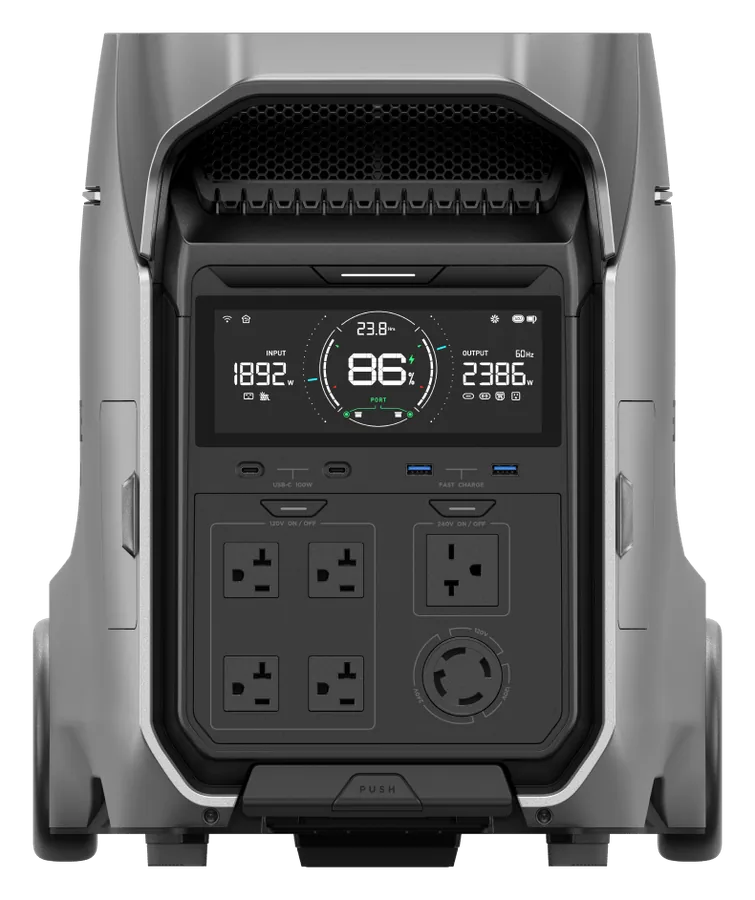
Engine's pick
EcoFlow DELTA Pro 3
About 29 h · also EcoFlow DELTA 3, Anker SOLIX C2000 Gen 2
Pump and fridge for three days, station stays put
2.0 kWh/day · 3 days
Open this in the quiz and change the devices
Engine's pick
DJI Power 1000 V2
About 3.8 days with an extra battery · also DJI Power 2000, Anker SOLIX F3000
A full day, under $1,000
1.0 kWh/day · 24 h
Open this in the quiz and change the devicesEngine's pick
Anker SOLIX C2000 Gen 2
About 27 h · also Bluetti Elite 200 V2, Jackery Explorer 2000 v2
Picks come from the same engine as the quiz, recalculated whenever our catalog changes.
Check your own pump
Pick your pump size, set the hours it actually pumps per day and add your other essentials. The full runtime calculator also has a cold-weather setting for unheated basements.
1. What you want to run
Sump pump (1/2 hp)
Cycles on about 4% of the time.
Pump time depends on rain and the water table; adjust it if your pump runs more.
Full-size refrigerator (top freezer)
Cycles on about 26% of the time; typical use is 0.99 kWh a day.
Runtime uses daily energy, not running watts. Turn off the station's ECO/auto-off mode so it doesn't cut power between compressor cycles. Older fridges use more.
2. The power station
What people actually ask
How long will a 1000 Wh power station run a sump pump?
For a 1/2 hp pump, about 15 hours if it runs about an hour a day in total, about 4 hours if heavy rain keeps it running 4 hours a day, and about 2 hours in a storm that has it on 8 hours a day. The battery lasts as long as the rain lets it.
What size power station do I need for a 1/2 hp sump pump?
One with at least about 1,160 W continuous and 2,150 W of surge to start it, which most current 1 kWh models have. For capacity, 2 kWh covers about a day at an hour of pumping. In heavy rain even 3 kWh lasts only about half a day, so plan a way to recharge.
Can a power station work as a battery backup for my sump pump?
Yes, if it has a UPS mode: the pump stays plugged into the station, the station stays plugged into the wall, and it switches to battery within its rated switchover time when the grid drops. Most models list 10 to 30 ms. Check the output limit in UPS mode too, because some units cap it below a pump's start-up draw.
Why did my power station turn off my sump pump?
Most likely its ECO or energy-saving mode. A sump pump sits at zero load for long stretches between cycles, and some stations switch their AC outlets off when the load stays low. Turn that mode off before relying on the station for a pump.
Will a power station start a 1/3 hp sump pump?
Almost certainly if it's 1 kWh or larger. Honda lists a 1/3 hp sump pump at 800 W running and 1,300 W to start, which is within the surge rating of most mid-size models.
The bottom line
A 1 kWh station with at least 2,150 W of surge starts a 1/2 hp sump pump and covers a night or more of normal pumping; a 2 kWh unit covers about a day. Heavy rain shortens both to hours, so have a way to recharge. Choose a model with a UPS mode and check its output limit in that mode, turn ECO mode off, and test it before storm season. See the comparison chart for UPS switchover times, our home backup guide for whole-outage plans, or take the quiz.
Sources (checked 2026-11-01)
- Honda generator wattage estimation guide (sump pump running and starting watts)
- Zoeller 50 Series sump pump brochure
- Jackery HomePower 3000 user manual (UPS output limit)
- Jackery Explorer 1000 v2 user manual (energy-saving mode)
- NOAA National Hurricane Center: hurricane season
- Maryland Emergency Management: never back-feed