Under $500, the best portable power stations are now 1 kWh LiFePO4 units with up to 2,000 W of output, enough to carry a fridge and Wi-Fi through the night. Under $1,000 buys about 2 kWh, enough for most of a day of essentials or a remote workday on Starlink Standard, and more models you can add batteries to. The picks below come from our sizing engine with the budget set in the quiz. We never print prices: the bands reflect where each model usually sells, checked 2026-11-01, and Amazon shows today's price.
As an Amazon Associate, RightSizePower earns from qualifying purchases. That never changes how models are ranked. How we recommend
Quick picks
- Overnight outage essentials (under $500)Anker SOLIX C1000 Gen 2
- Weekend camping with a 12 V fridge (under $500)Anker SOLIX C800X / C800 Plus
- A CPAP for the night (under $500)EcoFlow RIVER 3 Plus
- A full day of essentials you can still carry (under $1,000)Anker SOLIX C2000 Gen 2 (closest)
- Multi-day outages, adding batteries later (under $1,000)Jackery HomePower 1000 Plus v2
- A remote workday on Starlink Standard (under $1,000)Anker SOLIX C2000 Gen 2
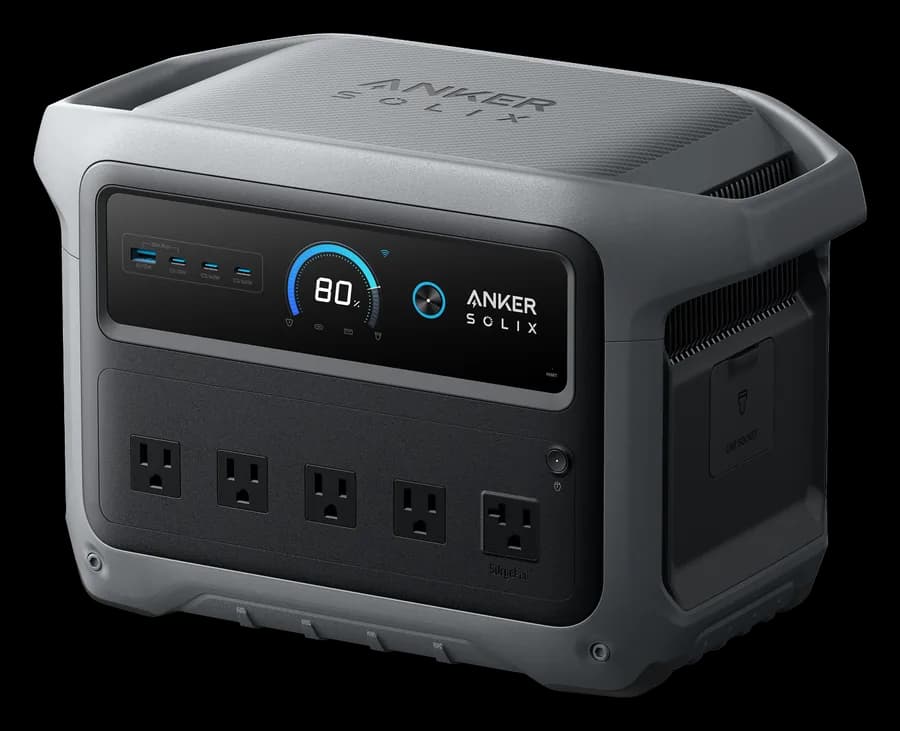
Anker SOLIX C1000 Gen 2
1,024 Wh and 2,000 W: a fridge, Wi-Fi and phones through the night.
- Capacity
- 1,024 Wh
- Output
- 2,000 W
- Weight
- 24.9 lb
- UPS
- 10 ms
Paid link
Check price on AmazonAnker SOLIX C800X / C800 Plus
768 Wh at 23 lb: a 12 V fridge and phones for a weekend with solar.
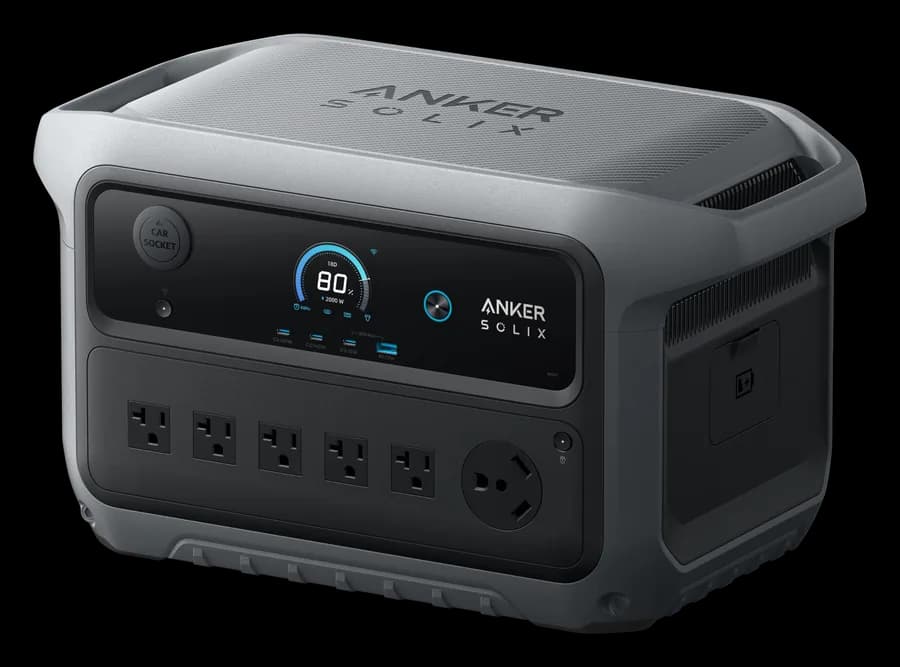
Anker SOLIX C2000 Gen 2
2,048 Wh and 2,400 W at 42 lb: the most battery you can still carry in this budget.
- Capacity
- 2,048 Wh
- Output
- 2,400 W
- Weight
- 41.7 lb
- UPS
- 10 ms
Paid link
Check price on AmazonBest power stations under $500
Overnight outage essentials
A top-freezer fridge, Wi-Fi and two phones through the night, carried with two hands. About 1.4 kWh a day at the devices.
Engine's pick
Anker SOLIX C1000 Gen 2
Black mark: the 10 h you asked for (the low end falls short).
- Covers the start-up surge (about 1,215 W; it handles 3,000 W).
- Refills from a wall outlet in about 49 min.
- 25 lb, one-hand carry.
- Not for you if: you plan to add an extra battery; the C1000 Gen 2 cannot be expanded.
Also a fit: OUPES Mega 1 (about 11 h) and EcoFlow DELTA 3 Classic (about 11 h).
Weekend camping with a 12 V fridge
A 12 V fridge and two phones, a day on battery, then solar or the car. About 0.4 kWh a day at the devices.
Engine's pick
Anker SOLIX C800X / C800 Plus
Black mark: the 24 h you asked for.
- Takes up to 300 W of solar.
- 23 lb, one-hand carry.
- Not for you if: you need more than 1,200 W at once or want to keep a full-size fridge running through a whole day.
Also a fit: EcoFlow RIVER 2 Pro (about 41 h) and Anker SOLIX C1000 Gen 2 (about 2.3 days).
A CPAP for the night
A CPAP without the humidifier and a phone for one night, light enough for one hand. About 0.1 kWh a day at the devices.
Engine's pick
EcoFlow RIVER 3 Plus
Black mark: the 10 h you asked for (the low end falls short).
- 600 W continuous for your 11 W of devices.
- Refills from a wall outlet in about 1 h.
- 10 lb, one-hand carry.
- UPS mode: switches over in 10 ms or less.
- Not for you if: a full-size fridge is the main load (its start-up uses the whole 1,200W surge and 286Wh lasts only a few hours) or you need a space heater or kettle; 600W is the running limit.
Also a fit: Anker SOLIX C300 (about 11 h) and Bluetti Elite 30 V2 (about 11 h).
Best power stations under $1,000
A full day of essentials you can still carry
The same fridge, Wi-Fi and phones for 24 hours from one unit under 50 lb. About 1.4 kWh a day at the devices.
Closest fit in this budget
Anker SOLIX C2000 Gen 2
Black mark: the 24 h you asked for (the low end falls short).
- Covers the start-up surge (about 1,215 W; it handles 4,000 W).
- Refills from a wall outlet in about 58 min.
- 42 lb, two-hand carry.
- Covers about 21 h of the 24 h you asked for. Recharge once, cut a device or add an extra battery to close the gap.
- Not for you if: you need 240V or more than 2400W at once.
Also a fit: Jackery HomePower 2000 Plus v2 (about 21 h) and EcoFlow DELTA 3 Max (about 21 h).
Multi-day outages, adding batteries later
The essentials for two to three days, with room to add batteries and solar; it can roll. About 1.4 kWh a day at the devices.
Engine's pick
Jackery HomePower 1000 Plus v2
Black mark: the 3 days you asked for.
- Covers the start-up surge (about 1,215 W; it handles 3,600 W).
- Takes up to 400 W of solar.
- 24 lb, one-hand carry.
- Needs an expansion battery, bought separately, to last as long as you asked. Extra batteries aren't included in this budget.
- Not for you if: you want more than 400W of solar input; Jackery limits it on this model.
Also a fit: Jackery HomePower 2000 Plus v2 (about 5.2 days with extra batteries) and DJI Power 1000 V2 (about 5.3 days with extra batteries).
A remote workday on Starlink Standard
Starlink Standard, a laptop and a phone for about 10 hours. About 2.4 kWh a day at the devices.
Engine's pick
Anker SOLIX C2000 Gen 2
Black mark: the 10 h you asked for.
- 2,400 W continuous for your 88 W of devices.
- Refills from a wall outlet in about 58 min.
- 42 lb, two-hand carry.
- UPS mode: switches over in 10 ms or less.
- Not for you if: you need 240V or more than 2400W at once.
Also a fit: Anker SOLIX S2000 (about 12 h) and Jackery Explorer 2000 v2 (about 12 h).
What does each budget get you?
Current models we track in each budget band, power banks excluded.
| Budget | Models | Largest battery | Most output | UPS ≤20 ms | Expandable | TT-30 | 240 V |
|---|---|---|---|---|---|---|---|
| Under $500 | 18 | 1,152 Wh | 2,000 W | 14 | 5 | 0 | 0 |
| $500 to $1,000 | 11 | 2,074 Wh | 2,600 W | 11 | 6 | 1 | 0 |
| $1,000 to $2,000 | 10 | 3,840 Wh | 3,840 W | 9 | 7 | 7 | 1 |
What you give up under $500
- Capacity. The ceiling is about 1,152 Wh. That carries a fridge and Wi-Fi overnight, not through a full day.
- Output for big loads. Up to 2,000 W runs a microwave or a coffee maker, but not both at once.
- Expansion. Only 5 of 18 models take extra batteries, so what you buy is roughly what you keep.
- RV and home connections. No TT-30 outlet and no 240 V output.
- Freshness. 6 of these are older models with thinning stock; our engine marks them down slightly against current models.
What you don't give up: 14 of 18 have a UPS mode with a 20 ms or faster switchover, and LiFePO4 batteries are standard.
What you give up under $1,000
- Days, not hours. Around 2 kWh covers most of a day of essentials. For 24 hours of a fridge, Wi-Fi and phones from one carryable unit, the closest in this budget reaches about 21 h. Multi-day outages need extra batteries or solar on top.
- Heavy-duty output. The ceiling is 2,600 W: no rooftop RV air conditioner for long and nothing on 240 V.
- Home backup wiring. 240 V output for a well pump or transfer switch starts in the $1,000 to $2,000 band, and the wiring needs a licensed electrician.
For more of what each size runs, see the runtime chart by capacity and the home backup picks.
Specs of the main picks
| Spec | Anker SOLIX C1000 Gen 2 | Anker SOLIX C800X / C800 Plus | Anker SOLIX C2000 Gen 2 |
|---|---|---|---|
| Capacity | 1,024 Wh | 768 Wh | 2,048 Wh |
| Continuous output | 2,000 W | 1,200 W | 2,400 W |
| Surge | 3,000 W | 1,920 W | 4,000 W |
| Boost mode (heating loads) | None | 1,600 W | None |
| Battery | LiFePO4, 4,000 cycles to 80% | LiFePO4, 3,000 cycles to 80% | LiFePO4, 3,000 cycles to 80% |
| Weight | 24.9 lb | 23.15 lb* | 41.7 lb |
| AC outlets | 5* | 5 | 4 + TT-30* |
| USB-C | 3 × up to 140 W | 2 × up to 100 W | 3 × up to 140 W |
| 12 V car outlet | Yes | Yes | Yes |
| Wall charge, 0–100% | 49 min | 58 min | 58 min |
| Solar input | 600 W, 11-60V (XT60i) | 300 W, 11-60V, 10A (XT-60) | 800 W, 11-60V, 17A (XT60i) |
| UPS switchover | ≤10 ms | ≤20 ms | ≤10 ms |
| Extra batteries | Not expandable | Not expandable | Up to 4,096 Wh |
| Warranty | 5 years | 5 years | 5 years |
* Not stated on the maker's spec sheet, or derived from other official figures.
Same devices, different budgets
Fridge, Wi-Fi and two phones, with the budget and runtime changed per row. Each row runs the quiz engine.
Overnight, under $500
1.4 kWh/day · 10 h
Open this in the quiz and change the devicesEngine's pick
Anker SOLIX C1000 Gen 2
About 11 h · also OUPES Mega 1, EcoFlow DELTA 3 Classic
Overnight, $500 to $1,000
1.4 kWh/day · 10 h
Open this in the quiz and change the devices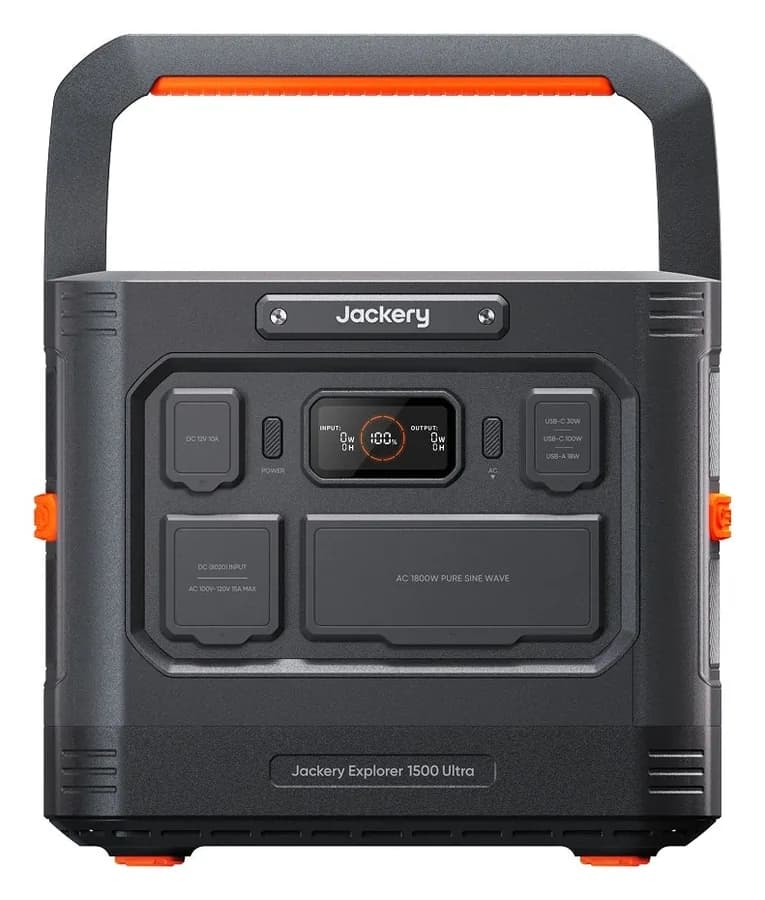
Engine's pick
Jackery Explorer 1500 Ultra
About 17 h · also Anker SOLIX C1000 Gen 2, OUPES Mega 1
Full day, under $500 (wheels OK)
1.4 kWh/day · 24 h
Open this in the quiz and change the devices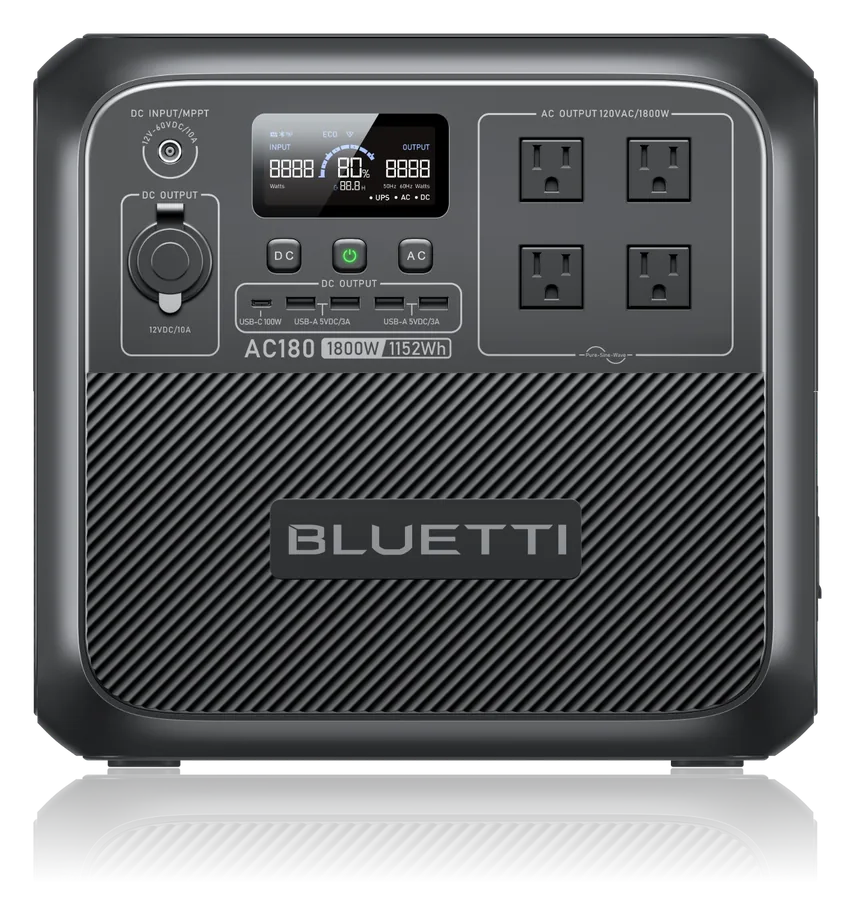
Closest fit
Bluetti AC180
Covers about 12 h · also Anker SOLIX C1000 (Gen 1), Anker SOLIX C1000 Gen 2
Full day, $500 to $1,000 (wheels OK)
1.4 kWh/day · 24 h
Open this in the quiz and change the devices
Engine's pick
EcoFlow DELTA 3
About 2.3 days with an extra battery · also EcoFlow DELTA 3 Plus, Anker SOLIX C2000 Gen 2
Overnight with UPS for a desktop PC, under $500
2.2 kWh/day · 10 h
Open this in the quiz and change the devicesClosest fit
Bluetti AC180
Covers about 5.6 h · also Anker SOLIX C1000 (Gen 1), Anker SOLIX C1000 Gen 2
Picks come from the same engine as the quiz, recalculated whenever our catalog changes.
What people actually ask
What is the best portable power station under $500?
For outage essentials, our engine picks the Anker SOLIX C1000 Gen 2: 1,024 Wh and 2,000 W, enough for a fridge, Wi-Fi and phones through the night. For camping or CPAP, a lighter unit fits better; see the picks above.
Can a power station under $500 run a refrigerator?
Yes, the 1 kWh models can. A typical top-freezer fridge uses about 1 kWh a day and needs around 1,200 W to start, and the Anker SOLIX C1000 Gen 2 runs one alone for about 15 h. Most 300 Wh units can't start a full-size fridge, and the ones that can run it only a few hours.
What do you get for under $1,000 that you don't get under $500?
Mostly capacity and output: up to 2,074 Wh and 2,600 W against 1,152 Wh and 2,000 W. You also get more models that take extra batteries (6 of 11, against 5 of 18) and the first TT-30 RV outlets. Neither budget buys 240 V output.
Is an older model on sale a good deal?
Sometimes. 6 of the 18 models under $500 we track are older units with thinning stock. They still work; compare UPS switchover, cycle rating and expansion against current models before you buy. Our engine lowers their score slightly and says so on the pick.
Do cheaper power stations use worse batteries?
Not anymore. Every model under $500 we track above power-bank size uses LiFePO4 cells. The savings come from smaller capacity, lower output and fewer extras, not battery chemistry.
Who should buy which
- Overnight outages, CPAP or camping on a tight budget: a 1 kWh unit under $500, or a 300 Wh unit if you only run small DC loads.
- A full day of essentials, Starlink Standard or RV basics: a 2 kWh unit under $1,000.
- Multi-day outages: an expandable unit under $1,000 now, extra batteries later.
- Whole circuits on 240 V: a home-backup unit above these budgets.
The bottom line
Under $500 now buys a real 1 kWh LiFePO4 station that handles an overnight outage; under $1,000 doubles that to about 2 kWh and adds expansion options. Decide by hours and devices first, then let the budget narrow the list. The sizing quiz takes a budget answer and runs the same engine, and the comparison chart and runtime calculator help you check the details.